


























Ballots, Battles and Democracy: The Journey to the 13th Parliamentary Elections
Ballots, Battles and Democracy: The Journey to the 13th Parliamentary Elections

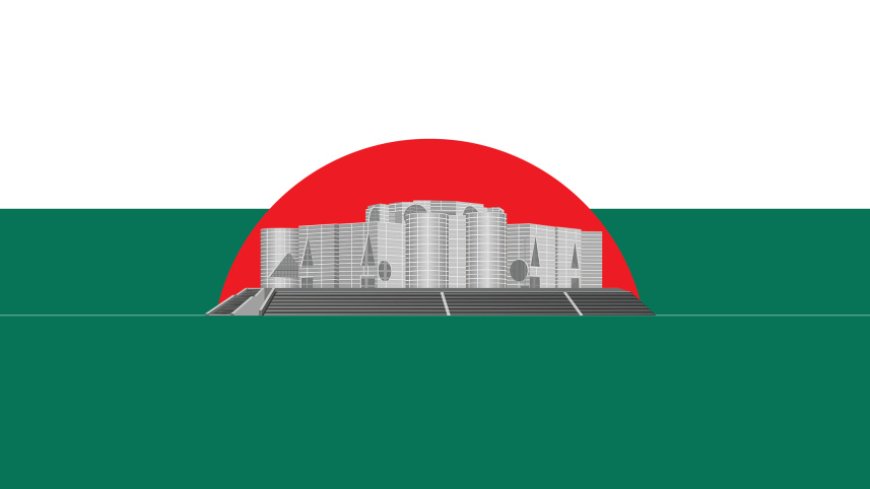
Bangladeshis delivered a decisive mandate in the national elections of December 7, 1970—the first general polls held in Pakistan. The Awami League won an absolute majority, but the military regime refused to transfer power. Instead, the state unleashed a brutal campaign in East Pakistan. The people resisted, waging a nine-month war against Pakistani forces and their local collaborators that culminated in independence on December 16, 1971.
Since then, Bangladesh’s 54-year journey has been marked by both upheaval and endurance. The Constitution of 1972 introduced a multiparty parliamentary system, and in March 1973 the country held its first parliamentary election as a sovereign state. That vote began a political trajectory that has seen 12 parliamentary contests—each reflecting shifts in power, public sentiment, and democratic struggle.
As Bangladesh prepares for its 13th parliamentary election on February 12, 2026, here is a condensed account of the previous 12 elections and how voters have shaped the nation’s course at the ballot box.
1973 GENERAL ELECTIONS
Date: March 7, 1973
Contesting parties: 14
Seats won:
-
Awami League: 293
-
Bangladesh Jatiyo League: 1
-
Jatiyo Samajtantrik Dal: 1
-
Independents: 5
1979 GENERAL ELECTIONS
Date: February 18, 1979
In early 1975, the parliamentary system was replaced by BKSAL. Months later, on August 15, Bangabandhu Sheikh Mujibur Rahman was assassinated, plunging the country into turmoil. After a series of coups and counter-coups, Ziaur Rahman assumed the presidency in 1977, imposed martial law, and suspended the constitution.
Following a referendum in 1977 and a direct presidential election in 1978, Zia founded the Bangladesh Nationalist Party (BNP). Religion-based parties were permitted to contest elections for the first time. The 1979 parliamentary election—held under a presidential system—marked another major political shift.
Contesting parties: 29
Seats won:
-
BNP: 207
-
Awami League: 39
-
Bangladesh Muslim League–Islamic Democratic League: 20
-
Jatiyo Samajtantrik Dal: 8
-
Others and Independents: remaining seats
1986 GENERAL ELECTIONS
Date: May 7, 1986
After Ziaur Rahman’s assassination in 1981, Hussain Muhammad Ershad seized power in 1982 and declared himself president. The third parliamentary election, held under martial law, was widely viewed as uneven as the BNP boycotted the polls, though the Awami League and Jamaat-e-Islami Bangladesh participated.
Contesting parties: 28
Seats won:
-
Jatiya Party: 153
-
Awami League: 76
-
Jamaat-e-Islami Bangladesh: 10
-
Others and Independents: remaining seats
1988 GENERAL ELECTIONS
Date: March 3, 1988
Although the 1986 parliament gave legal cover to Ershad’s rule, its political legitimacy remained contested. Amid escalating protests, Ershad declared a state of emergency and dissolved parliament. The 1988 election was widely regarded as one-sided, with major opposition alliances boycotting.
Contesting parties: 8
Seats won:
-
Jatiya Party: 251
-
Others and Independents: remaining seats
1991 GENERAL ELECTIONS
Date: February 27, 1991
A mass uprising forced Ershad’s resignation. Justice Shahabuddin Ahmed led an interim government that oversaw elections under a party-neutral administration. The 1991 polls restored parliamentary democracy, replacing the presidential system.
Contesting parties: 75
Seats won:
-
BNP: 140
-
Awami League: 88
-
Jatiya Party: 35
-
Jamaat: 18
-
Others and Independents: remaining seats
1996 GENERAL ELECTIONS (February)
Date: February 15, 1996
Amid demands for a caretaker government following the controversial Magura-2 by-election, opposition parties resigned from parliament. Elections held without a neutral caretaker were boycotted and widely criticised.
Seats won:
-
BNP: 278
-
Others and Independents: remaining seats
1996 GENERAL ELECTIONS (June)
Date: June 12, 1996
Parliament passed the Thirteenth Amendment establishing a neutral caretaker system. Fresh elections were held in June—making 1996 the only year with two national polls.
Contesting parties: 81
Seats won:
-
Awami League: 146
-
BNP: 116
-
Jatiya Party: 32
-
Others: remaining seats
2001 GENERAL ELECTIONS
Date: October 1, 2001
The third election under a caretaker government followed the completion of a full parliamentary term. The BNP-led four-party alliance, including Jamaat, secured victory.
Contesting parties: 54
Seats won:
-
BNP: 193
-
Awami League: 62
-
Jamaat: 17
-
Others and Independents: remaining seats
2008 GENERAL ELECTIONS
Date: December 29, 2008
After a political crisis and state of emergency in 2007, elections were held under a caretaker administration. The Awami League’s Grand Alliance won a landslide victory.
Contesting parties: 38
Seats won:
-
Awami League: 230
-
BNP: 30
-
Jatiya Party: 27
-
Others and Independents: remaining seats
2014 GENERAL ELECTIONS
Date: January 5, 2014
Held amid an opposition boycott after the caretaker system was scrapped, the polls were widely described as one-sided. For the first time, parliament was not dissolved before voting. The Awami League won 153 seats uncontested and formed government.
Contesting parties: 12
Seats won:
-
Awami League: 234
-
Jatiya Party (Ershad): 34
-
Others and Independents: remaining seats
2018 GENERAL ELECTIONS
Date: December 30, 2018
Though formally participatory, the election was marred by allegations of intimidation, mass arrests, and ballot-box stuffing before polling day.
Contesting parties: 39
Seats won:
-
Awami League: 258
-
Jatiya Party (Ershad): 22
-
BNP: 6
-
Others and Independents: remaining seats
2024 GENERAL ELECTIONS
Date: January 7, 2024
The 2024 polls were effectively uncontested, as major opposition parties—including the BNP—boycotted. The Awami League fielded independents to project competition. Months later, the government led by Sheikh Hasina was ousted following a student-led mass uprising on August 5.
Contesting parties: 28
Seats won:
-
Awami League: 224
-
Jatiya Party (Ershad): 11
-
Others and Independents: remaining seats
From landslides to boycotts, caretaker transitions to contested mandates, Bangladesh’s electoral history mirrors its broader democratic struggle—an ongoing contest between power and participation, authority and accountability.
What's Your Reaction?