








































































IMF projects stable global growth in 2026 as AI-driven gains counter trade challenges
IMF projects stable global growth in 2026 as AI-driven gains counter trade challenges

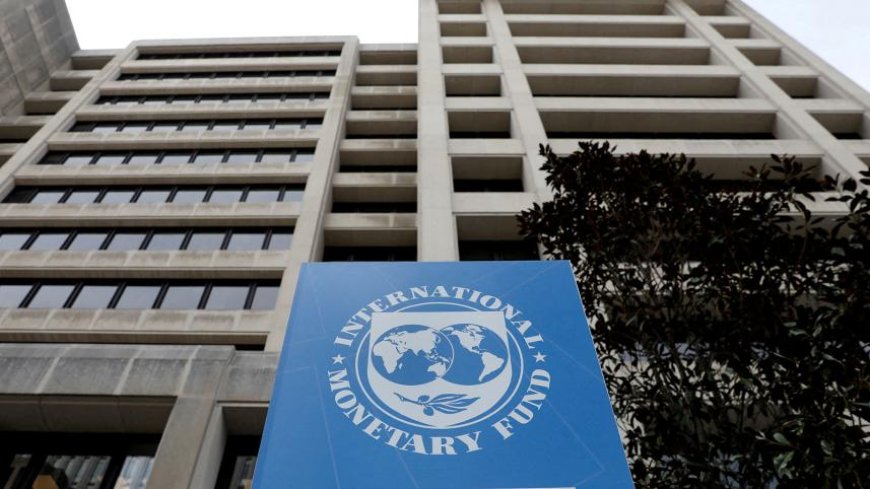
The International Monetary Fund on Monday slightly raised its global growth outlook for 2026, citing the easing impact of US tariffs and a sustained boom in artificial intelligence investment that has lifted asset values and reinforced expectations of productivity gains.
In its updated World Economic Outlook, the IMF projected global GDP growth of 3.3% in 2026—up 0.2 percentage points from its October forecast. Growth in 2025 is also expected to reach 3.3%, 0.1 percentage point higher than previously estimated. The Fund kept its 2027 global growth projection unchanged at 3.2%. Global growth forecasts have been revised upward since July last year, reflecting trade agreements that reduced tariff rates imposed by US President Donald Trump, which peaked in April 2025.
“Global growth remains quite resilient,” IMF Chief Economist Pierre-Olivier Gourinchas told reporters, noting that the Fund’s projections for 2025 and 2026 now exceed those made in October 2024, before Trump’s re-election. He said the global economy has largely absorbed the trade and tariff shocks of 2025 and is performing better than initially expected.
According to Gourinchas, companies have adapted to higher US tariffs by restructuring supply chains, while new trade deals have lowered some duties and China has redirected exports away from the US. The IMF’s latest projections assume an effective US tariff rate of 18.5%, down from around 25% estimated in April 2025.
The IMF raised its forecast for US economic growth in 2026 to 2.4%, an increase of 0.3 percentage points from October, driven in part by heavy investment in AI infrastructure such as data centres, advanced chips and power capacity. Its 2027 US growth forecast was marginally reduced to 2.0%. Technology investment has also supported stronger outlooks for Spain—where 2026 growth was revised up by 0.3 percentage points to 2.3%—and Britain, whose 2026 forecast was maintained at 1.3%.
Gourinchas warned that the rapid pace of AI investment could fuel inflationary pressures. He also cautioned that if anticipated productivity gains and profits from AI fail to materialise, a correction in elevated asset valuations could dampen demand. The IMF flagged AI-related risks as skewed to the downside, alongside geopolitical tensions, potential supply-chain disruptions and renewed trade frictions.
He added that an expected Supreme Court ruling against Trump’s sweeping tariffs under emergency sanctions law could introduce fresh uncertainty if alternative trade measures are pursued.
Despite the risks, the IMF said AI offers substantial upside potential for the global economy if rapid adoption translates into productivity gains, stronger innovation and greater business dynamism. The Fund estimates AI could lift global growth by up to 0.3 percentage points in 2026 and by 0.1 to 0.8 percentage points annually over the medium term, depending on adoption speed and readiness across countries.
Among major economies, China’s growth is forecast at 4.5% in 2026, down from an expected 5.0% in 2025 but 0.3 percentage points higher than earlier estimates. The upgrade reflects a temporary reduction in US tariffs on Chinese goods and continued export diversification toward Southeast Asia and Europe. Gourinchas cautioned that China could face rising protectionism unless it shifts toward a more balanced growth model driven by domestic demand.
The IMF also raised its euro zone growth forecast for 2026 to 1.3%, supported by higher public spending in Germany and stronger performances in Spain and Ireland, while keeping the 2027 projection unchanged at 1.4%. Japan received a modest upgrade due to fiscal stimulus under its new government. Brazil, however, was downgraded, with 2026 growth revised down by 0.3 percentage points to 1.6%, largely due to tighter monetary policy aimed at curbing inflation.
Globally, inflation is expected to continue easing—from 4.1% in 2025 to 3.8% in 2026 and 3.4% in 2027—creating scope for more accommodative monetary policy to support growth, the IMF said.
What's Your Reaction?