






















Iran war approaches two weeks with both sides trading strikes and warnings
Iran’s new leader pledges to avenge ‘martyrs’ while Netanyahu issues veiled threat

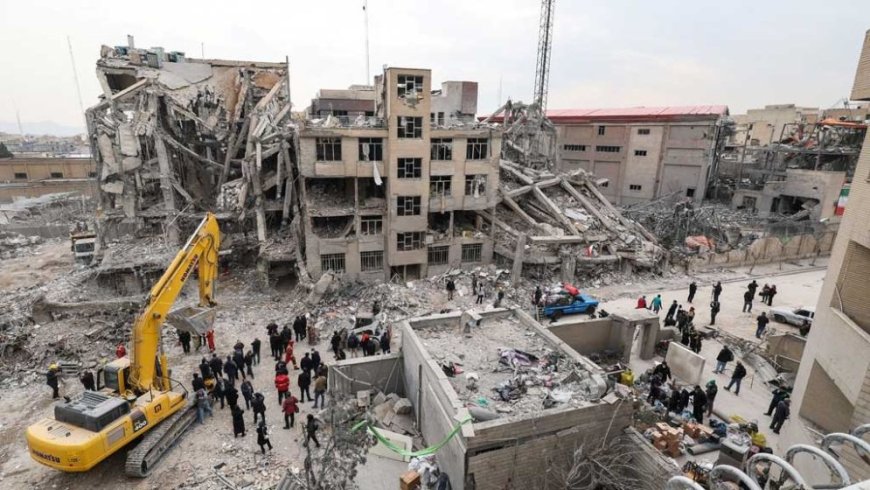
The leaders of Iran, Israel and the United States struck defiant tones on Friday, vowing to continue fighting as the Middle East war neared the two-week mark. The conflict has already killed thousands, disrupted the lives of millions and unsettled global financial markets.
Iran’s new Supreme Leader, Mojtaba Khamenei, delivered his first public remarks on Thursday through a statement read by a television presenter. He vowed to keep the Strait of Hormuz closed and warned neighbouring countries to shut down US military bases on their territory or face potential Iranian attacks.
“I assure everyone that we will not neglect avenging the blood of your martyrs,” said the hardline cleric, who is closely linked to Iran’s powerful military establishment. It remained unclear why he did not appear in person.
Israeli Prime Minister Benjamin Netanyahu held his first news conference since US-Israeli airstrikes on Iran began on February 28. Speaking via video link, he defended the military campaign and issued a veiled threat against Khamenei.
“I will not detail the actions we are taking. We are creating the optimal conditions for toppling the regime, but I cannot say with certainty that the people of Iran will overthrow it — a regime ultimately falls from within,” Netanyahu said. “But we can certainly help, and we are helping.”
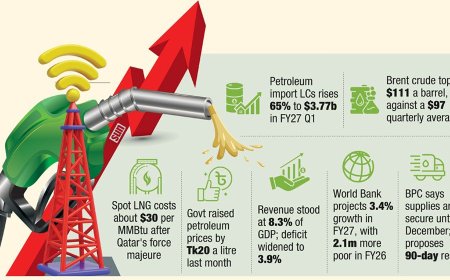
Fears of one of the most severe disruptions to global energy supplies pushed oil prices up about 9% to around $100 a barrel on Thursday, weighing on financial markets.
The S&P 500 recorded its largest three-day percentage drop in a month, while Asian stocks also came under pressure on Friday.
In a bid to stabilise energy markets, the United States issued a 30-day licence allowing countries to purchase Russian oil and petroleum products currently stranded at sea.
US Treasury Secretary Scott Bessent said the rise in oil prices would likely be temporary.
“The temporary increase in oil prices is a short-term disruption that will result in massive long-term benefits for our nation and economy,” he said, echoing earlier remarks by President Donald Trump.
US political fallout
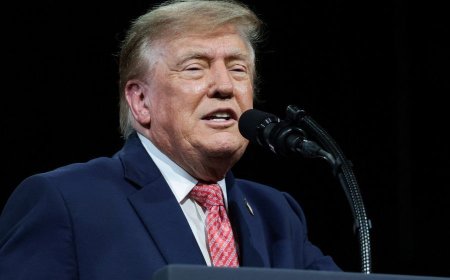
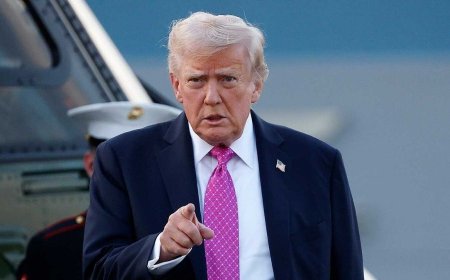
Trump, who has already declared that the United States and Israel have effectively won the war, said higher oil prices caused by supply disruptions — particularly the closure of the Strait of Hormuz, through which roughly a fifth of the world’s oil normally flows — could benefit the United States.
“The United States is the largest oil producer in the world, by far, so when oil prices go up, we make a lot of money,” Trump wrote on social media, adding that preventing Iran from acquiring nuclear weapons remained the priority.
His remarks angered opposition Democrats, who accused the Republican president of being indifferent to the war’s impact on ordinary Americans and demanded more information about civilian casualties — including a strike that reportedly killed dozens of children at an Iranian girls’ school.
The Trump administration has yet to provide a clear public estimate of the war’s likely cost or duration, or outline a strategy for Iran once the fighting ends. The president and his aides have also offered differing explanations for the decision to launch the campaign.
The death toll from the conflict has surpassed 2,000 people, most of them in Iran. Nearly 700 others have died in Lebanon, where Israel has struck central Beirut and ordered residents to evacuate large areas of the south during its offensive against the Iran-backed group Hezbollah.
Drones have been reported over Kuwait, Iraq, the United Arab Emirates, Bahrain and Oman, raising questions about US and Israeli claims that much of Iran’s long-range weapons capability has been neutralised.
In Iraq, United States Central Command said it was conducting rescue operations after one of its refuelling aircraft crashed following an incident involving another plane. Officials said the crash was not caused by hostile or friendly fire.
However, the Iran-aligned militant coalition Islamic Resistance in Iraq claimed responsibility for shooting down the aircraft.
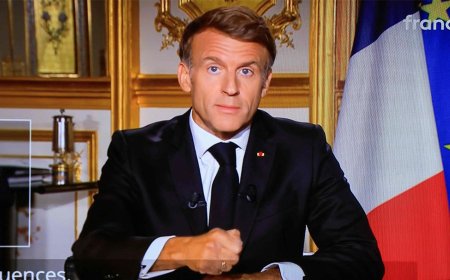
French President Emmanuel Macron said one French soldier was killed and several others wounded in an attack in northern Iraq. The strike came hours after an Italian base in the same region was also targeted.
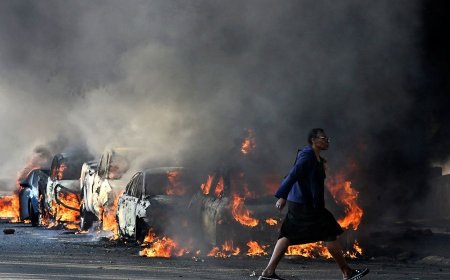
Earlier this week, two tankers were set ablaze in Iraq’s Basra port after being struck by suspected Iranian explosive-laden boats. Other vessels have also been hit in the Gulf near the Strait of Hormuz.
Tighter security inside Iran
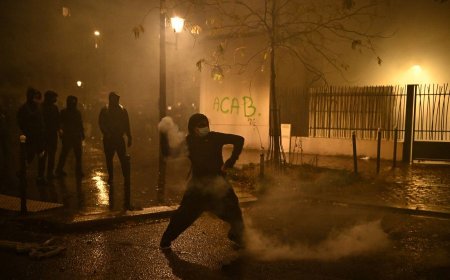
Inside Iran, residents reported a heavier security presence as authorities sought to demonstrate control.
“Security forces are everywhere, more than before. People are afraid to come out, but supermarkets are open,” said Majan, a 35-year-old teacher speaking by phone from Tehran.
Israel and the United States have called on Iranians to rise up against the country’s clerical leadership.
While many Iranians favour political change — and some openly celebrated the death of the previous supreme leader after security forces killed thousands of anti-government protesters in January — there has been little sign of organised dissent while the country remains under attack.
Iranian officials say their strategy is to create prolonged economic pressure that could force Trump to scale back the campaign. A spokesperson for Iran’s military command warned earlier this week that oil prices could rise to as high as $200 per barrel.
US Energy Secretary Chris Wright said such a surge was unlikely but did not rule it out entirely.
“I would say unlikely, but we are focused on the military operation and solving the problem,” Wright told CNN.
What's Your Reaction?