







































Aftershocks jolt parts of the country; experts caution a major earthquake could follow
Government response faces strong criticism

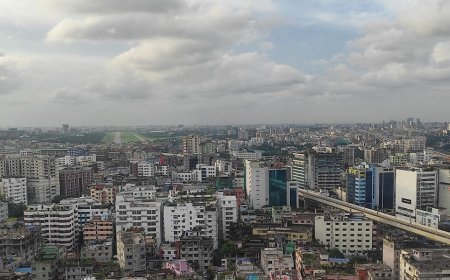
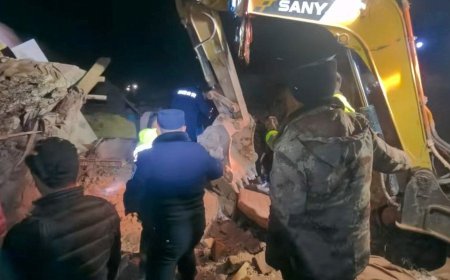
A series of aftershocks shook Bangladesh on Saturday, a day after a major earthquake struck Madhabdi in Narsingdi, violently jolting the capital and several other regions, leaving at least 10 people dead and dozens injured.
The fresh tremors have heightened public anxiety and renewed concern among scientists, who warn the seismic activity could be a precursor to a far more destructive event.
The Bangladesh Meteorological Department (BMD) confirmed that a 3.3-magnitude tremor was felt at around 10:36am in Palash upazila, Narsingdi. Its epicentre was 29 kilometres northeast of the BMD office in Agargaon, Dhaka.
Later, at 6:06:04pm, a 3.7-magnitude quake was recorded in Dhaka’s Badda area, roughly six kilometres from Agargaon. Just a second later, at 6:06:05pm, another tremor measuring 4.3 struck Narsingdi, 23 kilometres northeast of the same point, according to BMD assistant meteorologist Farzana Sultana.
Although these aftershocks caused no additional casualties or reported structural damage, panic rippled through Dhaka and nearby districts, sending residents rushing out of buildings and students fleeing classrooms.
Scientists warn of potential for massive quake
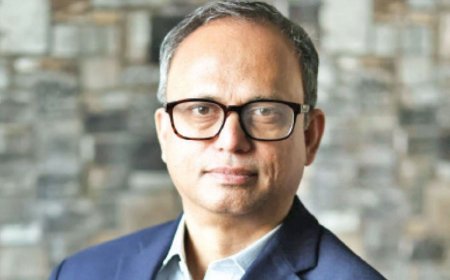
Earthquake expert and retired Dhaka University geologist Professor Syed Humayun Akhtar said the tremors represent the release of only a tiny amount of the immense energy long stored in the Indo-Burma subduction zone, where the Indian Plate pushes beneath the Burma Plate.
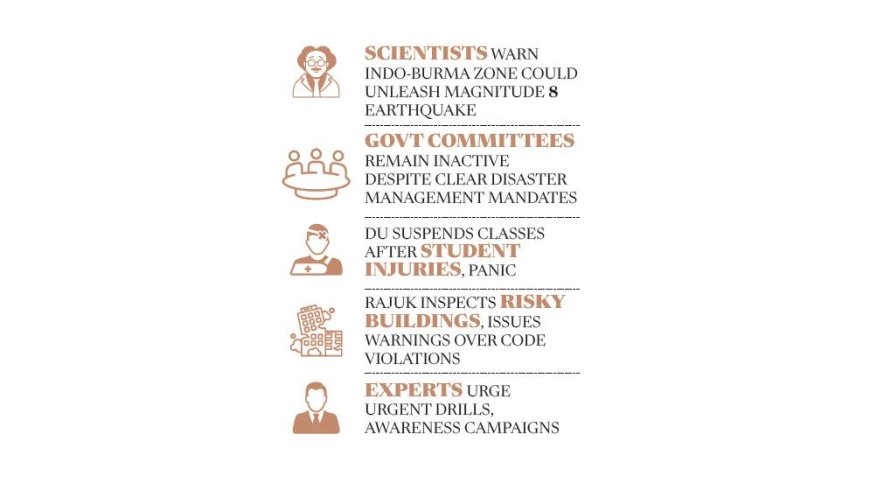
“Yesterday’s major earthquake triggered several aftershocks. A huge amount of energy has accumulated in the Indo-Burma subduction zone. An earthquake above magnitude 8 could occur there,” he said.
He noted that less than 1%—possibly as little as 0.1%—of the stored energy was released during Friday’s initial quake near Ghorashal.
“That locked portion has now started to unlock. A small part opened, releasing a little energy, which is why we’re seeing small quakes within a few kilometres, mostly to the south,” he added.
Professor Akhtar cautioned that these tremors should not be dismissed as ordinary aftershocks.
“This indicates the zone is opening up. If the entire locked segment ruptures, the consequences will be enormous. These tremors will not simply fade out,” he warned.
He said the pattern pointed to the possibility of a stronger quake ahead.
“If yesterday’s quake were magnitude 6.5 or 7, we would expect a few aftershocks that gradually subside. But this behaviour suggests a larger earthquake may still be coming.”
Dhaka at highest risk
When asked which cities were most vulnerable to a major quake, Professor Akhtar named Dhaka as the most exposed.
“The main seismic threats are the Dauki Fault and the subduction zone from Sylhet to Chattogram. No matter where a major quake occurs along them, Dhaka will suffer the greatest impact,” he said.
He stressed that Dhaka combines every risk factor: extreme population density, unplanned construction, and limited emergency response capacity.
He described scenes of panic at Dhaka University, where students scrambled down staircases or even jumped from upper floors.
“Fear drives people to react instinctively, and those reactions can be deadly. Preparedness and drills are crucial,” he said, urging nationwide awareness campaigns, including a smartphone-based “Natural Hazard Game” to teach proper earthquake response.
He also dismissed the feasibility of widespread retrofitting of unsafe buildings.
“You can’t demolish and rebuild Dhaka. Retrofitting advocates often speak from commercial interest. People don’t have the money for that—someone who spent their life savings building a house can’t afford another 10%–30%.”
Instead, he emphasised short- and mid-term strategies focused on awareness, training, and the “drop, cover, and hold” method, which could drastically reduce casualties.
Government criticised for lack of action
Despite the severity of the situation, the government has come under heavy criticism for failing to activate key disaster management bodies.
Although the capital experienced a major quake on Friday and three more tremors on Saturday, no emergency meetings were called by the National Disaster Management Council, the National Disaster Response Co-ordination Group, or other mandated committees.
The Disaster Management Act 2012 requires these bodies to issue strategic guidelines on disaster response, rescue operations and preparedness.
Yet no visible action or directives were issued in the two days following the quake.
Dr Mehedi Ahmed Ansary, a geotechnical-earthquake engineering expert at BUET, was critical of the government's passive stance.
“The government should immediately call an emergency meeting with all stakeholders, including experts. I don’t see any activity at all,” he said.
“They say they are monitoring the situation, but they don’t have the capacity for that.”
He noted that a national disaster advisory council was dissolved after a few meetings. “Perhaps bureaucrats didn’t want it. I was part of it, but now there are no calls,” he added.
Dr Ansary warned that numerous committees, plans and standing orders exist on paper, but “none are functioning.”
He urged immediate inspection of building safety by both authorities and residents.
Limited RAJUK response
Some measures were taken by Rajdhani Unnayan Kartripakkha (RAJUK).
RAJUK Chairman Engineer Md Riazul Islam inspected buildings in Armanitola, Mugda and Badda, issuing warnings for building code violations and demanding legal documents from owners.
“This earthquake was a warning,” he said.
“Risky buildings are being inspected and, in many cases, sealed or shut down; hazardous structures are being demolished. If we are not vigilant, a catastrophic disaster is inevitable.”
Dhaka University suspends classes
Dhaka University suspended all classes and exams scheduled for Sunday, 23 November, after new injuries and escalating fear on campus.
Three Shamsunnahar Hall students were injured during Saturday’s tremor, less than a day after the earlier quake caused cracks in several halls and academic buildings, injuring at least 22 students.
An urgent notice signed by Acting Controller of Examinations Dr Himadri Shekhar Chakraborty said the university was closely monitoring the situation and prioritising student safety. Updated exam schedules will be announced later.
Many students remain afraid to stay inside older dormitories as inspections continue.
US Congresswoman expresses concern
US Representative Grace Meng of New York expressed deep concern over the earthquake’s impact. “My heart aches for the people of Bangladesh as the country reels from this terrible tragedy. The loss of life and high number of injuries is devastating,” she said.
She added that her office was closely monitoring developments and stood ready to support Bangladeshi-Americans worried about loved ones affected by the disaster.
What's Your Reaction?