









































Western nations back Bangladesh’s Prevention and Suppression of Human Trafficking Ordinance
Western nations back Bangladesh’s Prevention and Suppression of Human Trafficking Ordinance.

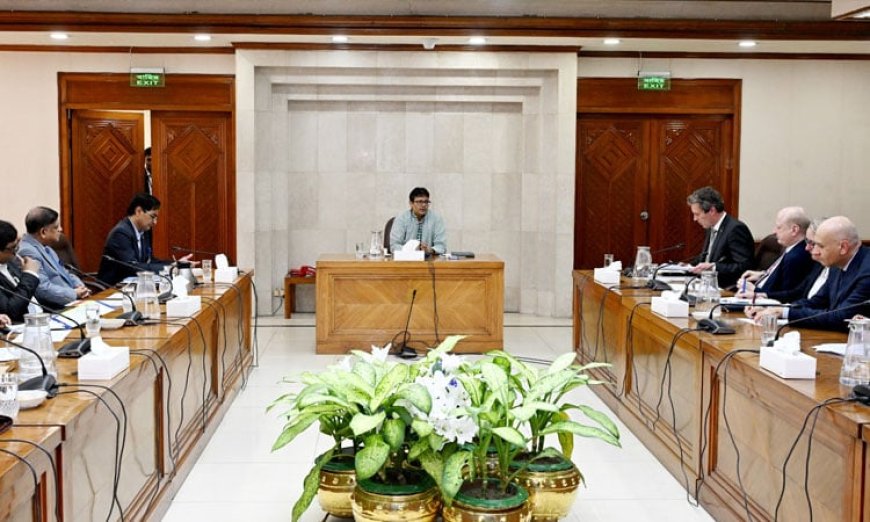
Envoys from Italy, Germany, the United Kingdom and the Netherlands have expressed support for Bangladesh’s Prevention and Suppression of Human Trafficking and Smuggling of Migrants Ordinance 2025.
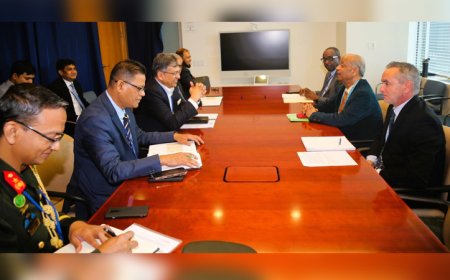
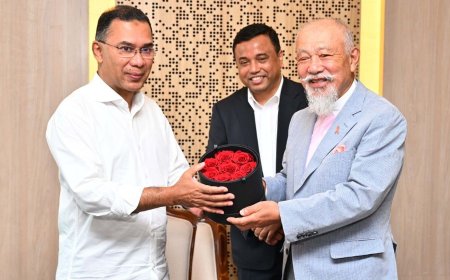
The support was conveyed during a meeting held on Wednesday at the office of the Chief Adviser’s Special Envoy, Lutfey Siddiqi, according to a statement issued by the Chief Adviser’s Press Wing this morning.
Senior officials from the Special Branch and the Criminal Investigation Department attended the meeting, alongside representatives from National Security Intelligence, the Bureau of Manpower, Employment and Training (BMET), and the Ministry of Foreign Affairs.
The interim government has formulated the ordinance to address the root causes of fraudulent visa applications originating from Bangladesh. The law criminalises migrant smuggling, including facilitation through forged or fraudulent documents.
During the discussion, participants noted that until recently there had been a perception that Bangladesh was not sufficiently serious about tackling the use of fake documents in visa applications, a situation that eroded trust and adversely affected visa processing.
It was observed that unethical brokers operate both domestically and from abroad—often through social media—while prosecutions in the past have been limited. Several cases were highlighted, including one embassy receiving more than 600 visa applications supported by fake job offer letters, and another receiving 300 tourist visa applications from the same area, all backed by falsified bank statements from a single bank. In a separate incident, a Facebook page collected several hundred thousand taka from 70 victims before being shut down.
Law enforcement agencies are now pursuing prosecution in all such cases. It was also noted that immigration police offloaded an average of more than 40 individuals per day last year.
Participants discussed the misuse of visa-on-arrival airports as transit points for illegal onward travel to third countries. One country reported receiving over 6,000 asylum applications last year from Bangladeshi nationals who had initially entered on student or work visas.
Concerns were raised that declining trust in Bangladeshi documents has significantly increased visa processing times in some countries, while another country has temporarily suspended visa applications pending the completion of an ongoing investigation in Bangladesh.
On a positive note, United Commercial Bank was commended for introducing QR codes on bank statements to enhance verification, with encouragement for wider adoption across the banking sector.
Recent progress in intelligence-sharing agreements was acknowledged, improving coordination against transnational crime. Technical assistance and systems such as the EU Returnee Case Management System are also being used more effectively, although it was noted that trained immigration officers are often transferred shortly after receiving specialised training.
BMET officials reported that most of their processes are now fully automated and integrated with immigration police systems, allowing the monitoring of exits and re-entry of BMET cardholders for the first time.
Participants also noted that while primary recruiting agents are registered and regulated, sub-agents operating at the local level remain largely unregulated, underscoring the need for proactive public awareness campaigns on broker-related abuses.
Bangladesh’s accession to The Hague Apostille Convention was discussed, with emphasis on ensuring that apostilles issued by the Ministry of Foreign Affairs are fully genuine in both source and content.
The meeting concluded with all parties recognising the interim government’s strong focus and commitment to addressing these challenges transparently. The envoys described the level of cooperation currently being extended by Bangladesh as unprecedented.
What's Your Reaction?