














































US and China economic chiefs meet in Paris to pave the way for Trump–Xi summit
US and China economic chiefs meet in Paris to pave the way for Trump–Xi summit.

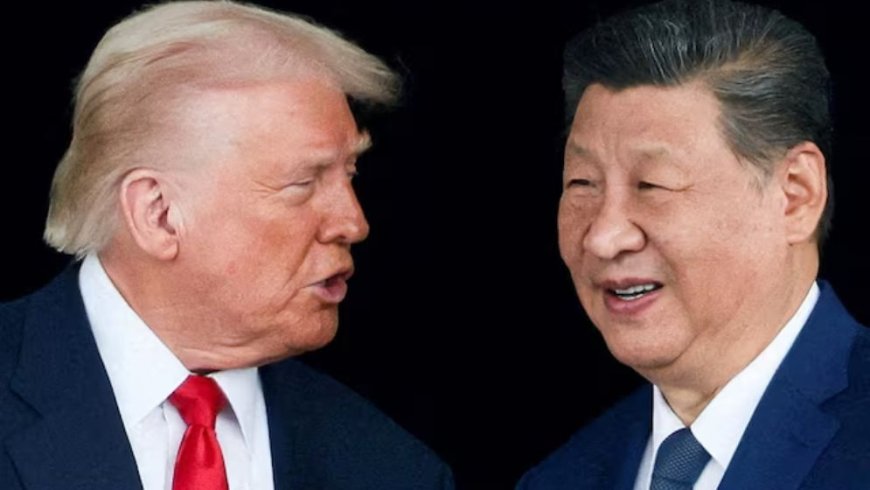
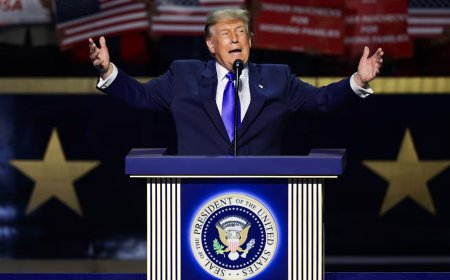
Top US and Chinese economic officials are set to begin a new round of talks in Paris on Sunday, aiming to resolve outstanding issues in their trade truce and smooth the way for US President Donald Trump’s planned visit to Beijing to meet Chinese President Xi Jinping later this month.
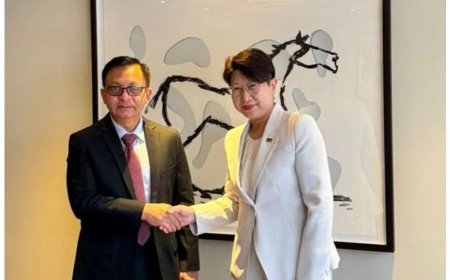
The discussions will be led by US Treasury Secretary Scott Bessent and Chinese Vice Premier He Lifeng. Key topics are expected to include adjustments to US tariffs, the supply of Chinese rare earth minerals and magnets to American buyers, US restrictions on high-tech exports, and China’s purchases of US agricultural goods.
The meeting will take place at the Paris headquarters of the Organisation for Economic Co-operation and Development, according to a source familiar with the arrangements. China is not a member of the 38-nation group, which largely consists of advanced economies, and Beijing continues to describe itself as a developing country.
US Trade Representative Jamieson Greer will also join the talks, which follow a series of meetings held in European cities last year to ease tensions that had threatened to severely disrupt trade between the world’s two largest economies.
Analysts say the chances of a major breakthrough remain limited, given the short preparation time and Washington’s focus on the ongoing war involving Iran and Israel.
“Both sides, I think, have a minimum goal of holding a meeting that keeps things together and avoids a rupture and renewed escalation of tensions,” said Scott Kennedy of the Center for Strategic and International Studies in Washington.
Kennedy said Trump may seek commitments from Beijing to purchase Boeing aircraft and increase imports of US liquefied natural gas and soybeans. In return, Washington might need to consider concessions related to export controls on advanced technology.
Even so, Kennedy suggested the likely outcome could be a summit that “appears to show progress but essentially leaves things much as they have been over the past four months.”
Trump and Xi could meet several more times this year, including at an Asia-Pacific Economic Cooperation summit hosted by China in November and a Group of Twenty summit hosted by the United States in December, where more concrete results could emerge.
Iran war and oil concerns
The conflict involving Iran and Israel is also expected to feature in the Paris discussions, particularly following a surge in oil prices and the closure of the strategic Strait of Hormuz, a route through which China receives roughly 45% of its oil imports.
Bessent announced on Thursday a 30-day sanctions waiver allowing the sale of Russian oil stranded in tankers at sea, a move aimed at boosting global supply.
On Saturday, Trump urged other countries to help safeguard shipping in the Strait of Hormuz after US forces struck military targets on Iran’s Kharg Island oil export hub and Tehran threatened retaliation.
In an editorial, the state-run China Daily newspaper stressed the importance of maintaining US-China dialogue, calling it a “stabilising anchor” amid uncertainty stemming from the Middle East crisis.
“In a moment like this, the last thing the world needs is a trade war between its two largest economies,” the editorial said.
Review of trade truce
Officials are also expected to review progress under the trade truce announced by Trump and Xi in October 2025 in Busan, South Korea. The agreement eased tensions by reducing US tariffs on Chinese imports and suspending for a year China’s strict export controls on rare earth materials. It also halted the expansion of a US blacklist restricting Chinese companies from purchasing advanced American technology such as semiconductor manufacturing equipment.
Under the deal, China agreed to buy 12 million metric tons of US soybeans during the 2025 marketing year and 25 million tons in the 2026 season beginning after the fall harvest.
US officials, including Bessent, say China has so far met its commitments, particularly in soybean purchases.
However, while some industries have resumed receiving rare earth exports from China, US aerospace and semiconductor companies still face shortages of key materials such as yttrium, which is used in heat-resistant coatings for jet engines.
“US priorities will likely focus on China’s agricultural purchases and improved access to Chinese rare earths in the short term,” said William Chou of the Hudson Institute.
New trade tensions
Greer and Bessent are also bringing a new point of contention to the talks: a fresh “Section 301” investigation into alleged unfair trade practices related to excess industrial capacity in China and 15 other major trading partners. The probe could lead to a new round of tariffs within months.
Greer has also launched a separate investigation into alleged forced-labour practices in 60 countries, including China, which could result in bans on certain imports into the United States.
These investigations aim to rebuild tariff pressure after the Supreme Court of the United States ruled that Trump’s earlier global tariffs imposed under an emergency law were illegal. The decision effectively reduced tariffs on Chinese goods by 20 percentage points, though Trump subsequently introduced a 10% global tariff under a different trade statute.
China has condemned the investigations and warned it may take countermeasures. An editorial in China Daily said the probes represent “unilateral actions that complicate negotiations.”
What's Your Reaction?