


























































Foreign exchange reserves climb beyond $34.5 billion
Foreign exchange reserves climb beyond $34.5 billion.


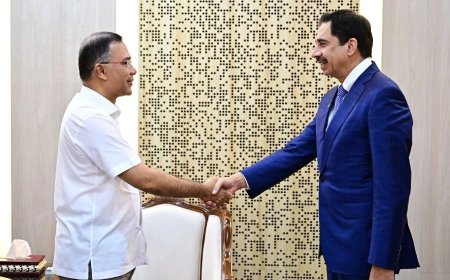
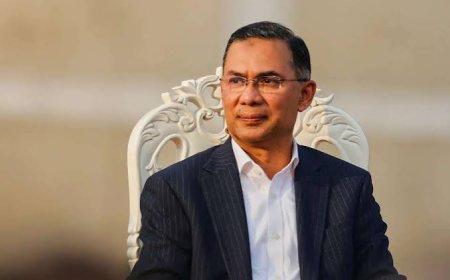
Bangladesh reached a significant political milestone on Tuesday as the interim government headed by Muhammad Yunus formally transferred power to a new administration led by Tarique Rahman.
The peaceful transition coincided with encouraging economic news, as the country’s foreign exchange reserves surpassed $34.5 billion.
Economists see the rise in reserves as a reassuring signal for the incoming government, offering much-needed financial stability as Bangladesh embarks on a new democratic phase.
Bangladesh Bank Executive Director and spokesperson Arif Hossein Khan confirmed the updated reserve figures. Central bank officials attributed the increase largely to a sharp rise in remittance inflows.
As of 17 February, gross reserves stood at $34.54 billion, while reserves calculated under the IMF’s BPM-6 methodology were $29.86 billion.
Remittance inflows reached $3.17 billion in January — the highest monthly figure so far this year. The upward trend continued in February, with $1.81 billion received in the first 16 days alone.
Officials said expatriate Bangladeshis are increasingly sending money through formal banking channels, strengthening the country’s dollar reserves.
With a surplus of dollars in the banking system, concerns emerged over a potential sharp depreciation of the US dollar. To maintain market balance and exchange rate stability, Bangladesh Bank has been purchasing dollars from commercial banks.
In the current fiscal year (FY2025–26), the central bank has bought around $4.90 billion from the market. This represents a notable turnaround from the 2021–2024 period, when it had to sell nearly $34 billion to stabilise the foreign exchange market.
What's Your Reaction?