




















Greenland gears up the next generation for a future in mining
Greenland gears up the next generation for a future in mining.

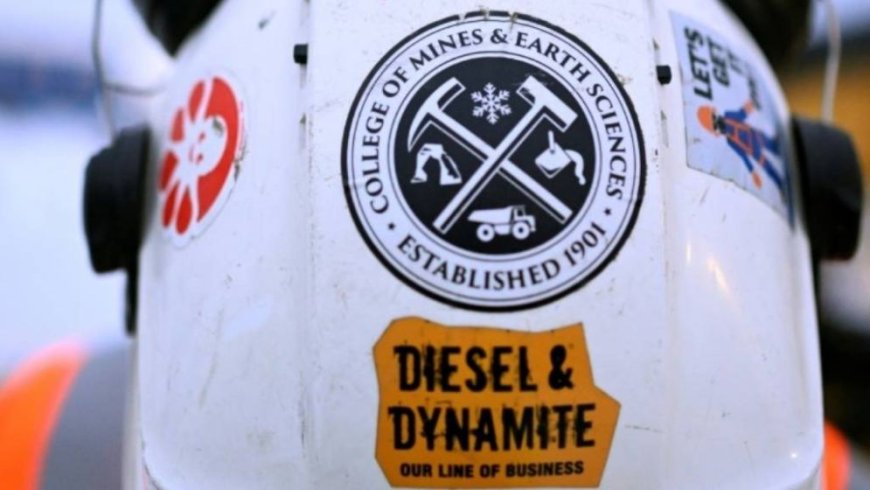
At the Greenland School of Minerals and Petroleum, a dozen students wearing high-visibility vests and helmets spend the day training on bulldozers, dump trucks, excavators and other heavy machinery.
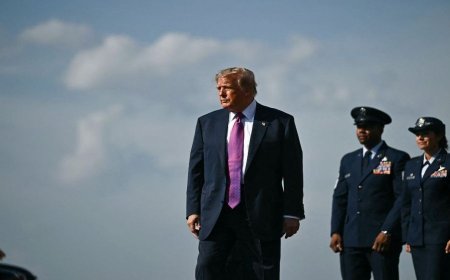
The Greenlandic government is looking to this generation to help realise its ambition of building a profitable mining sector in the vast Arctic territory—an island that has drawn interest from figures such as Donald Trump.
Established in 2008, the school in Sisimiut, in southwestern Greenland, offers a three-year post-secondary vocational programme to students from across the island. Alongside hands-on technical training, students aged 18 to 35 study geology, rock mechanics, mathematics and English.
Instructor Kim Heilmann closely supervises as they learn to handle the heavy equipment.
“I want them to understand that mining can be done in Greenland if it’s done responsibly,” he told AFP. “But the biggest challenge is keeping them motivated about a career in mining.”
According to the school’s director, Emilie Olsen Skjelsager, the isolated locations of Greenland’s two operating mines—and the solitude that comes with them—discourage many potential workers.
Greenland, an autonomous territory within the Kingdom of Denmark, assumed control over its mineral and raw material resources in 2009. While its economy remains heavily dependent on Danish subsidies alongside fishing revenues, the government hopes that mining and tourism will one day provide the financial independence needed to loosen ties with Denmark.
“The school was founded in anticipation of increased mining activity,” Olsen Skjelsager said. “It also aims to build a skilled local workforce for heavy machinery operation, drilling, blasting and exploration services.”
By graduation, a handful of students—“perhaps up to five”—will find jobs in mining. Most others will join the construction sector.
Skills gap
Greenland’s population of 57,000 has historically relied on foreign labour to develop mining ventures due to limited local expertise.
“We have capable people who can handle mining, blasting and drilling,” said Deputy Minister of Mineral Resources Jorgen T Hammeken-Holm. “But if you set up processing facilities near mining sites, you need technical expertise to run them. There’s a shortage of trained professionals in that area.”
In the coming years, Greenland will also need more geologists, engineers and economists—especially as traditional livelihoods such as hunting and fishing gradually decline.
The government covers students’ tuition and provides a monthly stipend of about 5,000 kroner (around $800).
Inside the school, a display case showcases minerals believed to lie beneath Greenland’s surface, including cryolite, anorthosite and eudialyte—an ore containing rare earth elements vital for the green and digital transitions.
“New mining sites have been explored across Greenland,” said Angerla Berthelsen, a 30-year-old student hoping to work in the sector. “There are many opportunities here,” he added optimistically.
Uncertainty over reserves
However, uncertainty persists regarding the true scale and viability of Greenland’s mineral wealth.
According to the Geological Survey of Denmark and Greenland (GEUS), Greenland contains 24 of the 34 critical raw materials identified by the EU as essential for green and digital technologies.
The agency notes that Greenland’s diverse geological history has produced a wide range of metals, minerals and gemstones. Yet it cautions that only a limited number of occurrences have been thoroughly assessed—an essential step before they can be classified as economically viable deposits.
Deputy Minister Hammeken-Holm acknowledged that, at present, resource estimates remain “more or less a guess.”
Adding to the challenges, Greenland’s harsh Arctic climate and lack of road connections between towns mean the island lacks the infrastructure necessary for large-scale mining.
Currently, just two mines operate in Greenland: a gold mine in the south and an anorthosite mine on the west coast that produces a titanium-bearing rock.
What's Your Reaction?