








































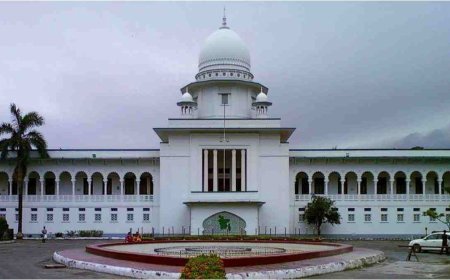

The International Crimes Tribunal is set to fix the verdict date in the case against Hasina today, with security tightened around the court premises
According to an ICT prosecutor, the verdict is likely to be announced in late November.

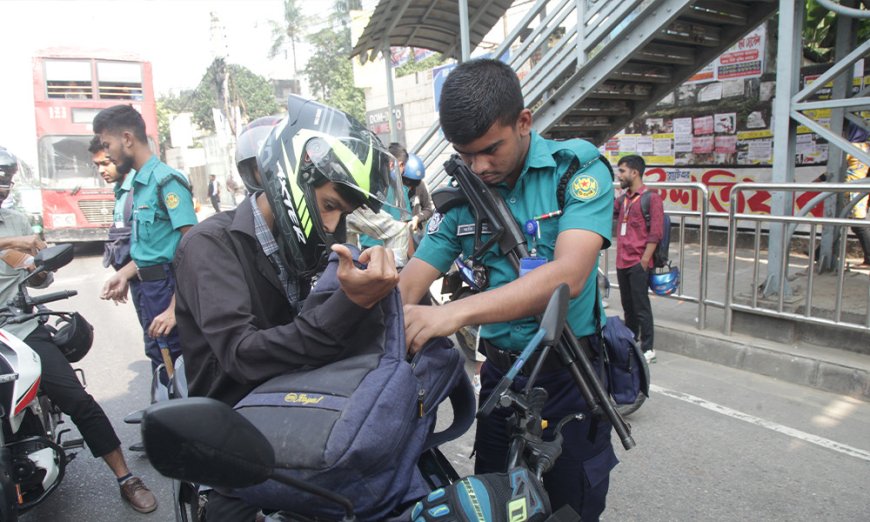
ICT to set Hasina verdict date today; security tightened nationwide
The International Crimes Tribunal (ICT) is scheduled to announce today the date for delivering its verdict in the case against ousted prime minister Sheikh Hasina and two of her top aides, accused of crimes against humanity during last year’s July uprising.
According to an ICT prosecutor, the verdict is expected in late November.
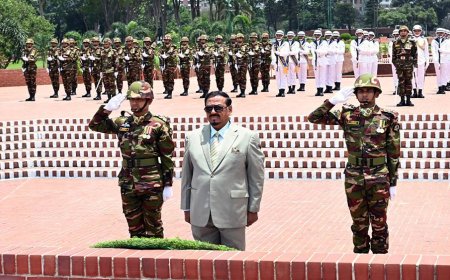
Security has been heightened across Dhaka and other major locations ahead of the announcement, with additional police and paramilitary forces deployed following calls by the banned Awami League for nationwide protests.
Despite rising tensions, prosecutors have played down security concerns.
“Sheikh Hasina’s trial is being conducted transparently. The Awami League is trying to stir unrest over the verdict, but we don’t see it as a threat to justice,” ICT prosecutor Advocate Md Mizanul Islam told reporters.
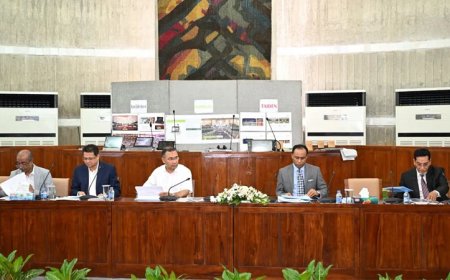
The three-member ICT-1 bench—comprising Justice Md Golam Mortuza Mozumder, Justice Md Shofiul Alam Mahmood, and Justice Md Mohitul Haq Enam Chowdhury—is expected to fix the verdict date today, with the judgment likely later this month.
“The tribunal might take another week or slightly longer to deliver the verdict,” said another ICT prosecutor, Gazi Monowar Hossain Tamim.
First Crimes Against Humanity Trial Against Hasina
This is the first time Sheikh Hasina has been tried for crimes against humanity—under the very tribunal her own government once established.
The case also involves former home minister Asaduzzaman Khan Kamal and former inspector general of police (IGP) Chowdhury Abdullah Al-Mamun.
The trial concluded last month, and on 23 October the tribunal fixed 13 November to announce the verdict date. Hasina and Kamal are being tried in absentia, while Mamun—now in custody—turned approver after confessing and testifying against them.
Hasina, 78, fled to India on 5 August 2024 following her government’s fall amid a student-led uprising. She has since ignored court summons to return and face charges of ordering a brutal crackdown to suppress the movement.
According to UN figures, up to 1,400 people were killed during the final 21 days of the Hasina-led Awami League regime between 16 July and 5 August 2024. The killings, allegedly carried out by state forces and ruling party activists, occurred in at least 438 locations across 41 districts. Investigators found that over 350,000 rounds of ammunition were fired nationwide—95,000 of them in Dhaka alone.
Prosecution Seeks Death Penalty
The prosecution brought five charges against Hasina and her co-accused, seeking the death penalty for Hasina and Kamal under the doctrine of command responsibility for mass killings and related atrocities.
State-appointed defence lawyer Advocate Md Amir Hossain, representing the absconding Hasina and Kamal, maintained that all three accused are innocent and sought full acquittal.
The 135-page charge sheet is backed by 8,747 pages of documents, videos, and audio evidence, including a recording where Hasina was allegedly heard ordering her aides to “shoot the students.”
Of 81 listed witnesses, 53 testified in court, along with approver Mamun—making a total of 54. Witnesses included victims’ relatives, injured protesters, and notable figures such as National Citizen Party convener Nahid Islam and Daily Amar Desh editor Mahmudur Rahman.
Most witnesses demanded capital punishment for the accused. If convicted, Hasina and Kamal could face the death penalty.
Attorney General Md Asaduzzaman and ICT Chief Prosecutor Advocate Muhammad Tajul Islam both pressed for the maximum sentence.
“Sheikh Hasina should have been hanged 1,400 times for the 1,400 murders,” Tajul Islam said, adding that “even the ICC would find her guilty.”
Asaduzzaman warned that failing to punish the accused would mean “injustice to the July martyrs and the injured” and would “endanger countless lives.”
Other Pending Cases
Hasina also faces two additional cases in the ICT for alleged enforced disappearances during her 15-and-a-half-year rule.
Another case concerns the killing of Hefazat-e-Islam activists during the Shapla Chattar crackdown in Dhaka’s Motijheel on 5–6 May 2013.
On Wednesday, the ICT-1 granted a two-month extension for investigators to submit the probe report in that case, setting a new deadline of 12 January, prosecutor Mizanul Islam confirmed.
That case names nine accused—including Hasina, former home minister Mohiuddin Khan Alamgir, and Gonojagoron Mancha spokesperson Imran H Sarker—for killings, torture, and other grave crimes during the Motijheel operation.
Four accused—former state minister for home Shamsul Haque Tuku, former IGP AKM Shahidul Haque, sacked army officer Ziaul Ahsan, and ex-DIG Mollah Nazrul Islam—were produced before the tribunal on Wednesday. The remaining five, including Hasina, remain absconding.
The forthcoming verdict on the 2024 crimes against humanity case is now seen as a defining moment in Bangladesh’s post-revolution justice process—one likely to shape the nation’s political landscape ahead of the 13th national election due in early February 2026.
What's Your Reaction?