



















































The government is planning to suspend the import of bonded yarn.
The move to withdraw the duty-free facility for 10–30 count yarn has sparked strong opposition from garment exporters.

In an effort to protect domestic textile producers and create jobs, the government has moved to suspend the bonded warehouse facility for the import of 10–30 count yarn. The Ministry of Commerce has formally written to the National Board of Revenue (NBR), citing recommendations from the Bangladesh Trade and Tariff Commission, seeking withdrawal of duty-free import privileges for these yarn counts under the bonded system.
Sources familiar with the letter sent to the NBR chairman said the proposal, described as a short-term measure, recommends excluding 10–30 count yarn from bonded warehouse benefits. These yarn types account for a significant share of imports under the facility.
The letter also instructed customs houses to ensure that yarn count information is clearly specified in the commercial descriptions on bills of entry to prevent misuse of the system.
A senior official from the NBR’s Customs Policy Department confirmed the development on Sunday, noting that NBR Chairman Md Abdur Rahman Khan is reviewing the proposal from multiple angles.
“A final decision will be made after examining all aspects,” the official said.
BGMEA, BKMEA oppose move
The proposed suspension has triggered strong resistance from apparel industry bodies.
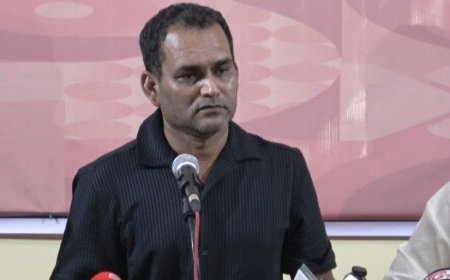
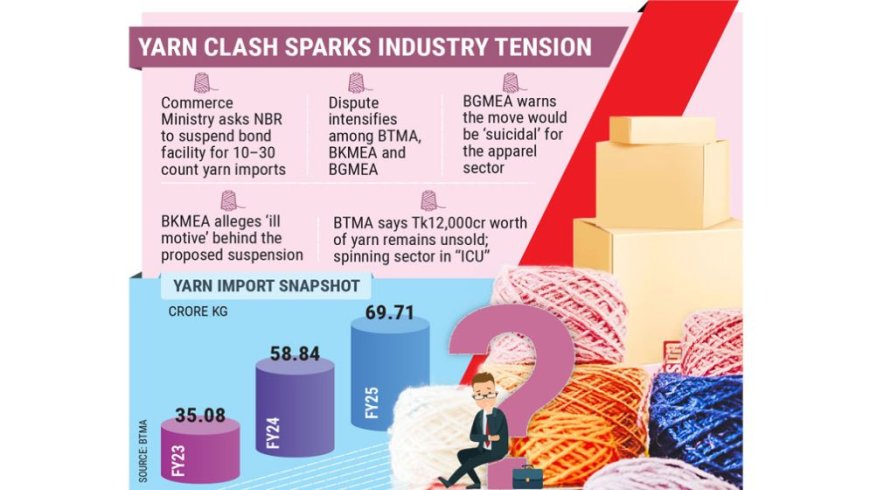
Bangladesh Garment Manufacturers and Exporters Association (BGMEA) Director Mohammed Sohel told the Daily Sun that the move would be “suicidal” for the garment sector.
“If this decision is implemented, factories will shut down. Imported yarn is around 40 cents cheaper than locally produced yarn. Even when we receive large export orders, we are compelled to import yarn because all varieties are not available domestically,” he said.
He added that the industry has been under pressure for several years and warned that local yarn prices would rise further if the measure is enforced.
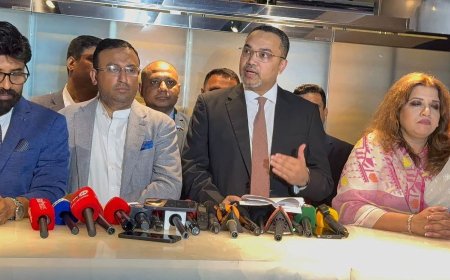
Bangladesh Knitwear Manufacturers and Exporters Association (BKMEA) Executive President Fazlee Shamim Ehsan said the association would outline its stance at a press conference on Monday, questioning the lack of consultation with key stakeholders.
“The government earlier suspended exports through land ports, which severely hurt our shipments. Now another decision is being taken — what is the government gaining from this?” he asked.
Yarn imports surge
Data from the Bangladesh Textile Mills Association (BTMA) show that yarn imports have surged at an unusually high rate in recent years.
In volume terms, imports rose by 68.32 percent in FY23 compared to FY22, followed by a further 18.4 percent increase in FY24. Import value increased by 46.53 percent over the same period.
Bonded warehouse facilities currently apply to 10–30 count yarn under HS codes 52.05, 52.06 and 52.07.
Imports under these categories stood at 35.08 crore kilograms in FY23, rising to 58.84 crore kg in FY24 and further to 69.71 crore kg in FY25.
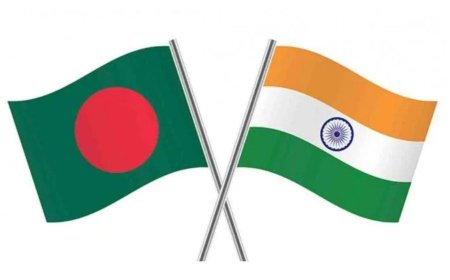
According to the Ministry of Commerce, textiles and garments account for about 84 percent of Bangladesh’s export earnings, with knitwear contributing roughly 55 percent. One of the key raw materials for knitwear — 10–30 count yarn — is largely imported from India.
To support export growth, the government has allowed duty-free imports of raw materials through the bonded warehouse system since the 1980s.
Meanwhile, domestic entrepreneurs have invested around $3 trillion in backward linkage industries to produce yarn and fabric locally, generating substantial employment. Industry insiders claim local producers now have the capacity to meet overall domestic demand for cotton and blended yarn.
Tk12,000cr unsold yarn
BTMA leaders said local spinning mills are currently stuck with unsold yarn worth about Tk12,000 crore amid sharply rising production costs, warning that the sector is now in “ICU.”
They cited several challenges, including cuts to cash export incentives, nearly doubled gas prices, depreciation of the taka, bank interest rates as high as 16 percent, reduced Export Development Fund (EDF) support, higher wages, and acute shortages of working capital.
BTMA also alleged that Indian mills, benefiting from various government incentives, are dumping yarn in Bangladesh at prices well below production costs, creating unfair competition and threatening the survival of local spinning mills.
BTMA President Showkat Aziz Russell said more than 250 garment factories and over 50 textile mills have already shut down, while over half of the remaining units are operating at around 50 percent capacity.
“One of my own cotton mills has closed. I fear becoming a ‘textile-less’ president,” he said.
According to BTMA estimates, producing one kilogram of yarn in Bangladesh costs around $3, while Indian mills produce similar yarn at $2.85–$2.90 per kg and export it to Bangladesh at about $2.50 per kg.
They said neighbouring countries provide incentives equivalent to roughly 30 cents per kg through measures such as subsidised land, tax exemptions, skills development support and infrastructure assistance.
As a result, yarn is exported to Bangladesh at $2.50–$2.60 per kg — 30 to 40 cents below local production costs — leaving domestic producers unable to compete despite efficiency improvements and putting long-term investment and sustainability in the sector at risk.
What's Your Reaction?