
































Investment outlook remains bleak as BIDA’s efforts fall short
Investment outlook remains bleak as BIDA’s efforts fall short

Despite a shift in the political landscape following the July 2024 uprising, Bangladesh has seen no fresh momentum in investment or employment over the past one and a half years, raising doubts about the effectiveness of the Bangladesh Investment Development Authority (BIDA).
Although BIDA hosted an international investment summit last April, officials now acknowledge that it will take more time for the event’s impact to translate into actual investment inflows.
Following the political transition on August 8, Dr Muhammad Yunus assumed responsibility for governing the country. The investment summit, held from April 7 to 10 last year, had generated high expectations of new investment and job creation. The interim government spent Tk5 crore on the event, which initially received a positive public response.
The summit resulted in investment proposals worth Tk3,100 crore. However, no major new proposals have emerged since. Instead, during the 2024–25 fiscal year, registrations of domestic and foreign investment proposals with BIDA dropped by 58% compared to the previous year, a downward trend that has continued.
Analysts say both local and foreign investors are now holding back major commitments while awaiting a national election.
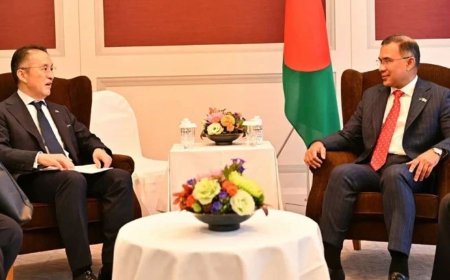
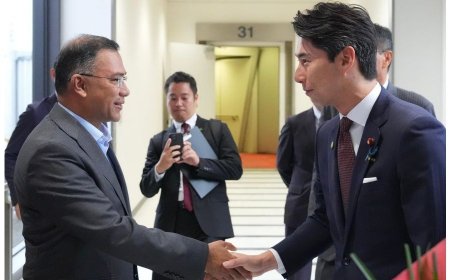
After taking office in September 2024, BIDA Executive Chairman Chowdhury Ashik Mahmud Bin Harun visited the United States, Japan, the United Kingdom, Qatar, China, Malaysia, Turkey and South Korea by October. During the 2024–25 fiscal year, he officially visited the US in January, Japan in February, the UK in March and Qatar in April.
Despite these efforts, no investment materialised from Qatar, while net foreign direct investment (FDI) from the UK declined by 40.71%. The United States saw higher capital repatriation than new investment. Compared to the previous fiscal year, investment proposal registrations from Japan and the UK also fell, and no new proposals were registered from Qatar.
BIDA data show that total registered domestic and foreign private-sector investment proposals stood at Tk66,057 crore in 2024–25, marking a 58% year-on-year decline. The number of proposed projects also dropped significantly.
Economists argue that the interim government should have focused on dismantling structural barriers to investment rather than raising expectations. Despite repeated assurances, the promised one-stop service has yet to be implemented effectively. Gas and electricity shortages persist, with frequent load-shedding continuing even during winter. As a result, employment has not improved, and a large number of people have reportedly lost jobs since August 5, 2024.
According to the latest Bangladesh Bureau of Statistics (BBS) estimates, GDP in the current fiscal year stands at around Tk5.5 million crore. However, registered investment intentions remain limited to Tk1–1.5 lakh crore, equivalent to just 2–3% of GDP. Actual realised investment is often half that amount or less due to delays in utility connections, energy shortages and logistical bottlenecks.
Long-standing challenges such as bureaucratic inefficiency, corruption and administrative complexity also persist. The absence of an elected government has further eroded investor confidence.
China remains one of Bangladesh’s largest sources of FDI stock. The Chief Adviser visited Beijing in March last year, and a large Chinese delegation attended the Dhaka investment summit in April. BIDA’s executive chairman later led a delegation to Shanghai in July, encouraging Chinese investment in power, textiles and IT.
While strong interest and commitments were expressed, these did not materialise. As a result, new investment proposals from China plunged by 89% in 2024–25, while net FDI inflows from China fell by 3.3%.
Responding to the criticism, BIDA Chairman Chowdhury Ashik Mahmud Bin Harun said foreign investment does not materialise overnight.
“Creating an enabling environment for investment takes time. Bangladesh is no exception. We need to allow more time to assess the outcomes of last year’s investment summit,” he said.
Country-wise data also indicate a significant shift in investor interest. In 2023–24, China, Japan, Singapore, Saudi Arabia and Germany were the top sources of investment proposals. In 2024–25, only China remained among the top five.
South Korea emerged as the largest source of investment proposals last year, amounting to Tk1,820 crore, followed by China with Tk620 crore, down from Tk5,730 crore the previous year. Proposals from the United States stood at Tk410 crore, the UAE at Tk310 crore and Hong Kong at Tk220 crore.
Former World Bank Dhaka office chief economist Dr Zahid Hussain said the decline in investment proposals was unsurprising.
“Bangladesh was in a transitional phase last year, and investors tend to be cautious in such circumstances. At the same time, long-standing infrastructure and opportunity constraints remain unresolved. As a result, investment not only failed to increase, it declined,” he said.
He added that the investment climate could improve once political stability is restored under an elected government.
What's Your Reaction?