







































The government is firmly committed to building an economy that is progressive, inclusive, and sustainable, the Finance Minister said
The government is firmly committed to building an economy that is progressive, inclusive, and sustainable, the Finance Minister said.

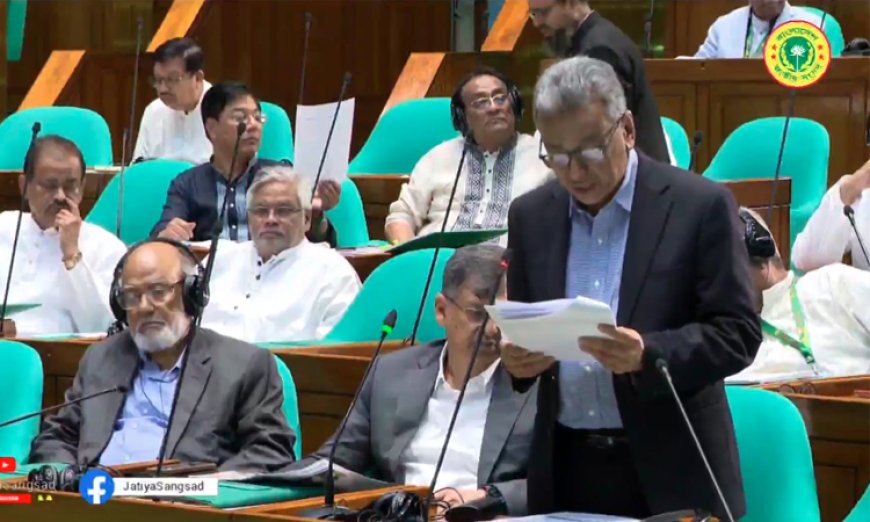
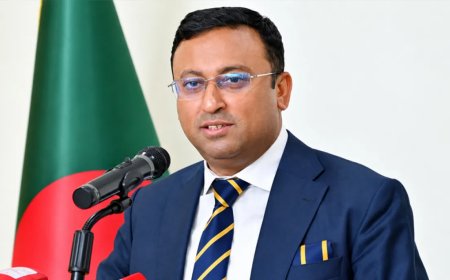
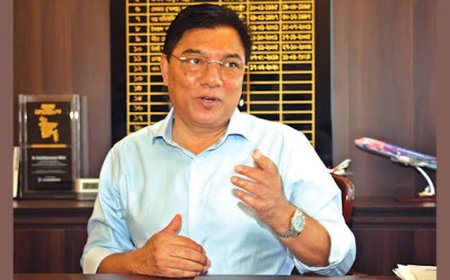
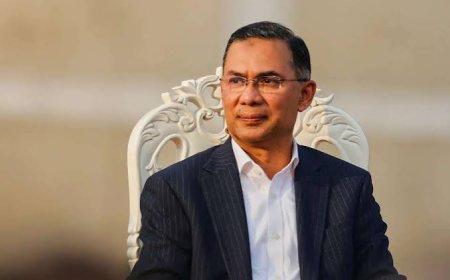
Finance Minister Amir Khosru Mahmud Chowdhury on Thursday told the Jatiya Sangsad that the government is firmly committed to transforming Bangladesh’s economy into an advancing, inclusive and sustainable one, while delivering on its election pledges, achieving a trillion-dollar economy by 2034 and addressing emerging global challenges, including the ongoing Middle East conflict.
Presenting a comprehensive statement in the House under Section 300 of the Rules of Procedure, he said the government assumed office with a strong public mandate and immediately moved to stabilise the economy, restore institutional strength and ensure equitable development.
“The people have placed their trust in us, and our responsibility is to honour that trust by building an advancing, inclusive and sustainable economy,” he said.
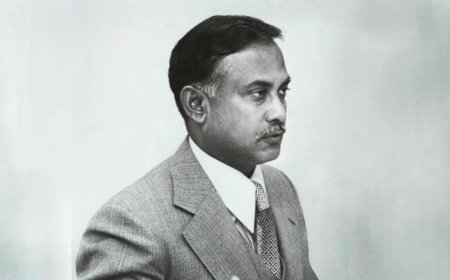
Khosru noted that the Bangladesh Nationalist Party (BNP), under the leadership of Shaheed President Ziaur Rahman, has long served as a platform for fulfilling public aspirations. He credited the party with introducing multiparty democracy and initiating the country’s journey towards economic emancipation.
He further said that Begum Khaleda Zia revitalised a fragile economy by expanding the garment industry, strengthening Bangladesh’s position in the global labour market and fostering middle-class growth, laying the foundation for long-term economic progress. He added that her reforms—including the introduction of VAT, modernisation of tariff and import structures, and pro-private investment policies—helped strengthen the economic base.
“Building on that legacy, we are now firmly committed to steering the economy towards an advancing, inclusive and sustainable path, grounded in transparency, integrity and accountability,” he said.
Outlining the current economic situation, the finance minister said the government inherited a fragile structure marked by structural weaknesses, high inflation, external sector pressures, slow investment, institutional erosion and governance challenges—issues that require urgent and coordinated reforms.
He said the government’s development vision centres on economic democratisation and deregulation to ensure that the benefits of growth reach all citizens.
“Our goal is not just higher growth, but a progressive, inclusive and sustainable economy built on transparency, accountability and good governance,” he added.
Khosru said the government has already begun implementing key election commitments to improve livelihoods and strengthen resilience. As part of social protection, it has started distributing 50 lakh family cards, with plans to gradually include all households, alongside introducing farmer cards for genuine farmers, fishermen and livestock producers.
He said agricultural loans of up to Tk 10,000 have been waived, while targeted support is being provided to rural producers to boost productivity and incomes.
To generate employment, the government plans to create one crore jobs through ICT expansion, modern transport and communication systems, blue economy initiatives, eco-tourism and regional creative hubs. It is also working to promote the “Created in Bangladesh” brand globally to enhance export competitiveness and diversify opportunities.
On fiscal reforms, the minister said priority is being given to revenue transparency and automation to improve tax collection and reduce reliance on borrowing. The government aims to raise the tax-to-GDP ratio to 10 percent in the medium term and 15 percent by 2034 through better public service delivery and efficient spending.
“We want taxpayers to see clear benefits through improved services, governance and infrastructure,” he said.
He added that efficient debt management, development of the domestic bond market and better coordination of deficit financing would help maintain fiscal sustainability and reduce long-term risks. A dynamic macro-fiscal framework is also being strengthened to support medium-term budgeting and credible projections towards the trillion-dollar goal.
On financial sector reforms, Khosru said steps have been taken to restore discipline in the banking sector and strengthen the central bank’s legal framework. Measures are also underway to improve bank management, address capital shortfalls and rebuild confidence.
He said efforts are being made to develop the capital market by ensuring regulatory independence, preventing manipulation and introducing instruments such as corporate bonds, Sukuk and green bonds.
Strengthening SMEs, improving the business climate and expanding access to credit will further boost investment, production and employment, he added. He also emphasised increased spending on education, health and social protection to ensure inclusive human development.
Referring to the ongoing Middle East conflict, the minister said it has created fresh uncertainty in global energy markets, supply chains and trade, posing a significant challenge for Bangladesh. He noted that international oil and LNG prices have more than doubled, requiring an additional Tk 36,000 crore in subsidies for power and energy between March and June of the current fiscal year.
“This will increase budgetary pressure and require around three billion US dollars in additional imports, affecting foreign exchange reserves,” he said.
To mitigate the impact, the government has adopted energy-saving and financial measures, including reduced office hours, greater use of daylight, limits on electricity consumption, earlier market closures, sourcing alternative fuels and ensuring timely subsidies.
He said the government is also seeking additional budget support from development partners to maintain balance of payments stability and manage fiscal pressures.
Despite the global crisis, the government has decided to keep energy prices unchanged to ease the burden on citizens, he added.
Khosru acknowledged that Bangladesh, as an import-dependent economy, cannot remain insulated from global geopolitical developments, but stressed that prudent policies and effective management would help navigate the challenges.
He said the upcoming national budget for FY2026-27 will prioritise stability, transparency and inclusive growth while addressing inherited economic constraints.
Expressing hope for public support, he said people would recognise the limitations inherited from the past and back the government’s reform efforts.
Reiterating the government’s commitment, the finance minister said it will continue to ensure good governance, rebuild institutional strength and place the economy on a sustainable path for future generations.
What's Your Reaction?