


























































Remittance inflows surge to a record $17.17 billion in six months
The latest figure marks an increase of $2.86 billion, reflecting growth of nearly 19.9 percent.


Bangladesh posted a record $17.17 billion in inward remittances during the first six months and seven days of fiscal year 2025–26, highlighting the strength of overseas earnings and offering vital support to the country’s foreign exchange reserves amid global trade challenges.
The inflow represents a sharp year-on-year rise from the same period of FY2024–25, when remittances stood at about $14.31 billion.
The latest tally reflects an additional $2.86 billion, or nearly 19.9 percent growth, extending the momentum from FY25—a landmark year in which annual remittances surpassed $30 billion for the first time.
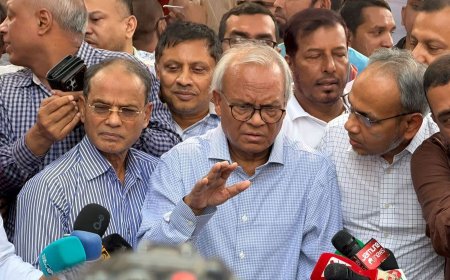
Bangladesh Bank Executive Director and Spokesperson Arif Hossain Khan said the continued growth is the result of both structural changes and policy measures.
He pointed to renewed confidence in formal remittance channels following the political transition in late 2024, which led many expatriates to move away from the illegal “hundi” system.
Greater transparency and a rising sense of economic responsibility among migrant workers have also encouraged increased use of official banking channels, he said.
The stabilisation of the taka against the US dollar has been another crucial factor, curbing speculative behaviour. With a market-based exchange rate now in effect, remitters are no longer holding back transfers in anticipation of abrupt currency depreciation.
Government incentives have further boosted inflows, with the ongoing 2.5 percent cash incentive motivating low-income migrant workers to remit through formal platforms.
In addition, the expansion of digital remittance services—such as mobile financial services and fintech solutions—has made money transfers quicker and more convenient, particularly for workers in the Middle East and Southeast Asia.
Monthly remittance receipts stood at $2.47 billion in July, $2.42 billion in August, $2.68 billion in September, $2.56 billion in October, $2.88 billion in November, and $3.22 billion in December.
Data show that average monthly inflows exceeded $2.42 billion over the past six months.
The robust remittance performance has prompted policymakers to reassess the need for borrowing from the International Monetary Fund under strict conditions.
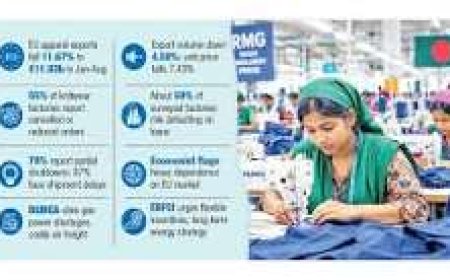
Professor Mustafizur Rahman, Distinguished Fellow of the Centre for Policy Dialogue (CPD), told UNB that the surge in remittances is helping offset recent weakness in exports, which saw a slight contraction in December 2025.
According to the Asian Development Bank (ADB) and local economists, strong remittance inflows are expected to play a key role in driving consumption and GDP growth in 2026.
As of early January 2026, Bangladesh’s gross foreign exchange reserves have been significantly bolstered by the inflows, standing at around $33 billion under the traditional calculation method. This has given the government greater fiscal room to manage external debt and import payments, he added.
Syed Mahbubur Rahman, Managing Director and CEO of Mutual Trust Bank Limited (MTB), said confidence in the banking system has returned, encouraging expatriates to send money through formal channels.
He noted that exchange rate stability and a normalised curb market have diminished the attractiveness of hundi transactions, which also deny remitters access to the 2.5 percent incentive.
“In this situation, sending remittances through illegal hundi channels results in losses for remitters,” he said.
Mahbubur Rahman added that Bangladesh Bank’s policy initiatives have further motivated migrant workers and non-resident Bangladeshis to remit their earnings through legal means.
What's Your Reaction?