

















































“It was 2:15 a.m.—the early hours of March 26, 1971”
“It was 2:15 a.m.—the early hours of March 26, 1971.”


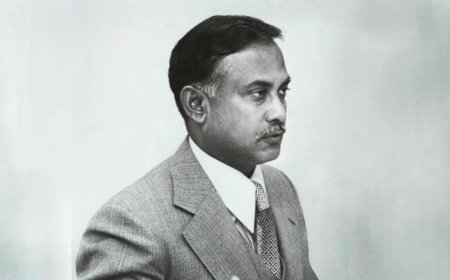
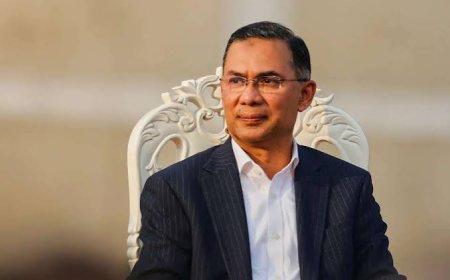
At 2:15 a.m. on March 26, 1971, Shaheed President Ziaur Rahman rose in revolt against the Pakistani military junta, rallying Bengali troops under his command in the port city of Chattogram.
March 26 is observed as Bangladesh’s Independence Day. In a later reflective article, Zia described the date as one “etched in the Bangalee’s heart in blood letters.”
At the time, Ziaur Rahman was serving as a major in the Pakistan Army and was second-in-command of the 8 East Bengal Regiment. From that position, he initiated his rebellion against the Pakistani authorities.
On March 26, 1972—the first anniversary of independence—he published an article titled “Birth of a Nation” in the now-defunct Dainik Bangla, by then holding the rank of major general and serving as deputy army chief. The piece was republished in 1974 by the weekly Bichitra.
Recalling those tense moments, Zia wrote: “Time was very precious. I called the (Bengali) officers, JCOs and jawans and directed them to engage in armed struggle. They accepted the order unanimously and willingly.”
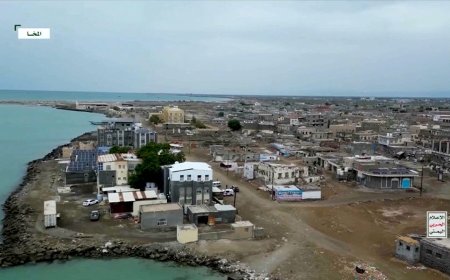
He then moved his troops to the Kalurghat area on the outskirts of Chattogram, where Bengali radio personnel had set up the clandestine Swadhin Bangla Betar Kendra. From there, he proclaimed the independence of Bangladesh.
In his article, Zia reflected on the cultural repression and political marginalisation of Bengalis under Pakistani rule, particularly during prolonged military regimes. He noted that the seeds of Bengali nationalism were sown when Pakistan’s founder, Muhammad Ali Jinnah, declared in Dhaka that “Urdu and only Urdu” would be the state language.
He argued that such actions, along with continued discrimination, ultimately made armed resistance both necessary and inevitable.
Zia also outlined key historical milestones that shaped his thinking, including the 1952 Language Movement, the 1954 elections, Ayub Khan’s military rule, the 1965 Indo-Pak war, the mass movements of the 1960s, and the 1970 general elections. He emphasized how systemic neglect and suppression by Pakistani rulers pushed Bengalis toward the Liberation War.
According to Zia, the 1969 mass uprising and the Agartala conspiracy case—against Sheikh Mujibur Rahman—helped unify Bengali members of the armed forces with the civilian population.
The Awami League’s landslide victory in the 1970 elections further intensified tensions, as delays and conspiracies to transfer power led to the Non-Cooperation Movement in March 1971. Zia noted that during this period, the Pakistani army secretly increased its military preparedness.
He described Sheikh Mujib’s historic March 7 speech at the Race Course Maidan as a “green signal” for action, after which plans were finalized—until the “black night” of March 25–26 unfolded.
Zia recounted how, on the night of March 25, Pakistani forces launched a brutal crackdown, killing unarmed civilians across Dhaka and other cities. He described receiving orders around 1 a.m. to report to a Pakistani general at Chittagong Port—an order he suspected was a trap.
On his way, fellow Bengali officer Major Khalequzzaman Chowdhury intercepted him with news of the crackdown, prompting Zia to return to his battalion, where Bengali soldiers had already confined Pakistani officers.
Unable to reach fellow Bengali officers by phone, Zia contacted a civilian telephone operator and asked him to relay a message to key officials and Awami League leaders that the 8 East Bengal Regiment had revolted and would fight for independence.
He then addressed his troops, who were already aware of the situation. “They knew everything. Yet I briefly told them,” he wrote, recalling the decisive moment.
The article, running over 3,650 words, was written at the encouragement of a journalist ahead of the first anniversary of independence. Though initially hesitant, Zia explained his motivation:
“I am a soldier. Writing is a God-gifted art, and soldiers do not naturally possess that rare ability. But the emotion of that historic moment compelled me—I had to take up the pen.”
What's Your Reaction?