









































China’s Xi to host South Korea’s Lee for New Year talks amid tensions with Japan
China’s Xi to host South Korea’s Lee for New Year talks amid tensions with Japan


Chinese President Xi Jinping will host South Korean President Lee Jae Myung on a state visit beginning Sunday, underscoring Beijing’s push to strengthen ties with Seoul at a time of heightened tensions with Japan over Taiwan.
The trip will be the second meeting between Xi and Lee in just two months—an unusually short gap that analysts say highlights China’s strong interest in shoring up relations with South Korea, particularly in economic cooperation and tourism.
China–Japan relations have sunk to their lowest point in years after Japanese Prime Minister Sanae Takaichi said in November that a hypothetical Chinese attack on Taiwan could prompt a military response from Tokyo. Against this backdrop, Xi’s invitation to Lee is widely seen as a calculated move to deepen bilateral ties, especially ahead of Lee’s planned visit to Japan.
“China wants to underscore South Korea’s importance more than before,” said Kang Jun-young, a professor of political economics at Hankuk University of Foreign Studies. “Beijing appears to have strategically decided it would be better for Lee to visit China before South Korea holds another summit with Japan.”
The Lee administration has said it aims to “restore” relations with Beijing, noting that China remains South Korea’s largest trading partner. This marks a shift from strained ties under former president Yoon Suk Yeol, whose closer alignment with Washington and Tokyo, along with criticism of China’s Taiwan policy, unsettled relations with Beijing.
South Korea is now seeking to strike a balance—leaning toward cooperation with China while avoiding entanglement in regional disputes that could threaten Asia’s industrial powerhouse. Lee said in December that he would not take sides in the diplomatic row between China and Japan.
US alliance and North Korea
Despite warmer rhetoric, relations between Beijing and Seoul remain complex. China is challenging the United States—South Korea’s key regional ally—while nuclear-armed North Korea continues to pose security risks. China is Pyongyang’s main ally and economic lifeline.
Shin Beom-chul, a former South Korean vice defence minister and senior fellow at the Sejong Institute, said Xi and Lee could address sensitive issues, including efforts to modernise the South Korea–US alliance, which Beijing views as aimed at curbing China’s influence.
Around 28,500 US troops are stationed in South Korea to deter threats from the North. US officials have signalled that these forces could become more flexible, potentially responding to wider regional contingencies such as Taiwan and China’s expanding military reach.
“Korea is not simply responding to threats on the peninsula,” US Forces Korea commander General Xavier Brunson said at a forum on December 29. “It sits at the crossroads of broader regional dynamics shaping the balance of power in Northeast Asia.”
Lee is also expected to urge China to facilitate dialogue with North Korea, experts said. Pyongyang, however, has rebuffed Lee’s outreach, branding him a “hypocrite” and a “confrontational maniac.” Meanwhile, China and North Korea have moved closer, with leader Kim Jong Un appearing alongside Xi at a major military parade in September.
Tech, supply chains and K-pop
Lee’s Beijing visit is set to focus on cooperation in critical minerals, supply chains and green industries, his office has said. Nearly half of South Korea’s rare earth supplies—vital for semiconductor production—come from China, which also absorbs about one-third of South Korea’s annual chip exports.
Last month, South Korean Industry Minister Kim Jung-kwan and Chinese Commerce Minister Wang Wentao agreed to work toward stabilising rare earth supplies. Experts say the talks may also extend to artificial intelligence and advanced technologies.
Huawei Technologies plans to introduce its Ascend 950 AI chips in South Korea next year as a potential alternative to Nvidia, according to Huawei’s South Korea CEO Balian Wang, who said discussions with potential clients are under way. Huawei declined to comment further.
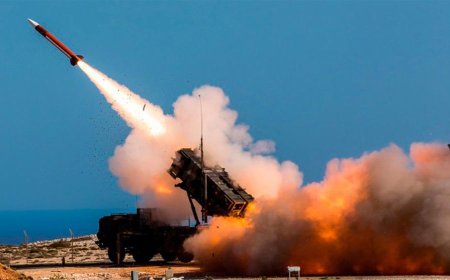
Another sensitive issue is China’s de facto ban on K-pop content, in place since around 2017 following South Korea’s deployment of a US-led missile defence system. Local media report that the chief executive of SM Entertainment, a leading K-pop agency, will be part of Lee’s business delegation.
What's Your Reaction?