
































Oligopolistic market and regulatory inaction behind ongoing LPG crisis
Only seven to eight firms are active in the market despite 58 licensed operators

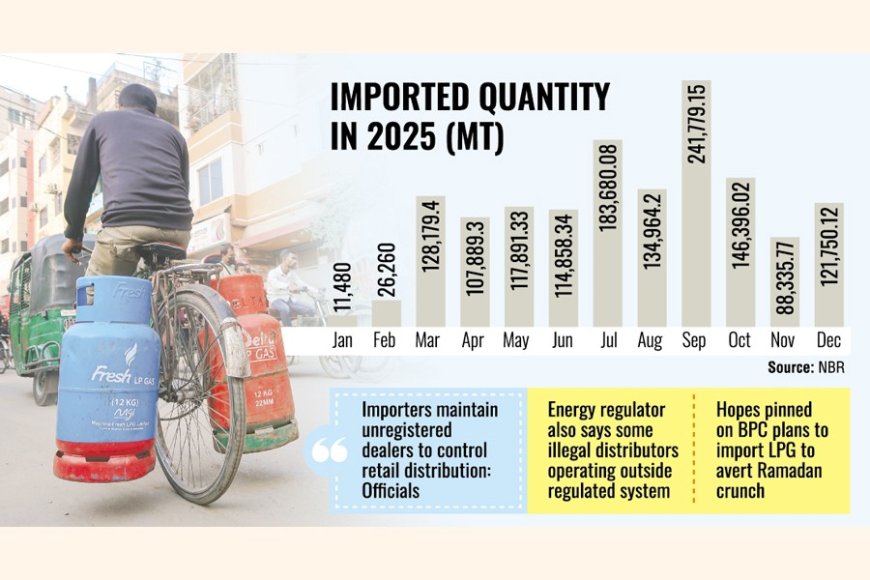
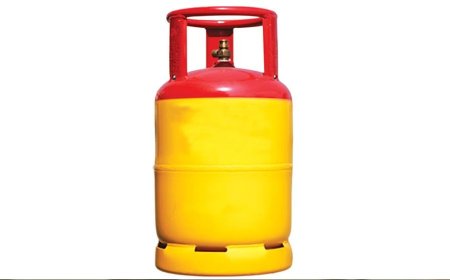
Despite importing more liquefied petroleum gas (LPG) than the country’s consumption needs during the July–December 2025 period, consumers are facing an acute supply crunch, raising serious concerns over market transparency and regulatory oversight.
One contributing factor appears to be the highly uneven pattern of monthly imports. Although overall volumes were adequate, fluctuations in supply may have exacerbated the crisis.
During the period under review, average LPG imports stood at 152,818 tonnes per month, with September recording the highest inflow and November the lowest. Yet consumers nationwide have reported what industry insiders describe as an “artificial” shortage, as retail prices soared beyond control.
According to data from the National Board of Revenue (NBR), total LPG imports in calendar year 2025 exceeded 1.42 million tonnes, averaging around 118,622 tonnes per month.
A key concern flagged by market observers is the shrinking import base. Although 58 companies hold licences to operate in the LPG sector, only seven to eight firms are actively importing the fuel, creating a highly concentrated and effectively monopolised market.
NBR figures show that in December 2025, just seven companies imported a total of 121,750.12 tonnes of LPG. Imports were even lower in November, when eight companies brought in only 88,335.77 tonnes. While December saw a sharp month-on-month rise, the dominance of a handful of players has left the supply chain vulnerable to manipulation.
Notably, the average monthly import volume of 152,818 tonnes in the second half of the year exceeded the country’s estimated monthly demand of 125,000 tonnes. Yet the market remained volatile, with sector insiders and energy officials insisting the crisis was not caused by a product shortage.
With so few active importers, the capacity to restrict supply and dictate retail prices has increased significantly. Supplies were reportedly curtailed during the peak winter months to push prices higher, leaving many districts without LPG cylinders even at nearly double the government-set rates.
Demand for LPG has risen sharply in recent months as natural gas supplies decline. The country’s current annual LPG demand stands at around 1.5 million tonnes. However, infrastructure development and the participation of licensed firms have failed to keep pace with this growth.
Analysts warn that with demand projected to reach 2.5 million tonnes by 2030—a 60 percent increase within five years—the existing monopolised market structure poses a serious threat to energy security.
Consumers have borne the brunt of the crisis. Mahbubur Rahman of Mohammadpur said he paid Tk 2,000 for a cylinder last week after struggling to find supplies. In Hatirjheel, resident Papri switched to an electric induction cooker after retailers demanded Tk 2,500 for a standard 12kg LPG cylinder—nearly twice the government-fixed price.
Retailers, too, say they are helpless. Abul Kalam, an LPG distributor in Mirbagh, Hatirjheel, said he has been unable to sell cylinders despite receiving constant calls from customers due to the ongoing supply disruption.
“The fact that only seven companies are importing LPG while 58 hold licences points to either a major barrier to entry or a structural failure in the market,” a market analyst told The Financial Express. “Unless more licensed operators become active, the risk of artificial shortages and price manipulation will persist.”
Professor M Shamsul Alam, energy adviser to the Consumers Association of Bangladesh (CAB), alleged that an oligopoly has emerged under the LPG Operators Association of Bangladesh (LOAB), blaming the government’s failure to enforce existing regulatory laws.
He said the market is now controlled by just five to six dominant operators and described the practice of charging prices above the government-fixed rate as a “criminal offence.” Professor Alam criticised regulators for their inaction, arguing that weak enforcement and the absence of penalties have allowed the crisis to continue at the expense of consumers.
Meanwhile, Mohammed Amirul Haque, managing director of Delta LPG Limited and president of LOAB, attributed part of the disruption to supply constraints in the Middle East. He expressed optimism that the situation would stabilise ahead of Ramadan.
Haque also noted that the Bangladesh Petroleum Corporation (BPC) plans to begin importing LPG, a move he said could significantly ease the current crisis.
BERC Chairman Jalal Ahmed acknowledged disruptions in the global LPG supply chain, particularly as major buyers such as India and China have sharply increased imports. However, he did not rule out the possibility of an artificial shortage domestically, suggesting that illegal distributors operating outside the regulated system may be partly responsible.
He added that only half of LOAB members have submitted their distributor lists despite repeated requests from the regulator.
What's Your Reaction?