













































Bangladesh now counts the United States as its second-biggest trade partner
Bilateral trade has surged in recent months, altering the traditional trade hierarchy.

The United States has recently become Bangladesh’s second-largest trading partner, driven by a significant rise in bilateral trade with the world’s biggest economy.
Officials familiar with the matter say the shift may be tied to successful negotiations between Dhaka and Washington, during which Bangladesh agreed to boost imports from the US to help narrow the trade imbalance.
The surge represents a temporary reshaping of Bangladesh’s long-standing trade structure, historically dominated by China, with India typically occupying the second position.
New data nonetheless point to a short-term departure from this pattern.
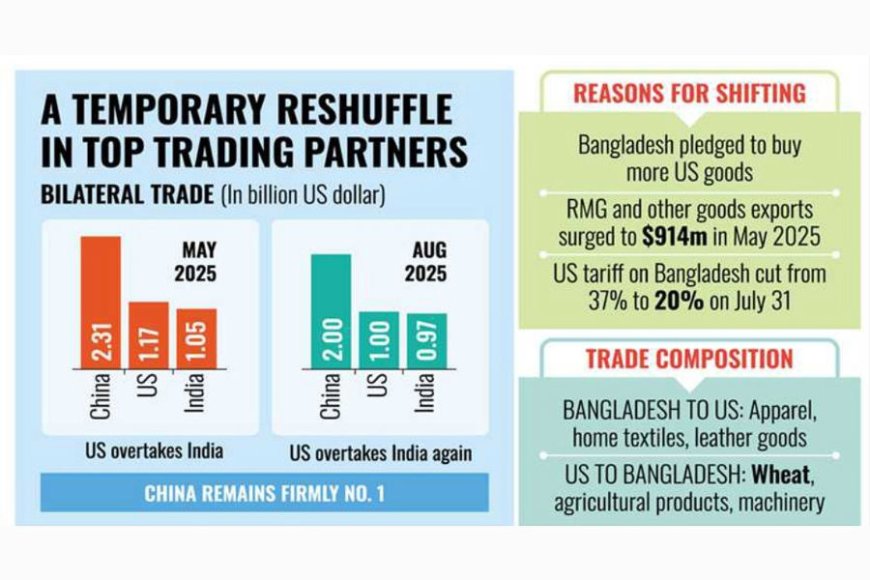
Figures from the Bangladesh Bureau of Statistics (BBS) show that in August the US climbed into second place, with total trade crossing US$1.0 billion—slightly ahead of India’s US$973 million. China remained firmly on top at US$2.0 billion.
Trends in July and June followed the usual order, with India second and the US third.
However, the US had already briefly taken the second spot in May 2025, recording US$1.17 billion in total trade compared with India’s US$1.05 billion, while China led with US$2.31 billion.
Economists and business leaders attribute the recent rise in US-Bangladesh trade to stronger two-way flows, fuelled by higher Bangladeshi exports and increased import volumes from the American market.
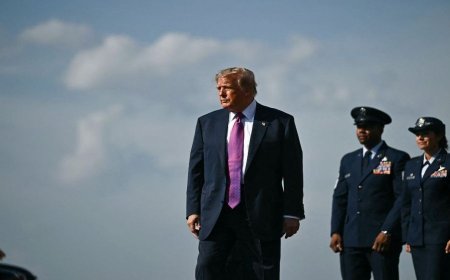
They also pointed to the positive effects of renewed trade engagement with the Trump administration, which eased certain barriers and improved market access for both sides.
Though China’s lead remains largely unchallenged, experts say the United States’ growing presence indicates a gradual diversification of Bangladesh’s external trade portfolio.
In April, the US raised tariffs on many countries amid concerns about its widening trade deficit.
Bangladesh faced a 37 percent tariff, which was suspended for three months starting April 9. On July 31, the rate was lowered to 20 percent.
Masrur Reaz, chairman of Policy Exchange Bangladesh, noted that exports to the US jumped sharply in May, when Bangladesh shipped goods worth US$914 million while importing just US$260 million.
By August, he said, the trade pattern had shifted somewhat, reflecting higher import volumes from the US.
Bangladesh is currently bringing in key food staples from the American market, particularly wheat.
What's Your Reaction?