
















































“No ban, no boycott — yet still no World Cup.”
“A one-off exclusion involving Bangladesh”

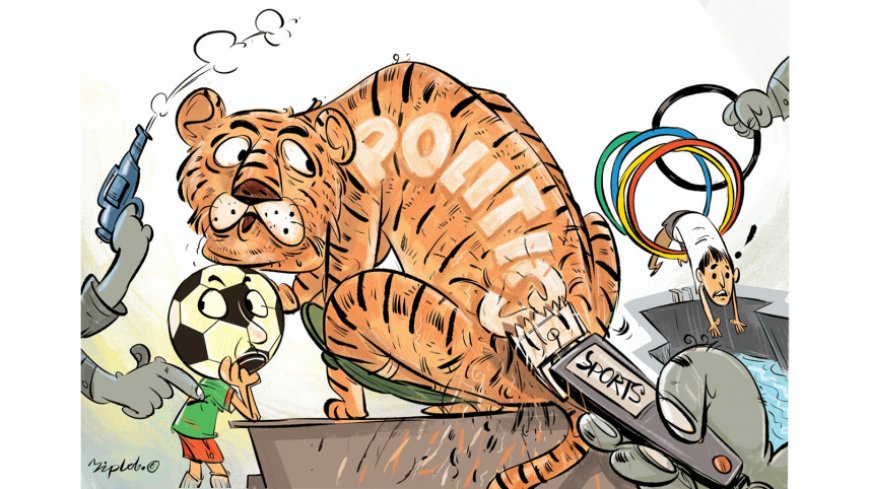
If international sport can be likened to a series of symbolic battles between nations, then mega events such as the World Cup or the Olympics resemble all-out wars where national honour is at stake. Unlike real wars—where avoiding combat is often the ideal outcome—absence in sport carries stigma. It signals a country’s inability to produce athletes capable of competing with the world’s best.
In its 54 years of nationhood, Bangladesh has endured this humiliation time and again. It holds the unenviable distinction of being the most populous country never to win an Olympic medal and remains far from qualifying for either the men’s football or hockey World Cups. Simply put, Bangladesh has rarely produced athletes who can consistently compete at the highest level.
Cricket stands as the lone exception to this culture of underachievement. After two decades of effort, Bangladesh finally made its World Cup debut in 1999. Since that first appearance in England, the country has participated in 16 men’s senior cricket World Cups—seven ODI editions and nine T20 tournaments.
Though the trophy cabinet remains empty and the team has never progressed beyond the quarterfinals, regular participation has allowed Bangladesh to establish itself within cricket’s upper tier—a sport played in more than 110 countries.
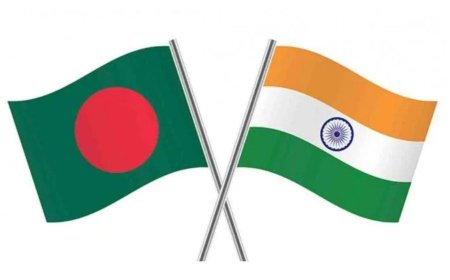
That continuity was expected to continue at the 10th T20 World Cup, scheduled to begin on February 7 in India and Sri Lanka. Instead, Bangladesh were replaced by Scotland on January 24, following weeks of failed negotiations between the Bangladesh Cricket Board (BCB) and the International Cricket Council (ICC) over relocating Bangladesh’s matches from India due to security concerns.
The abrupt outcome was triggered by a single incident—highlighting a feature common to both symbolic and real wars: how large conflicts can erupt from a solitary spark.
Historians often trace the origins of the First World War to the assassination of Archduke Franz Ferdinand on June 28, 1914—a single act that unleashed a chain reaction culminating in one of history’s deadliest conflicts.
In Bangladesh’s case, the spark was what the ICC later described as an “isolated” and “unrelated” incident—yet one that ultimately pushed the team out of the World Cup.
On January 3, the Board of Control for Cricket in India (BCCI) instructed IPL franchise Kolkata Knight Riders to release Bangladesh pacer Mustafizur Rahman, citing only “recent developments” without offering a cricketing explanation. The decision appeared to reflect pressure from right-wing political and religious groups rather than sporting considerations—forming the basis of Bangladesh’s security concerns.
The following day, the BCB, acting under government guidance, formally requested the ICC to relocate its Group C matches, all of which were scheduled to be played in India.
Weeks of correspondence, media speculation, and back-channel discussions followed, but neither side shifted its stance. The ICC rejected the request, while the BCB maintained it could not travel to India under current circumstances. The stalemate ended with Scotland being named as Bangladesh’s replacement.
What makes Bangladesh’s exit unprecedented is that it involved neither a ban nor a boycott. The ICC never barred Bangladesh, and neither the BCB nor the government ever declared an intention to withdraw.
There was no ban. There was no boycott. Yet Bangladesh are no longer part of the World Cup.
Historically, exclusions from global sporting events have largely stemmed from wars and geopolitical conflicts. Nations were barred from the 1920 Antwerp Olympics after the First World War, and Germany and Japan were excluded again following the Second World War. Yugoslavia, Russia, South Africa, Afghanistan and Kuwait have all faced bans at various times due to sanctions, apartheid, regime policies or government interference.
Boycotts, meanwhile, emerged as tools of collective protest—from the 1956 Melbourne Olympics to Cold War-era standoffs in 1980 and 1984. In recent decades, such actions have mostly been symbolic, with diplomatic withdrawals rather than athlete exclusions.
Cricket World Cups, however, have largely avoided both bans and boycotts. When teams have refused to travel to certain venues—such as Australia and the West Indies in 1996, or England and New Zealand in 2003—the standard response was a match forfeiture.
Even in 2016, when Australia declined to travel to Bangladesh for the Under-19 World Cup, they were swiftly replaced. Yet when India refused to travel to Pakistan for the 2025 Champions Trophy, citing security concerns and government directives, the ICC introduced a hybrid model ensuring mutual non-travel until 2027.
Bangladesh offered the same justification—security concerns and government orders—but received starkly different treatment. After weeks of deliberation, the request was rejected outright.
Bangladesh neither boycotted the tournament nor were they banned from it. Their removal is best described as a procedural exclusion.
Until recently, the ICC’s approach had been relatively consistent. Absent the India precedent, its handling of Bangladesh’s case might have gone largely unquestioned. But a precedent had already been set.
While India raised its concerns earlier—before the schedule was announced—the ICC’s unusually delayed scheduling suggested it anticipated resistance. Moreover, the Pakistan Cricket Board was formally involved in negotiations with India, whereas the BCCI was conspicuously absent from discussions with the BCB.
In dismissing Bangladesh’s concerns, the ICC referred to the IPL as merely “a domestic league,” ignoring its role as the most powerful commercial engine in world cricket—one influential enough to command a dedicated international window every year.
Ultimately, the ICC followed its procedures meticulously, closed all loopholes, and excluded Bangladesh once the BCB refused to relent.
The BCB, for its part, also faltered. Its lack of diplomatic experience showed, particularly in its failure to rally support from other boards ahead of a vote—leaving Pakistan as its sole backer.
The consequences are now unavoidable. The BCB faces a significant financial hit, and its relationships with both the ICC and the BCCI are likely to deteriorate further. While it has earned praise at home and abroad for standing its ground, the real test will come when the financial strain begins to bite.
For the ICC, the matter is far from settled. By dismissing Bangladesh’s security concerns and overlooking the constraints imposed by government directives, it has set a new benchmark for handling similar disputes. Whether the same iron-fisted approach would apply if the team involved were India, Australia or England remains an open—and uncomfortable—question.
What's Your Reaction?