



































July Marks the Beginning of the Mass Uprising Against the Hasina Regime
July Marks the Beginning of the Mass Uprising Against the Hasina Regime

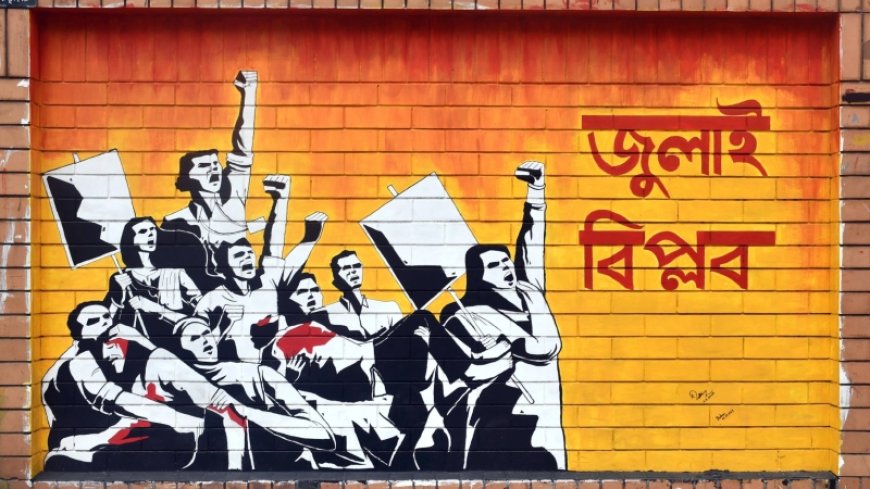
Bangladesh enters July remembering the uprising that changed its political landscape
Bangladesh has entered the month of July by recalling the nationwide movement that began as a student-led protest demanding quota reform in government jobs and, within weeks, evolved into a mass uprising that brought an end to Sheikh Hasina's nearly 16-year rule on August 5, 2024.
August 5 is popularly referred to as "July 36", reflecting the belief that the spirit of July—and the movement it symbolised—continued until Sheikh Hasina stepped down. The movement is widely known as the July Uprising, July Movement or Monsoon Movement.
What started on university campuses as a campaign to restore merit-based recruitment in government jobs soon expanded into a broader anti-government movement. As demonstrations spread across the country, they drew participation from students, teachers, professionals, workers, political activists and people from all walks of life.
The protests gathered momentum in the first week of July after the High Court declared illegal the government's 2018 circular abolishing quotas in first and second-class government jobs, effectively reinstating the previous quota system.
Students argued that the restored quota system undermined merit-based recruitment and demanded a fair and rational reform of the public recruitment process.
Although the movement initially centred on quota reform, the government's forceful response and repeated attacks on protesters by law enforcement agencies and activists of the now-banned Awami League and its affiliated organisations transformed it into a nationwide anti-government campaign.
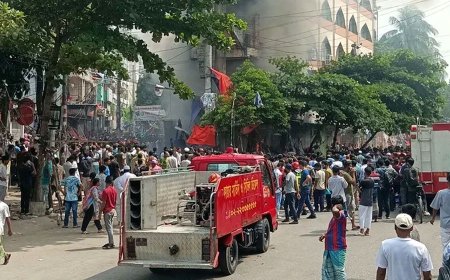
As demonstrations intensified throughout July, security forces and Awami League activists launched crackdowns on protesters from university campuses to major cities, leaving hundreds dead and thousands injured. According to the United Nations, around 1,400 people were killed and nearly 20,000 others were injured in the violence that continued until the government's fall.
Student leaders initially announced a nine-point demand that included accountability for the killings during the protests. However, after several key coordinators were detained and violence escalated, the movement narrowed its focus to a single demand—the resignation of Sheikh Hasina.
On August 3, coordinators of the Anti-Discrimination Student Movement formally announced the one-point demand at a rally at the Central Shaheed Minar. Two days later, following deadly violence across the country on August 3 and 4, they called the "March to Dhaka" programme.
Despite an indefinite curfew and heavy security deployment on the morning of August 5, hundreds of thousands of people marched toward Dhaka from across the country. Protesters gathered at Shahbagh and other key locations in the capital, while similar demonstrations took place nationwide.
As the crowds swelled, Sheikh Hasina resigned as prime minister and left for India with her younger sister, Sheikh Rehana, bringing an end to the Awami League's uninterrupted rule since 2009.
News of her resignation sparked spontaneous celebrations across the country. Thousands of people took to the streets in Dhaka and other cities, while crowds entered Ganabhaban, the prime minister's official residence, and other government premises after security forces withdrew.
The day, however, also witnessed further bloodshed, with casualties reported from different parts of the country as clashes and police firing continued even after Hasina's departure.
The uprising has since been regarded as one of the most significant political developments in Bangladesh's history, reshaping the country's political landscape and ushering in a new chapter in governance.
As the nation marks the beginning of July, political parties, educational institutions and civil society organisations have arranged discussions, exhibitions and memorial programmes to honour those who lost their lives during the movement.
For many Bangladeshis, the opening days of July now symbolise the beginning of a historic struggle that transformed a student movement for quota reform into a nationwide uprising that altered the course of the country's political history.
Marking the start of the month of the July Uprising, Bangladesh Jatiyatabadi Chhatra Dal (JCD) held a candlelight vigil titled "Aloke Aloke Smriti Somojjwal" (Memories Shining in Light) at the Central Shaheed Minar shortly after midnight on Tuesday, paying tribute to those killed during the July-August uprising.
The programme was presided over by JCD Central Committee President Rakibul Islam Rakib and conducted by General Secretary Nasir Uddin Nasir. Hundreds of activists from Dhaka University, Jagannath University, Sher-e-Bangla Agricultural University, Jahangirnagar University and several private universities participated.
BNP Senior Joint Secretary General and the Prime Minister's Political Adviser Ruhul Kabir Rizvi attended the event as the chief guest.
Among others present were Dhaka University JCD President Ganesh Chandra Roy and JCD Central Organising Secretary Amanullah Aman.
What's Your Reaction?