





























































Bank Resolution Act: Controversial provision dropped, former owners barred from reclaiming banks
Bank Resolution Act: Controversial provision dropped, former owners barred from reclaiming banks

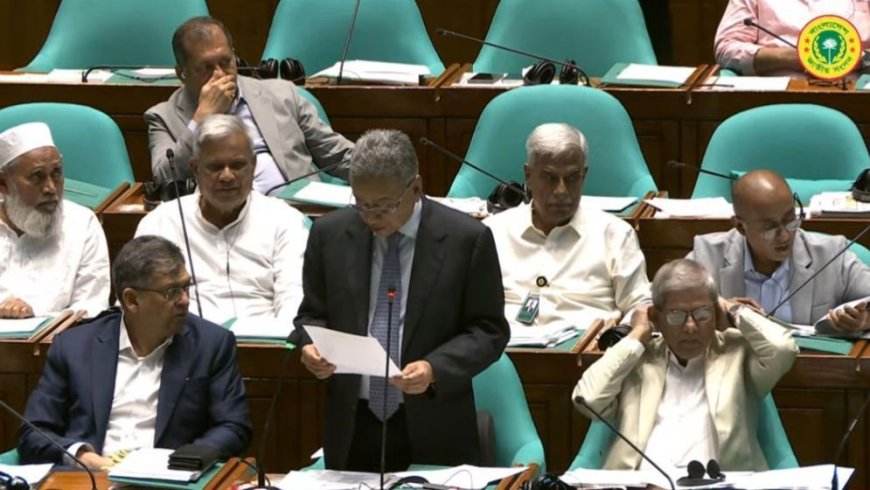
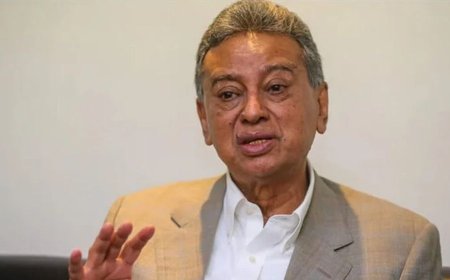
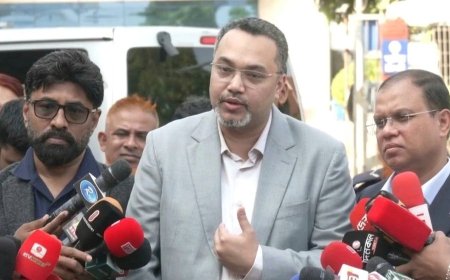
Facing mounting criticism, Finance Minister Amir Khosru Mahmud Chowdhury on Monday announced the repeal of the controversial Section 18A of the Bank Resolution Act, ensuring that former shareholders or owners of banks placed under resolution will no longer be able to regain control of those institutions.
The government also unveiled a phased repayment plan for depositors of the five merged Shariah-based banks.
Speaking during his concluding remarks on the proposed 2026-27 national budget in Parliament, Khosru said the decision to scrap the contentious provision of the Bank Resolution Act, 2026, was taken after consultations with relevant stakeholders.
"The government's position is clear," he said. "Those who looted public assets will receive no concessions, while the interests of depositors will be fully protected."
The BNP government enacted the Bank Resolution Act by converting the Bank Resolution Ordinance, promulgated by the interim government on 10 April, into law. Before the bill was passed in Parliament, lawmakers inserted Section 18A, which allowed former shareholders of a bank placed under resolution to apply to Bangladesh Bank to reacquire its shares, assets and liabilities. The provision also empowered the central bank to extend the same opportunity to any other suitable individual or institution if deemed necessary.
The inclusion of the provision drew sharp criticism from opposition parties, which alleged that it had been introduced to enable controversial business groups, including S Alam Group, to regain control of banks.
Addressing concerns over depositors' funds, the finance minister announced that individual depositors of the five merged Shariah-based banks would initially be allowed to withdraw up to Tk200,000 from their current and savings accounts, with the remaining balances to be repaid in phases.
He added that special humanitarian arrangements had been made for cancer patients, kidney dialysis patients, Hajj savings account holders and customers of deposit pension schemes (DPS).
To encourage greater investment in the capital market, Khosru proposed several amendments to the Finance Bill. The measures include exempting income from zero-coupon bonds from tax, extending tax incentives for listed companies, offering additional tax benefits to firms that conduct all transactions through banking channels, and reducing the tax rate on dividend income. The government also proposed removing the Tk500,000 investment ceiling for tax rebates on investments in mutual funds.
Highlighting efforts to recover illicitly acquired assets, the finance minister said that, as of May, assets worth approximately Tk723.43 billion had been frozen both at home and abroad in connection with 11 priority cases. Bangladesh has also sent 23 Mutual Legal Assistance Requests (MLARs) to authorities in 13 countries to facilitate the recovery of funds allegedly laundered overseas. In addition, the government has initiated the first phase of civil proceedings against six major borrower groups.
Khosru said the government was steering the economy away from debt-driven growth towards an investment-led model. As part of this strategy, it has proposed reducing government borrowing from the banking sector by Tk60 billion in the next fiscal year, while cutting operating expenditure and increasing the share of development spending.
To curb inflation, he said the government would continue reducing source-level taxes on 60 essential commodities, pursue deregulation to improve the ease of doing business, strengthen supply chains and maintain its drive against market manipulation.
"The success of a budget lies not in its announcement but in its implementation," the finance minister said, adding that the government would place particular emphasis on institutional reform, accountability and strengthening implementation capacity.
What's Your Reaction?