
























































A challenging economic road ahead for the new government
♦ Rising concerns over the revenue shortfall ♦ Fresh challenges linked to LDC graduation ♦ Industrial sector weighed down by mounting debt

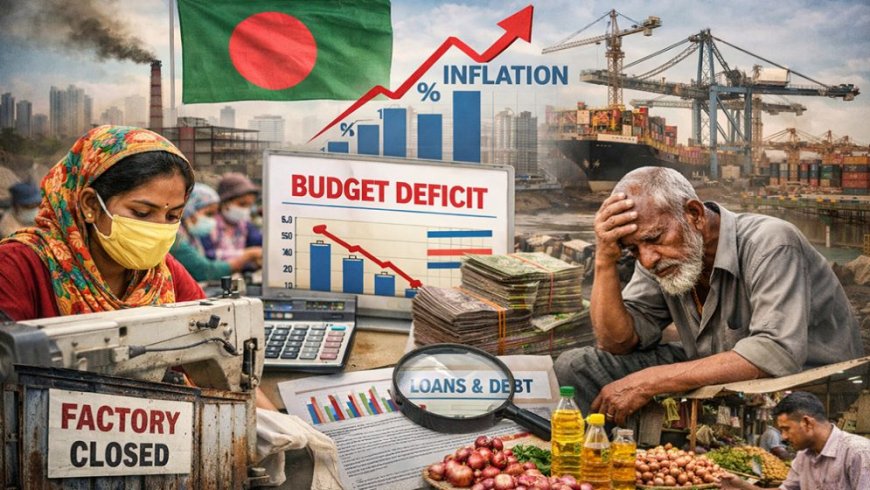
Following the 13th National Parliamentary Election, the most pressing reality confronting the new government as it takes office is an economy under significant strain.
While the overall situation may appear relatively stable on the surface, deep-rooted structural problems have built up beneath it. Nearly every sector is marked by stagnation, uncertainty, and eroding confidence—conditions that are likely to test the capacity of the incoming administration.
Several financial-sector reform initiatives launched during the interim government remain incomplete. Carrying these reforms forward will now fall to the elected government, but the challenge will be formidable. Alongside this, the new leadership must grapple with persistently high inflation, a fragile banking system, revenue shortfalls, weak investment, and growing pressure from rising public expenditure.
Compounding these challenges is the proposed new pay scale for government officials and employees—the first in many years—which recommends substantial increases, including a doubling of basic salaries. Economists caution that such measures could place heavy pressure on public finances and spill over into the private sector.
Dr Fahmida Khatun, executive director of the Centre for Policy Dialogue (CPD), said the most critical issue facing the economy is the sharp decline in investment. “Without investment, job creation stalls, production does not expand, and economic pressure persists over the long term. If policy continuity and good governance are not ensured in the post-election period, restoring investor confidence will be extremely difficult,” she noted.
She further warned that financing for long-term industrial investment is in serious distress. High interest rates and elevated risks have made bank borrowing increasingly difficult for entrepreneurs. “The elected government is assuming office at a time when private investment has almost come to a standstill. Introducing a new public-sector pay scale amid a revenue deficit will be another major challenge. In sum, the new government is inheriting a very difficult economic situation,” she said.
A CPD study also highlights worrying trends in development spending. Implementation of the Annual Development Programme (ADP) has been sluggish in the early months of the current fiscal year, limiting the expected stimulus to economic demand. Delays in development projects are weighing on private-sector activity, while low allocations for education, health, and human resource development risk undermining future productivity.
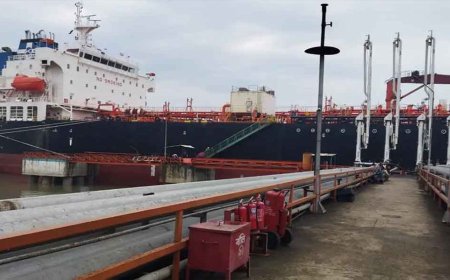
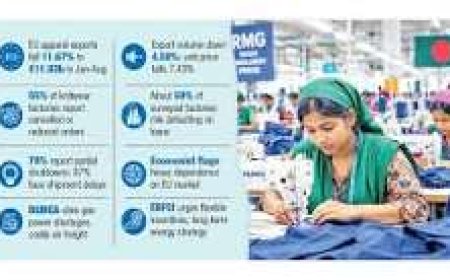
Meanwhile, the prolonged closure of many factories has led to the loss of hundreds of thousands of jobs. With employment growth stagnant, household incomes have failed to rise, intensifying pressure on living standards. These difficulties are further compounded by seasonal stresses linked to Ramadan and Eid-ul-Fitr. One of the new government’s most immediate tasks will be to stabilise the Ramadan market, though analysts stress that price pressures are not merely seasonal. They reflect sustained inflation, weak supply chains, low investment, and shortcomings in market oversight.
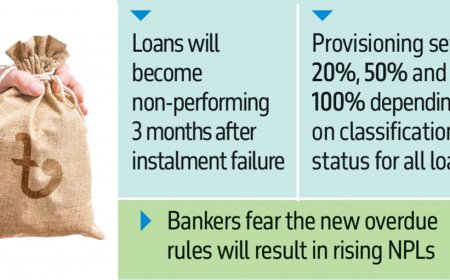
The banking sector presents another serious concern. Despite recent political changes, depositor confidence has yet to fully recover. In many cases, bank lending has become a burden rather than a catalyst for industrial growth. At the same time, increased government borrowing from banks to finance budget deficits is squeezing credit availability for the private sector.
Inflation continues to erode purchasing power. Although food prices have eased somewhat, non-food inflation remains stubbornly high. Dr Khatun described inflation as no longer a temporary phenomenon but a structural problem that cannot be resolved through interest rate hikes alone. She emphasised the need for reforms in supply chains, inventory management, and market monitoring.
Revenue collection will also pose a formidable challenge. The revenue gap has widened sharply in the first half of the fiscal year. Without expanding the tax base, curbing excessive exemptions, and enforcing fiscal discipline, the deficit could deepen further. CPD has warned that increased reliance on bank borrowing to cover shortfalls could further dampen investment prospects.
Adding to these pressures is Bangladesh’s scheduled graduation from Least Developed Country (LDC) status in November. Despite repeated calls from business groups for a 3–5 year postponement, the government has confirmed that graduation will proceed as planned. As preferential benefits from developed countries are phased out, analysts expect additional strains on the economy, increasing the burden on the new administration.
Taken together, the road ahead for the new government is set to be an exceptionally difficult one.
What's Your Reaction?