




























































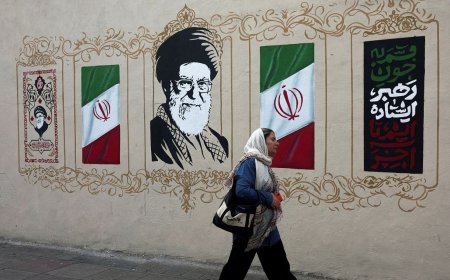


War Inflicts Severe Damage on Middle East Labour Market
War Inflicts Severe Damage on Middle East Labour Market

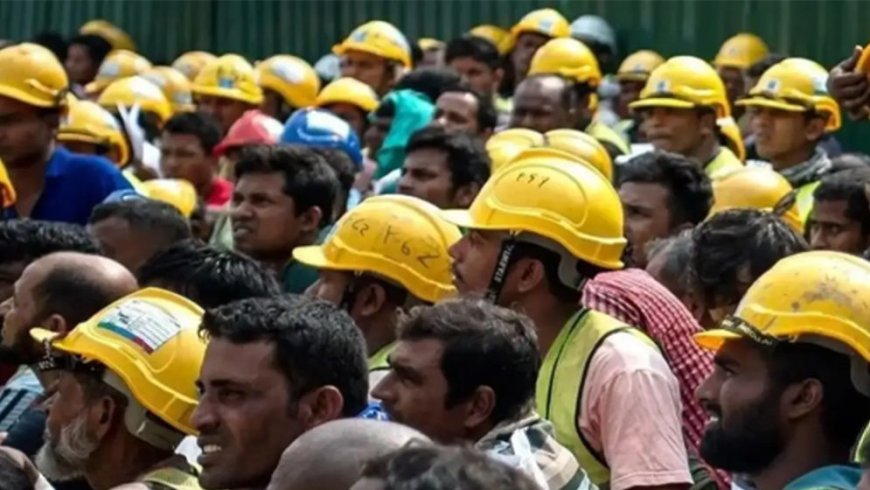
Middle East Conflict Deals Fresh Blow to Bangladesh’s Overseas Labour Market
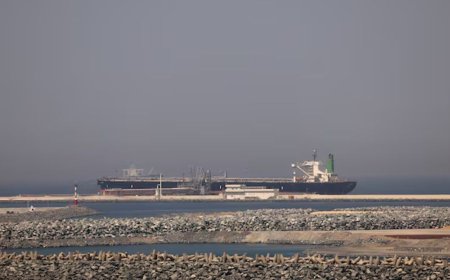
The COVID-19 pandemic delivered the most severe setback to the deployment of Bangladeshi workers to Middle Eastern labour markets. Although overseas employment gradually recovered in the years that followed, the recent conflict involving the United States, Israel and Iran has once again disrupted the region, creating new challenges for Bangladesh’s migrant workforce and remittance earnings.
The impact of the conflict has spread across the Middle East, significantly reducing the demand for foreign workers. As a result, the recruitment of Bangladeshi workers has declined sharply, while many expatriates have lost their jobs and returned home, placing renewed pressure on the country’s overseas employment sector.
According to sector insiders, demand for new workers in key destinations such as Saudi Arabia, Kuwait and Qatar has fallen considerably since tensions escalated in the region on February 28 this year.
Data from the Bureau of Manpower, Employment and Training (BMET) show that 153,636 Bangladeshi workers went abroad between March and May this year, compared with 260,438 during the same period last year. The figures indicate a year-on-year decline of around 41 percent in overseas migration.
Labour market analysts attribute the slowdown to growing uncertainty across the Middle East. Companies operating in infrastructure, tourism, services and trade have become increasingly cautious about hiring new employees, resulting in fewer recruitment approvals.
The conflict has also disrupted air travel across the region. Hundreds of flights have been cancelled, delaying the departure of newly recruited workers. Airfares that previously ranged between Tk50,000 and Tk55,000 have surged to Tk90,000–100,000 or more because of reduced flight availability.
BMET data show that Bangladesh’s overseas labour market remains heavily dependent on the Middle East. Saudi Arabia, Qatar, Kuwait, the United Arab Emirates and Oman continue to be the principal destinations for Bangladeshi workers.
Saudi Arabia remains by far the largest labour market. In 2025, about 752,000 of Bangladesh’s overseas workers were employed in the kingdom. Qatar received 169,000 workers, while Kuwait employed 42,496 Bangladeshis.
Between January 1 and June 5 this year, a total of 314,362 Bangladeshi workers migrated abroad. Of them, 190,072 went to Saudi Arabia, 23,780 to Qatar, 8,753 to Kuwait, 7,353 to Jordan, 7,121 to the United Arab Emirates and 3,091 to Iraq.
The figures reflect the continued concentration of Bangladeshi labour migration in Middle Eastern countries.
Following the pandemic, overseas employment rebounded strongly. In 2022, Bangladesh sent 1,126,368 workers abroad, including 391,302 to Saudi Arabia, 163,021 to Oman, 77,476 to the UAE, 29,009 to Kuwait and 27,663 to Qatar.
The country recorded an all-time high in overseas migration in 2023, when 1,305,453 workers secured jobs abroad. Among them, 497,674 went to Saudi Arabia, 127,883 to Oman, 98,422 to the UAE, 56,148 to Qatar, 36,548 to Kuwait and 8,626 to Jordan.
In 2024, overseas migration declined slightly to 1,010,908 workers. Saudi Arabia received 627,812 workers, followed by Qatar with 74,464, the UAE with 47,158, Kuwait with 33,015, Jordan with 15,410 and Lebanon with 4,230.
Shariful Haque, a Bangladeshi expatriate who operates a restaurant in Dubai, said the regional conflict has directly affected businesses in the UAE. Although his restaurant had been performing well, it was forced to remain closed for an extended period following Iranian attacks.
While the situation has improved and the restaurant has reopened, tourist arrivals remain low and business has yet to recover. As a result, his income has fallen sharply, making it increasingly difficult to support his family in Bangladesh.
Mazharul Bhuiyan, secretary of the Association of Travel Agents of Bangladesh (ATAB), said labour migration to Saudi Arabia has become increasingly difficult because of the conflict.
“Working conditions have become uncertain, and recruitment has slowed considerably,” he said.
According to him, most of the visas currently being issued for Kuwait are old approvals, while the issuance of new visas has nearly stopped. He noted that just as workers and businesses were recovering from the pandemic, the latest conflict emerged, disrupting travel plans through flight cancellations and frequent schedule changes.
He added that airfares have almost doubled, rising from Tk50,000–55,000 to more than Tk90,000–100,000, significantly increasing migration costs.
Bhuiyan also said tourist visas for Oman and Dubai have remained suspended for a long period, while most visa categories in Saudi Arabia, except Umrah visas, are experiencing stagnation. Companies remain reluctant to recruit new workers amid continued uncertainty. Rising fuel costs have further increased airfare prices, dealing a severe blow to travel agencies and the broader travel industry.
Migration expert Asif Munir said Bangladesh’s labour migration strategy remains overly dependent on the Middle East, particularly Saudi Arabia. He argued that the country has failed to systematically diversify its labour markets or establish alternative destinations capable of absorbing workers during periods of crisis.
Although labour market diversification has long been discussed at the policy level, migration continues to rely largely on private recruiting agencies and personal networks, he said.
As a result, Bangladesh remains highly vulnerable whenever geopolitical instability affects the region. Munir warned that concerns over job security and wage payments for migrant workers could eventually affect remittance inflows if the conflict persists.
He stressed the importance of strengthening bilateral labour agreements and expanding technology-based skills training to improve the resilience of the overseas employment sector.
Shariful Islam, head of the BRAC Migration Programme, said Bangladesh must reassess its dependence on low-skilled labour migration and remittance earnings.
Despite sending an estimated 2 to 2.5 million workers to Saudi Arabia over the past five years, annual remittance inflows from the country have fallen to between $3.5 billion and $4 billion, he noted.
He argued that high migration costs have led to substantial capital outflows while exposing workers to exploitation. At the same time, labour shortages have emerged in migrant-prone districts such as Tangail, Cumilla and Munshiganj, pushing up agricultural production costs.
Islam also pointed to the growing number of migrants from districts such as Madaripur who spend large sums attempting to reach Europe through Libya, often ending up destitute despite the financial sacrifices made by their families.
He said the government should focus less on the number of workers sent abroad and more on the quality of their skills and their contribution to remittance earnings.
According to him, Bangladesh has a demographic dividend window of only another 20 to 25 years before its population begins to age. He therefore called for mandatory technical and vocational education through coordinated efforts between the education and expatriate welfare ministries.
Islam also urged the government to explore emerging labour markets, including reconstruction projects in conflict-affected countries such as Iran, as part of a broader strategy to reduce dependence on traditional Middle Eastern destinations.
Meanwhile, the conflict has already forced a number of Bangladeshi workers to return home. Government data show that 201 Bangladeshis have returned from Iran with official assistance this year, while another 282 workers have returned from Bahrain.
What's Your Reaction?