
















































Salahuddin calls for stronger global pressure to resolve the Rohingya crisis
The government is adopting a comprehensive, coordinated approach involving all government agencies.

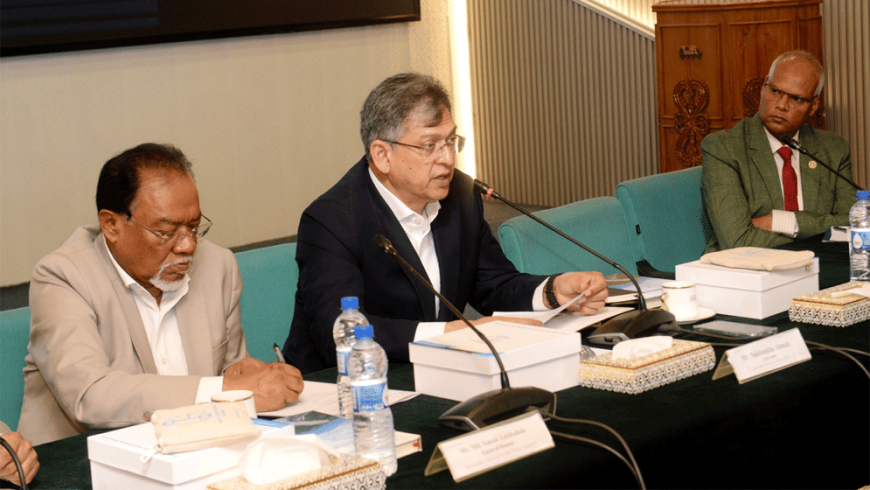
Home Minister Salahuddin Ahmed on Sunday called on the international community to intensify diplomatic pressure and maintain sustained engagement to resolve the Rohingya crisis and facilitate the refugees’ safe, dignified and permanent return to Myanmar.
“The crisis must remain high on the international agenda and should not be overshadowed by other global conflicts or political crises,” he said while addressing a roundtable titled “The Rohingya Crisis: Emerging Challenges & Reframing Response Strategies,” according to a press release.
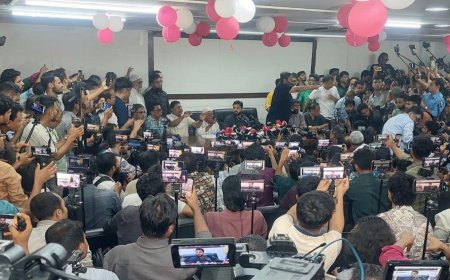
The Institute for Global Cooperation Foundation (IGCF) organised the discussion at the auditorium of the Bangladesh Institute of International and Strategic Studies (BIISS) in Dhaka.
Salahuddin stressed that the Rohingya issue must remain on the international radar of the United Nations and should not be sidelined by other global conflicts or crises.
He said a lasting solution would require stronger cooperation from the international community and international organisations, particularly the United Nations and influential countries.
The home minister also urged international human rights organisations, the UN Refugee Agency (UNHCR) and other relevant stakeholders to take a more active role in addressing the crisis.
“Our main goal is one and only one—to ensure that nearly 15 lakh, or 12 lakh according to UNHCR, forcibly displaced Myanmar nationals (FDMNs) sheltering in Bangladesh can return to their own country with full dignity and security,” he said.
He emphasised that continued international support and a strong political role from major countries were essential to achieving that objective.
Bangladesh has hosted more than 15 lakh displaced Rohingyas for nearly nine years, providing shelter, food, land, healthcare and basic protection on humanitarian grounds, the minister said.
However, the prolonged crisis has increasingly created security and social challenges, he added.
According to Salahuddin, criminal activities, arms and drug smuggling, human trafficking, gender-based violence and the activities of armed groups have increased in the camps over the years, posing serious threats to Bangladesh’s internal security.
Local communities living near the camps and the surrounding environment have also come under growing pressure, he said.
Against this backdrop, stronger security measures—including fencing the camps and introducing a regulated movement system—have become necessary to curb crime and protect both Rohingya refugees and local residents, the minister said.
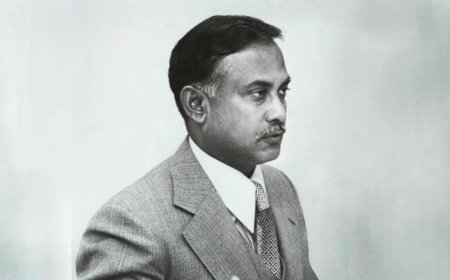
Salahuddin recalled Bangladesh’s earlier efforts to repatriate Rohingyas to Myanmar, saying the country successfully carried out repatriation in 1978 under then-president Ziaur Rahman and again in 1992 through the diplomatic initiative of then-prime minister Begum Khaleda Zia.
“Building on those successful experiences, the present government is determined to achieve 100 percent successful repatriation under the capable and visionary leadership of Prime Minister Tarique Rahman,” he said.
He said the government had already formed a National Strategy Formulation Committee on Rohingya Affairs under the leadership of Prime Minister Tarique Rahman.
A separate high-level national committee, headed by the home minister, is also working on law enforcement, border management and overall coordination of the Rohingya issue, he said.
The government is pursuing a comprehensive “whole-of-government” approach involving the civil administration, security and defence agencies, he added.
The minister warned that humanitarian assistance without a clear and credible repatriation plan could ultimately weaken international efforts to pursue a political solution.
“We need to move beyond emergency relief assistance and quickly adopt a ‘transitional strategy’,” he said.
He explained that the strategy should focus on creating a safe and suitable environment in Myanmar’s Rakhine State to enable Rohingyas to return to their homeland.
Salahuddin expressed optimism that sustained international engagement, national unity and a strong security framework would help Bangladesh ensure the dignified and permanent return of Rohingyas to Myanmar.
IGCF Chief Executive Officer Chowdhury Adnan Rahman delivered the welcome address, while Professor Dr Bulbul Siddiqi of the Department of Political Science and Sociology at North South University moderated the discussion.
Prime Minister’s Public Administration Adviser Md Ismail Zabihullah attended the event as the guest of honour and underscored the importance of administrative coordination in addressing the Rohingya crisis.
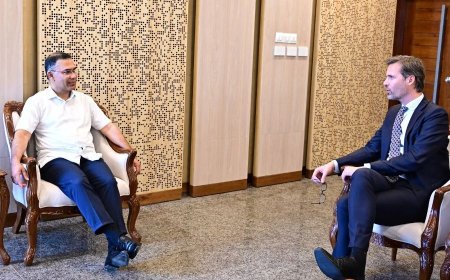
UNHCR Representative in Bangladesh Ivo Freijsen, BIISS Director General SM Ridwanur Rahman, Refugee Relief and Repatriation Commissioner (RRRC) Mohammed Mizanur Rahman, Refugee Cell Chief and Joint Secretary of the Ministry of Disaster Management and Relief Mohammad Nazmul Abedin, Dhaka University Professor Dr Sazzad Siddiqi, chairman of the Department of Peace and Conflict Studies, Professor Dr Niloy Ranjan Biswas of the Department of International Relations at IUB, Professor Dr Kazi Mahmudul Rahman, Jahangirnagar University Professor Dr Nurul Huda Sakib, ULAB Assistant Professor Avanti Harun, ActionAid Bangladesh Country Director Farah Kabir and Prothom Alo Special Correspondent Rahid Ezaz, among others, participated in the discussion.
What's Your Reaction?