















































Tarique Rahman’s New Political Approach Is Reshaping Bangladesh
Tarique Rahman’s New Political Approach Is Reshaping Bangladesh


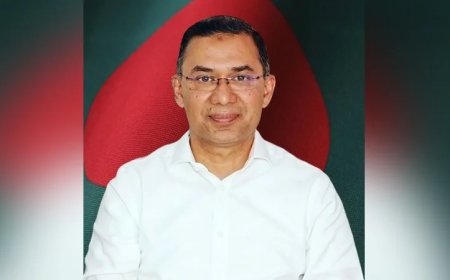
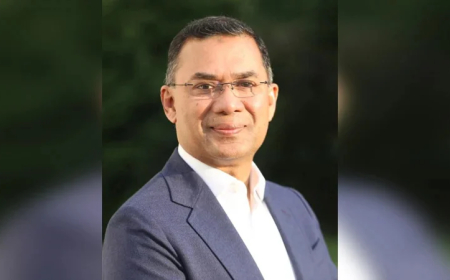
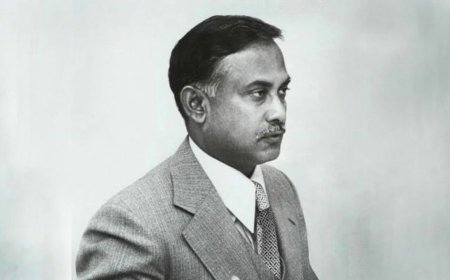
By taking disciplinary action against a state minister and a member of parliament from his own party within less than a month, Prime Minister Tarique Rahman has established a significant precedent in Bangladeshi politics. His actions suggest that his promise to introduce a new political culture is more than rhetoric; he intends to put that commitment into practice. These decisions send a clear message not only to BNP leaders and activists but also to the wider political community. They reflect the principle famously articulated by martyred President Ziaur Rahman: the party is greater than the individual, and the country is greater than the party. Tarique Rahman has demonstrated his willingness to hold members of his own party accountable in the interests of the nation and its people. Such an approach remains uncommon in Bangladesh's political landscape.
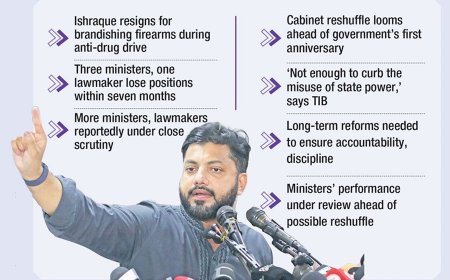
Ishraque Hossain is regarded as one of the BNP's promising young leaders. The son of late freedom fighter Sadeq Hossain Khoka, he enjoys considerable popularity in his constituency, much like his father did. His contribution to the prolonged movement against autocratic rule is widely recognised, while his determination and activism on the streets inspired many party supporters. A leader with such a background can be a valuable asset to any political organisation. Nevertheless, Tarique Rahman has made it clear that popularity, seniority or political influence cannot place anyone above the law. His decision reinforces a fundamental message: the interests of Bangladesh must come first.
The resignation of female MP Ferdousi Ahmed Misti, followed by Ishraque Hossain's removal from his responsibilities as state minister on Monday, could mark the beginning of a new phase in the country's political development. These incidents may become important milestones in efforts to transform Bangladesh's political culture.
Ferdousi Ahmed Misti faced allegations related to an attack, looting and vandalism at the Radda MCH-FP Centre in Mirpur, Dhaka. Following instructions from BNP chief and Prime Minister Tarique Rahman, she resigned from her parliamentary position on October 1. At the time, some observers may have considered the decision relatively straightforward because an MP does not occupy a central executive position in the cabinet.
The decision involving Ishraque Hossain, however, carried greater political weight. Asking a serving state minister to step down is a considerably more difficult undertaking, particularly when the individual enjoys a strong political following. The move can therefore be viewed as a bold decision. Previous governments have frequently faced allegations of overlooking serious misconduct by their own ministers and lawmakers. Tarique Rahman's approach appears to signal a departure from that tradition, with greater emphasis on accountability and good governance rather than political convenience.
The incident involving Ishraque Hossain highlights an important distinction between the objective of an action and the methods used to achieve it. Although his approach contained serious procedural and legal concerns, the issue he sought to address—drug abuse—has become a major national challenge. The spread of narcotics threatens young people, damages families and places the country's future at risk. An effective and sustained campaign against drugs is therefore essential to protecting the next generation.
In that sense, Ishraque's intention to combat narcotics may have been commendable. However, a worthwhile objective does not automatically justify the methods employed. His actions demonstrated how enthusiasm and a desire to tackle a serious problem can lead to inappropriate decisions when established legal procedures are not followed.
During an anti-drug operation in the Gendaria area of Wari, Ishraque Hossain, then state minister for Liberation War Affairs, was seen carrying a firearm while participating in efforts to apprehend several individuals. The incident reportedly occurred on Saturday afternoon near the Dayaganj Gumtighar railway crossing, close to Gendaria Railway Station.
A video shared on Ishraque's Facebook page showed him getting out of a vehicle and pointing a firearm while directing others to catch several people. Those accompanying him moved to apprehend the individuals. At one point, a person could be heard threatening to shoot someone, while a bodyguard was seen kicking a young man. The footage raised questions about the legality and appropriateness of the operation.
Bangladesh's legal framework clearly distinguishes between the responsibilities of government officials and the powers exercised by law enforcement agencies. Under the Constitution, ministers and state ministers belong to the executive branch, with their responsibilities governed by constitutional provisions, the Rules of Business and relevant legislation.
Article 55 of the Constitution addresses the exercise of executive power and the conduct of government business, while the Rules of Business specify the responsibilities assigned to different ministries and divisions. However, holding ministerial office does not automatically grant an individual the authority to conduct police operations, search people, detain suspects or make arrests. Such powers must be supported by specific legal provisions.
The Narcotics Control Act, 2018, identifies the officers authorised to carry out anti-narcotics enforcement activities. Section 21 addresses the seizure of narcotics in public places or from moving vehicles, as well as detention and arrest under specified circumstances. Section 23 provides certain authorised officers with powers to conduct searches and make arrests without warrants, subject to the conditions established by law. These include designated officers of the Department of Narcotics Control, police officers of the rank of sub-inspector or above, and specified officers of other authorised forces.
The legislation does not grant ministers, state ministers or members of parliament independent enforcement powers simply because they hold public office. Consequently, participation in an anti-drug operation must remain within the limits of the law, regardless of an individual's political position or official status.
The rules governing firearms also require careful consideration. Possessing a valid firearms licence is not the same as having unrestricted permission to display or use a weapon in public.
Clause 25 of the Firearms Licensing, Renewal and Usage Policy, 2025, issued by the Ministry of Home Affairs on July 13, 2025, sets out conditions governing the carrying and use of firearms. Sub-clause 25(a) allows individuals to carry or use weapons covered by their licences for self-defence, while prohibiting their display in a manner that causes fear or distress to others. Sub-clause 25(b) addresses restrictions on the public display of firearms by security guards who are not in uniform.
The underlying principle is straightforward: a firearms licence does not provide unlimited authority to brandish a weapon, intimidate members of the public or assume the responsibilities of law enforcement officers. Self-defence and the use of a firearm to threaten or assist in apprehending another person are legally distinct matters.
Ishraque Hossain's actions may have stemmed from youthful enthusiasm and a determination to confront the drug problem. Nevertheless, the incident quickly became a subject of political debate, with some attempting to shift attention away from the central issue. Prime Minister Tarique Rahman's decision to take action prevented the controversy from being reduced to a partisan argument.
Bangladesh has a long history of allegations involving misconduct by ministers and members of parliament. Yet successive governments have often struggled to hold their own members accountable, particularly when political interests are at stake. A culture of denial has consequently become deeply embedded in the country's political environment.
For years, some political leaders have appeared to operate under the assumption that admitting wrongdoing by members of their own parties would undermine public confidence in their governments. In practice, however, ignoring misconduct can have even more damaging consequences. Citizens are generally aware of the behaviour of their political representatives, and attempts to conceal or dismiss wrongdoing can further weaken trust in those who govern.
When political power is perceived as a means of escaping legal consequences, allegations of corruption, intimidation, violence and extortion become particularly damaging to public confidence. Such perceptions harm not only the party in power but also the credibility of the political system as a whole.
The failure to address misconduct within political parties has contributed to widespread public frustration and scepticism. Without meaningful accountability, it becomes difficult to persuade citizens that political leadership is genuinely committed to justice, democratic values and the rule of law.
Since becoming prime minister, Tarique Rahman has taken steps that suggest an effort to challenge this established pattern. The actions involving Ferdousi Ahmed Misti and Ishraque Hossain have reinforced the message that party affiliation should not provide protection from accountability. By taking action against figures from within his own political organisation, he has sought to demonstrate that disciplinary standards must apply to the ruling party as well as to its opponents.
Whether this approach develops into lasting institutional reform will depend on its consistent application. Individual decisions can establish an important precedent, but transforming political culture requires transparent procedures, impartial investigations and equal treatment under the law. Accountability must extend beyond a handful of high-profile cases if it is to produce a durable change in public life.
Nevertheless, the recent developments represent a potentially significant departure from the political practices that have undermined public trust for decades. They offer an opportunity to establish a political environment in which misconduct carries consequences and public office is treated as a responsibility rather than a privilege.
Tarique Rahman's challenge is now to turn these early signals into a consistent governing principle. If his administration continues to prioritise accountability, institutional integrity and the rule of law over partisan considerations, it could help strengthen democratic institutions and restore public confidence in politics.
For Bangladesh, the significance of these decisions extends beyond the individuals involved. They raise a broader question about whether political leaders are prepared to apply the same standards to their own supporters that they demand of others. A credible democracy requires an affirmative answer.
Tarique Rahman's recent actions have placed that principle at the centre of the political debate. If sustained through transparent and impartial governance, this approach could contribute to a meaningful transformation of Bangladesh's political culture and help establish a new direction for its democracy.
What's Your Reaction?