





























































History Repeats Itself: Lessons for Bangladesh from Pakistan’s Past
History repeats itself — but when it does, it rarely does so loudly. It whispers in patterns that only the attentive can hear.

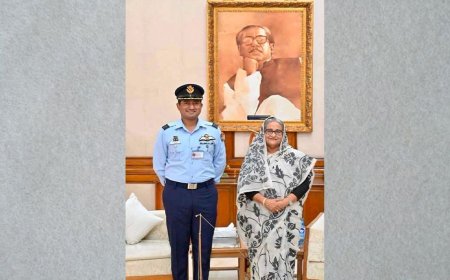
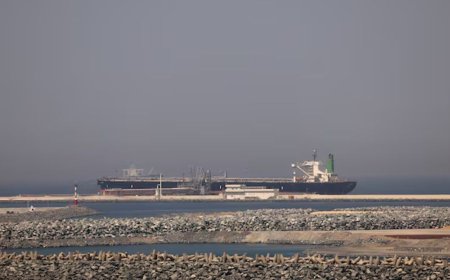
The ongoing visit of the Pakistan Navy Chief to Bangladesh is one such whisper — a reminder that when nations ignore the lessons of history, mistakes return in familiar forms, often leading to strategic blunders and geopolitical catastrophes.
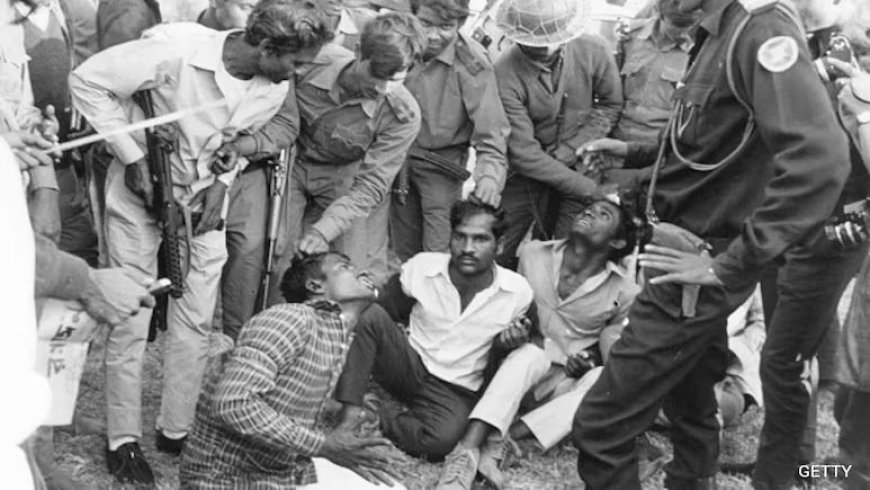
Pakistan’s recent behaviour — both at home and abroad — carries uncomfortable echoes of the past. The parallels with the events that led to the atrocities in the then East Pakistan are hard to miss. The killings, rapes, and forced displacements of 1971 were not sudden eruptions of violence; they were symptoms of deeper arrogance and denial by an establishment that refused to listen to its own people. Those same patterns — of suppression, misplaced confidence, and external manipulation — seem to be resurfacing in Pakistan today. And that is precisely why this visit should worry Bangladesh.
The Parallels Between Then and Now
The Pakistan of the early 1970s and the Pakistan of today share unsettling similarities. Then, as now, the country was under the grip of a hybrid regime — a structure without a genuine popular mandate (martial law was declared openly then, whereas it exists in all but name, now). The most popular leader was imprisoned then (Sheikh Mujibur Rahman) and now (Imran Khan). Both were branded “traitors” by those in power for challenging military dominance.
In 1971, the issue of insurgency was prominent in East Pakistan; today, insurgencies simmer in Balochistan and Khyber Pakhtunkhwa. Pakistan’s military establishment, which once crushed dissent in the East, now faces unrest in its western provinces. The tool of “proxy war” in Kashmir, however, remains unchanged.
The dependence of Pakistan’s leadership on U.S. support against India is another striking constant. President Yahya Khan leaned heavily on President Nixon, then and now, General Asim Munir and the ruling elite look towards Washington once again, hoping for favour and leverage from Trump adminsitration. Even the atmosphere between India and Pakistan reflects eerie continuity — the suspension of civil aviation rights then, and again now; the halting of port calls by flagged vessels.
Back then, Pakistan accused India of aiding “Bengali separatists”, now, it blames India for unrest in Balochistan and Khyber Pakhtunkhwa, calling them “Indian proxies.” The sporting world too mirrors this political chill. Cricket, once a bridge, has again become a battlefield of grudges — reluctant fixtures forced by ICC obligations, devoid of the camaraderie that once defined Indo-Pak encounters.
Economically, Pakistan stands where it stood half a century ago — caught between rising military expenditure, internal instability, and a collapsing financial system. Frequent bailouts from the IMF are the new face of an old dependency. Then, as now, politics in Pakistan seems trapped in a cycle of denial and decay.
Bangladesh’s Painful Memory and Pakistan’s Amnesia
The visit of Pakistan’s naval chief to Bangladesh might seem, on the surface, like a routine diplomatic courtesy. But for those who remember 1971, it carries emotional weight. It reopens wounds that never fully healed — wounds of betrayal, broken promises, and a painful journey to freedom.
Back then, the people of East Pakistan demanded nothing more than their fair share of political and economic rights. The response from West Pakistan was repression. Instead of dialogue, there was brutality. Millions were displaced, hundreds of thousands lost their lives, and countless others endured unspeakable atrocities.
Despite this, Pakistan refused to recognise Bangladesh until 1974. And even today, it has not offered a full and formal apology for the genocide of 1971. The absence of such acknowledgment keeps the pain alive. The memory of that betrayal remains embedded in Bangladesh’s national consciousness.
To welcome a high-ranking Pakistani military delegation, especially one led by the Navy Chief, without visible safeguards or clear strategic rationale, risks sending the wrong signal — both domestically and internationally. It may be read as a softening of Bangladesh’s historical awareness or an opening for Pakistan to revive old networks under the guise of goodwill.
Recent reports suggest that Pakistan’s intelligence agency, the ISI, has been trying to rebuild its footprint in Bangladesh — possibly to monitor India’s eastern frontier and maritime activity in the Bay of Bengal. These reports may need verification, but they serve as a timely reminder that strategic manoeuvres in this region are rarely innocent.
Meanwhile, Pakistan faces growing dissent within its diaspora. A large section of overseas Pakistanis — particularly in the U.S. and Europe — have formed pressure groups demanding the restoration of real democracy. Ironically, while Islamabad expects China’s support for its proxy war policies, Beijing itself has grown wary. China has not forgotten Pakistan’s history of mistrust and opportunism, and it watches Islamabad’s renewed outreach to Washington with quiet caution.
Bangladesh: From Survival to Strength
In stark contrast, Bangladesh’s journey since 1971 has been one of remarkable transformation. From a war-ravaged land to one of South Asia’s fastest-growing economies, it has demonstrated resilience, pragmatism, and self-belief. But progress brings its own risks. Strategic naivety can undo decades of achievement.
Bangladesh’s growth story has been intertwined with India’s partnership — through rail, road, energy, and waterway connectivity projects. These collaborations are not acts of charity but of shared purpose. When India and Bangladesh prosper together, the stability of the entire region is strengthened. Their relationship stands not on convenience, but on history, trust, and mutual respect.
Allowing a country with Bangladesh’s traumatic past with Pakistan to re-enter its military and strategic space is neither necessary nor wise. Diplomatic engagement can continue at the civilian level, but military-level visits — particularly by Pakistan’s defence leadership — reopen historical insecurities and invite external interference. For Dhaka, remembering 1971 is not an act of hostility, it is an act of self-preservation.
Trust must always walk hand in hand with caution. When engaging with countries that once undermined its sovereignty, Bangladesh must set firm boundaries — especially in defence, intelligence, and maritime affairs. Diplomatic courtesies should never become doorways to strategic compromise.
The Path Forward
Bangladesh today stands tall — respected, economically strong, and strategically vital in the Indian Ocean region. Yet, confidence must never turn into complacency. The visit of the Pakistan Navy Chief is not merely undesirable — it is strategically risky. It has the potential to disturb Dhaka’s delicate balance of relations and could invite complications in its trusted regional partnerships.
Dhaka should therefore refrain from extending its military diplomacy toward Pakistan until there is visible change in Pakistan’s political and moral orientation — including acknowledgment of 1971’s atrocities. At the same time, Bangladesh should deepen its cooperation with India in maritime security, intelligence sharing, and regional connectivity. India remains Bangladesh’s most natural partner — geographically, economically, and historically.
The story of 1971 was not just one of liberation, but of awakening — a reminder that freedom comes at a cost, and that trust misplaced can turn fatal. The echoes of that year remind us that while nations can forgive, they must never forget.
Conclusion: The Echo of Caution
As Bangladesh charts its course in a complex regional landscape, it must remember that history is not merely a record of the past; it is a guide to the future. The patterns of 1971 — of denial, deception, and misplaced trust — should serve as a warning.
This visit, no matter how symbolic it may appear, carries risks that far outweigh its diplomatic value. Bangladesh gains little from hosting Pakistan’s military leadership, but risks much if it opens even a small space for old influences to re-enter.
Diplomacy without discernment can be dangerous. The friendship Bangladesh nurtures today will shape the peace it enjoys tomorrow. In its quest for progress, Bangladesh must continue to build bridges — but with eyes wide open and memory intact.
Because when history whispers, the wise do not just listen — they act.
What's Your Reaction?