














































































BB launches pilot framework for digital processing of trade documents
BB launches pilot framework for digital processing of trade documents

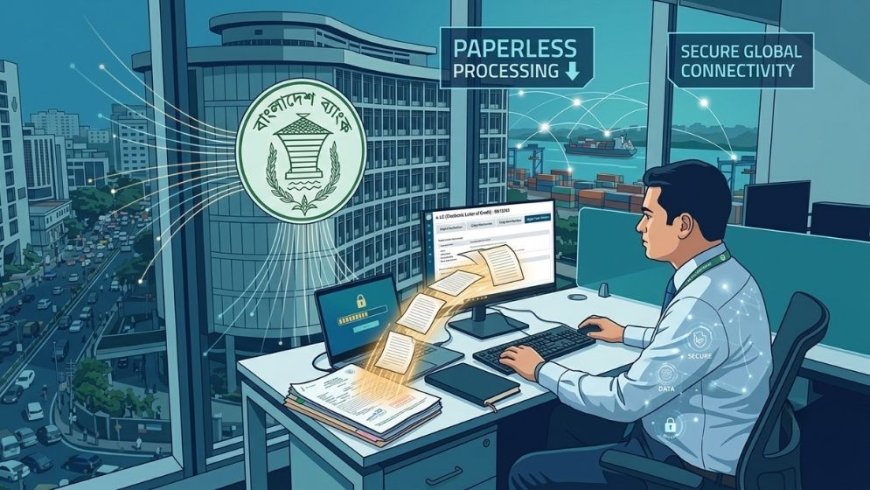
Bangladesh Bank (BB) has launched a pilot framework for the digital processing of trade documents for export and import transactions, marking a major step towards modernising the country's cross-border trade and trade finance systems.
In a circular issued on Wednesday, the central bank's Foreign Exchange Policy Department outlined the framework, which is designed to enhance efficiency, transparency and operational resilience by gradually replacing paper-based trade documentation with secure electronic processes.
The pilot programme will initially cover export and import transactions conducted through documentary collections and letters of credit (LCs) across approved trade corridors.
It will apply to transactions governed by internationally recognised rules, including the Uniform Rules for Collections (URC), Electronic Uniform Rules for Collections (eURC), Uniform Customs and Practice for Documentary Credits (UCP), and Electronic Uniform Customs and Practice (eUCP).
The framework also enables the use of Electronic Transferable Records (ETRs), allowing trade documents to be created, transferred and managed digitally while facilitating trade finance activities involving electronic documentation within approved pilot arrangements.
According to the circular, the framework is based on five core principles: interoperability across different systems, technology neutrality, decentralised verification of document authenticity through cryptographic methods, protection of data privacy, and legal equivalence between electronic and paper-based trade documents.
Authorised Dealer (AD) banks seeking to join the pilot programme must first obtain Bangladesh Bank's "concurrence in principle" by submitting details of the proposed trade corridors, counterparty institutions, transaction types and risk management arrangements.
The framework permits participating banks to process electronic commercial invoices, transport documents—including electronic bills of lading—and bills of exchange through secure digital platforms using digital signatures and authenticated interbank messaging.
To preserve the integrity of electronic trade documents, participating institutions will be required to ensure the uniqueness of electronic records, prevent unauthorised modifications, and maintain secure transmission through encryption, time-stamping and tamper-proof audit trails.
Bangladesh Bank said the pilot programme will be rolled out in phases across approved trade corridors. A broader implementation of the digital trade document system will depend on the successful completion of the pilot phase and subsequent regulatory evaluations.
The initiative builds on an earlier circular issued in January this year that permitted the secure electronic submission of export documents, underscoring the central bank's ongoing efforts to strengthen Bangladesh's digital trade ecosystem and make international trade more efficient.
What's Your Reaction?