



















































Bangladesh Must Deepen Economic Integration with Emerging Asia: Rehman Sobhan
Bangladesh Must Deepen Economic Integration with Emerging Asia: Rehman Sobhan

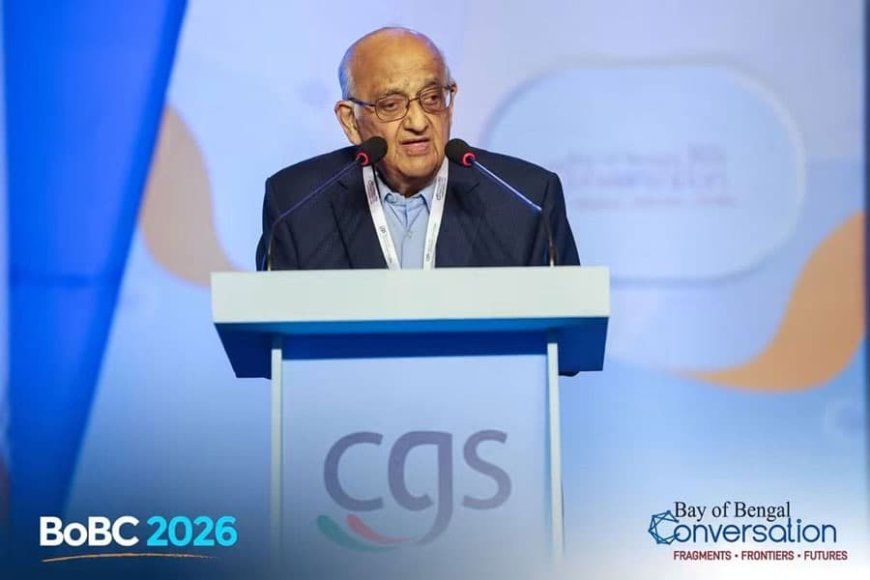
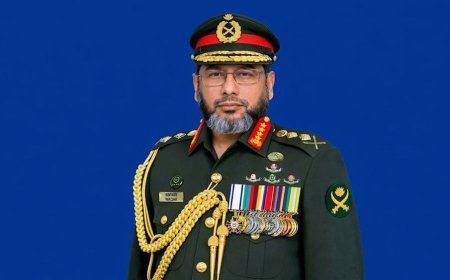
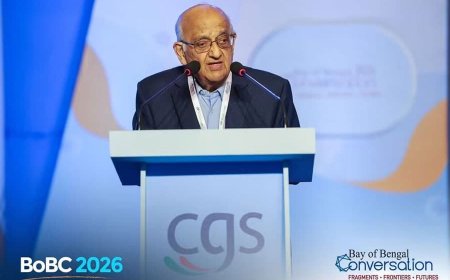
Chairman of the Centre for Policy Dialogue (CPD) Prof Rehman Sobhan has said Bangladesh must adapt to the changing global economic order by prioritising its economic interests and strengthening its integration with emerging Asian markets and value chains.
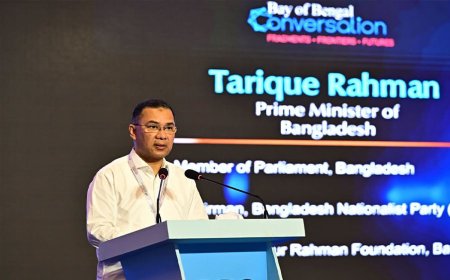
Speaking at the opening session of the three-day Bay of Bengal Conversation 2026 in Dhaka on Saturday, Sobhan said Bangladesh, as a relatively small player in the global system, had the flexibility to pursue strategies that best serve its economic interests.
Addressing a session titled “New International Economic Disorder: Implications for Bangladesh”, he stressed the need to expand Bangladesh’s value-chain linkages globally, particularly across Asia.
Sobhan noted that Bangladesh remains dependent on a limited number of export markets, while many of its major import sources and increasingly its sources of capital are located within Asia.
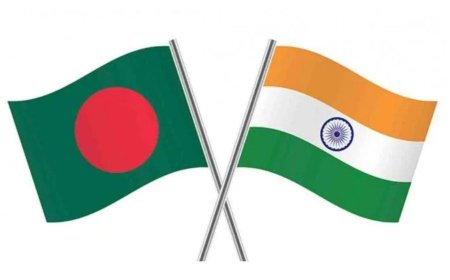
He said Bangladesh’s geographical position between China and India—two of Asia’s largest economies—offers significant economic opportunities that remain underutilised.
“China will be the largest economy in another decade or so, while India will become the third largest,” he said, adding that Bangladesh had not yet fully leveraged its strategic position between the two economic powers.
Although Bangladesh has incorporated parts of its manufacturing process into the value chains of China and India, Sobhan said it had yet to sufficiently connect its export sector with the rapidly expanding consumer markets of the two countries.
He identified strategic planning and implementation capacity as major weaknesses, saying many ideas for diversifying Bangladesh’s economic linkages remained largely on paper.
Strategic Economic Location
Sobhan said Bangladesh’s key strategic advantage lies in its economic geography, particularly its potential for land connectivity.
He argued that the country’s strategic importance extends beyond the Bay of Bengal, with its land routes offering opportunities to connect Southeast Asia, South Asia, West Asia and eventually Europe.
He cited the Padma and Jamuna bridges as important components of this connectivity and recalled the Bangladesh-China-India-Myanmar (BCIM) initiative, which he said was designed to promote greater regional economic integration.
“I was one of the founders of the BCIM, and we know how we actually worked on this,” he said.
India-China Relations
Sobhan identified relations between India and China as one of the major factors shaping Asia’s economic future.
While acknowledging tensions between the two countries, he noted that China remains one of India’s major trading partners, indicating the strength of their economic relationship.
He said improved India-China relations could create additional opportunities for Bangladesh as the regional economic order evolves.
According to Sobhan, greater cooperation between the two Asian powers could contribute to a more balanced global economic system by allowing countries in the region to benefit from Asia’s markets, technology and resources.
He said the shifting balance of global economic power had triggered responses from traditional economic powers, contributing to greater uncertainty in the international system, particularly for developing countries such as Bangladesh.
“In such circumstances, our policymakers may need to explore more creative coping strategies which can strengthen resilience to navigate across this uncertain terrain and guide us in repositioning ourselves within the global economic landscape,” he said.
Asia’s Growing Economic Influence
Sobhan said the world is witnessing the emergence of a new international economic order as economic power and influence increasingly shift towards Asia.
The growing competitiveness of Asian economies, particularly in manufacturing, has generated significant economic surpluses and created alternative sources of aid, foreign direct investment and capital for developing countries, he said.
He said this shift had reduced the traditional dependence of developing countries on Western sources of finance and resources while creating a more Asia-centred economic space.
According to Sobhan, Asian economies are increasingly trading with one another, making the region a major centre of global commerce.
He also highlighted the region’s technological advances, noting that China has emerged as a global leader in areas such as artificial intelligence patents and research publications.
Economic ties between Asia and other developing regions, including South Asia, Southeast Asia, Latin America and sub-Saharan Africa, are also expanding, he said.
Sobhan further noted that China has become a major source of official capital flows to developing countries through aid, loans and other forms of credit—an area historically dominated by the United States and Western Europe.
‘Weaponisation of Economics’
Sobhan said the emergence of a more balanced global economic order has been complicated by growing intervention in international markets by developed economies.
He described the trend as the “weaponisation of economics”, arguing that the United States and, to a lesser extent, European countries are increasingly using market access as a strategic tool through tariffs and other economic measures.
He said countries are sometimes being pressured to purchase goods from particular markets or invest in specific countries for strategic reasons rather than purely economic ones.
According to Sobhan, such policies represent a departure from the broader process of globalisation that helped shape the current international economic system.
He questioned the long-term sustainability of using tariff pressure to compel countries to trade or invest, arguing that competitive markets should ordinarily provide the primary incentive.
Sobhan also criticised the use of economic measures to pursue political objectives and raised concerns over growing protectionism aimed at reviving declining industrial sectors in advanced economies.
He warned that these developments are occurring alongside the weakening of international institutions responsible for maintaining a rules-based global economic system.
“The WTO, for example, has been marginalised and many of the accepted ground rules of that organisation are being perpetually violated,” he said.
Asia as the Future Economic Centre
Sobhan predicted that Asia would increasingly become “the centre of the economic universe”, with China eventually overtaking the United States as the world’s dominant economy.
He said China had already surpassed the US in purchasing-power terms and would eventually do so in nominal economic output as well.
China, he added, is also likely to become an increasingly important source of global capital and play a major role in developing international value chains.
For Bangladesh, Sobhan said, the changing global economic landscape presents an opportunity to strengthen economic integration with Asia and build greater resilience by diversifying markets, investment sources and value-chain connections.
What's Your Reaction?