






































Amid Bloodshed in Congo, Bangladesh Army Upholds the Banner of Peace
Amid Bloodshed in Congo, Bangladesh Army Upholds the Banner of Peace

Bloodshed in Congo, Bangladesh Army Raises the Flag of Peace
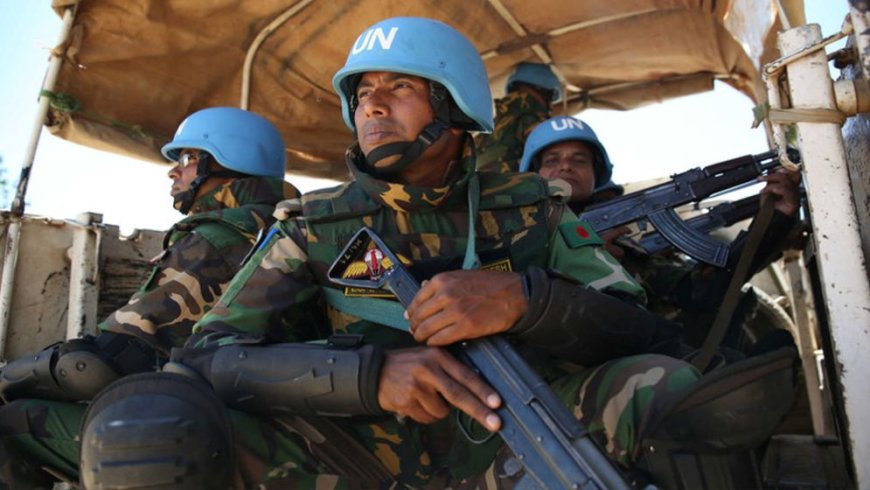
The Bangladesh Armed Forces have emerged as one of the United Nations' most trusted partners in restoring peace in conflict-ridden regions across the globe. Through professionalism, courage and sacrifice in some of the world's most dangerous theatres—including the Democratic Republic of the Congo (DR Congo), Mali, Sudan and Somalia—Bangladesh has become one of the leading contributors to UN peacekeeping operations since joining the mission in 1988.
Every year, 29 May is observed as the International Day of United Nations Peacekeepers, honouring those who serve under the UN flag and commemorating those who have made the ultimate sacrifice in the cause of peace.
In the mineral-rich but conflict-scarred DR Congo, Bangladeshi peacekeepers have fought fierce battles, navigated unforgiving terrain and overcome linguistic and cultural barriers to protect civilians and restore stability. Their efforts have played a crucial role in helping war-affected communities rebuild their lives and move towards democratic governance.
Speaking to News24, retired senior military officers Brigadier General Mohammad Imdadul Haque, Major General Mahbub Hayder Khan and Brigadier General Abu Musa Sharafuddin shared firsthand accounts of Bangladesh's peacekeeping experience in Congo, highlighting the bravery, sacrifice and professionalism that have earned the country global recognition.
Major General Mahbub Hayder Khan noted that while many people associate armed forces solely with warfare, peacekeeping demonstrates another vital role of the military: establishing and safeguarding peace. "We want to show that weapons can also be used to protect lives and create stability. Because of the contributions of peacekeepers, many countries have been able to return to normalcy and pursue development," he said.
Bangladesh's peacekeeping journey began in 1987–88 with observer missions before expanding to full troop deployments. Brigadier General Abu Musa Sharafuddin explained that the UN invited Bangladesh to contribute larger contingents because of the Bangladesh Army's professionalism and reputation. Since then, Bangladeshi troops have served in some of the most complex missions in the world, significantly enhancing the country's international standing.
The cost of that service has been high. A total of 174 Bangladeshi peacekeepers have lost their lives while serving under the UN flag. Brigadier General Mohammad Imdadul Haque described their sacrifice as both tragic and heroic, saying they placed duty, national honour and the reputation of the Armed Forces above their own lives.
The Democratic Republic of the Congo presents one of the most challenging environments for peacekeeping. Despite vast reserves of gold, diamonds, cobalt and other valuable minerals, the country has suffered decades of violence driven by political instability, ethnic tensions and competition over resources. Following years of bloodshed that claimed millions of lives, the United Nations launched a major peacekeeping mission in the country.
Bangladesh has been contributing troops to the Congo mission since 2003. Under the UN's Chapter VII mandate, peacekeepers were authorised not only to defend themselves but also to conduct offensive operations to protect civilians, humanitarian workers and UN personnel.
One of the key responsibilities assigned to Bangladeshi contingents was to create a secure environment for Congo's historic elections. To achieve this, peacekeepers conducted thousands of operations, protected critical installations, dismantled militia camps, secured aid activities and supported reconstruction efforts.
Among the most notable missions was Operation Boga in 2005. Just weeks after assuming responsibility in the area, Bangladeshi troops were ordered to advance through dense forests and mountainous terrain to confront armed militias. Torrential rain, impassable roads and difficult logistics slowed the advance, while intelligence later revealed that rebels were waiting in ambush. Despite these obstacles—and even after an armoured vehicle plunged into a ravine—Bangladeshi troops adapted their plans and successfully completed the operation.
Language barriers added another layer of complexity. French and Swahili dominated local communication, forcing peacekeepers to rely heavily on interpreters and relationships with local communities. Gathering intelligence was especially difficult because civilians often feared retaliation from armed groups.
Another major challenge came in the Che region, a heavily forested area near the borders of Congo, Rwanda and Uganda that had become a stronghold for rebel forces. Two previous international operations had failed to secure the area. Drawing lessons from those failures, Bangladeshi commanders developed a new strategy involving a coordinated three-pronged assault supported by Congolese forces. The operation successfully dismantled the militia stronghold and helped pave the way for peaceful elections.
According to the officers, the greatest achievement of the Bangladesh contingent was restoring stability to a region long plagued by violence. Their efforts enabled civilians to participate in what became Congo's first successful and peaceful election, while significantly restricting the activities of armed groups.
Reflecting on their experiences, the officers said the mission demonstrated the Bangladesh Army's professionalism, adaptability and combat capability on the international stage. The lessons learned in Congo continue to shape military training and doctrine, while the success of Bangladeshi peacekeepers remains a source of national pride.
From the forests of Ituri to the mountains of eastern Congo, Bangladesh's peacekeepers have carried not only weapons but also a commitment to peace—raising the flag of hope in places where conflict once seemed endless.
What's Your Reaction?