







































POLLS SCHEDULED FOR 12 FEBRUARY
CEC unveils schedule for the landmark dual vote

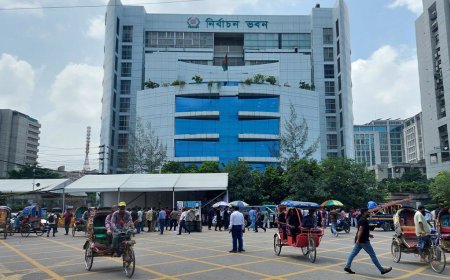
Ending months of political uncertainty and speculation, the Election Commission on Thursday announced that the 13th parliamentary election and a nationwide referendum will be held on 12 February 2026.
Chief Election Commissioner (CEC) AMM Nasir Uddin unveiled the long-awaited schedule in a nationally televised address, calling the moment a pivotal step in Bangladesh’s democratic trajectory.
In the speech broadcast simultaneously on BTV and Bangladesh Betar, the CEC urged all political parties, candidates and citizens to participate actively, saying the country faces a “historic responsibility” as it prepares for its first-ever simultaneous parliamentary election and referendum.
A first-of-its-kind electoral exercise
Underscoring the unprecedented nature of the dual vote, the CEC announced that parliamentary ballots will be printed in black and white, while referendum ballots will be pink to ensure clarity when both are conducted side by side.
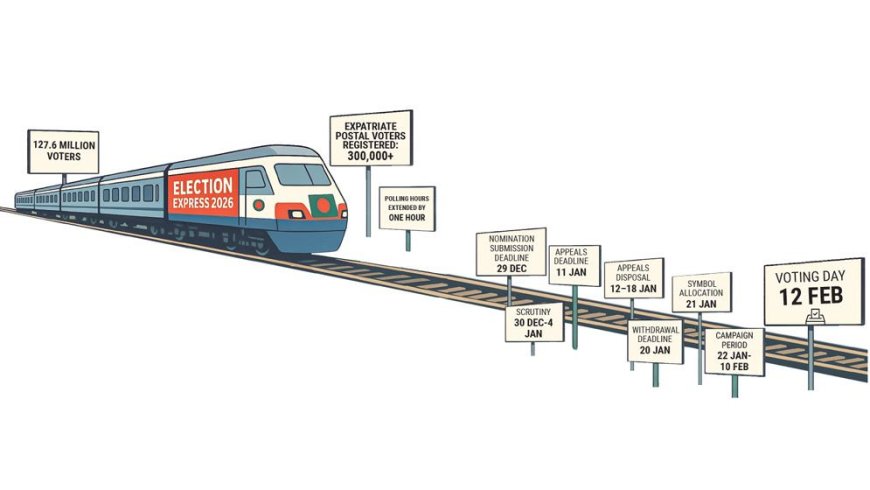
Polling will run from 7:30am to 4:30pm — an hour longer than usual — and the day will be declared a public holiday.
For the first time, registered expatriate Bangladeshis will be able to vote in the referendum through postal ballots, a system now extended to parliamentary voting as well. Postal voting has also been introduced for government staff posted outside their home constituencies, polling officials and eligible detainees.
Officials said preparations to accommodate these major procedural changes, including a possible increase in polling booths nationwide, are nearly complete.
In another first, the Commission has appointed three of its senior officials as returning officers — one each for Dhaka-13 and Dhaka-15, Chattogram-11 and Khulna-3. A total of 69 returning officers will oversee the polls nationwide, including divisional commissioners for Dhaka and Chattogram and deputy commissioners across all 64 districts.
Timeline leading up to polling day
According to the newly announced schedule, nomination papers must be filed by 29 December. Scrutiny will take place from 30 December to 6 January.
Appeals against returning officers’ decisions can be lodged until 11 January, and will be settled between 12 and 18 January.
Candidates may withdraw until 20 January, after which the final list of contestants and the allocation of election symbols will be published on 21 January.
Campaigning will officially begin on 22 January and continue until 7:30am on 10 February.
A gazette notification on the full schedule was expected to be issued by midnight Thursday.
The Election Commission will next appoint returning and assistant returning officers and form law-and-order committees, judicial inquiry bodies and vigilance teams. Restrictions on non-essential transfers of government employees will remain in place throughout the election period.
Honouring the past, defining the future
Opening his address, the CEC offered greetings ahead of Victory Day and paid tribute to the martyrs of the Liberation War and those killed during the 2024 student uprising.
He described the upcoming polls as a landmark moment in the nation’s political recovery, expressing hope that the election and referendum would restore public confidence in state institutions and revive a tradition of healthy political competition.
Reforming the long-criticised postal voting system, he noted, was another breakthrough that will enable millions of expatriates to participate for the first time.
A year of reforms and an updated voter list
The CEC highlighted extensive reforms undertaken over the past year to ensure a credible, inclusive and transparent election. A major component was overhauling the voter list: more than 4.5 million previously excluded voters were added, while over 2.1 million deceased entries were removed.
Targeted registration drives significantly reduced the gender gap in voter enrolment.
Legal amendments now allow the Commission to set its own deadline for voter eligibility, ensuring that young voters eligible up to 31 October 2025 can participate.
As per the voter list published on 18 November, Bangladesh currently has 127,695,183 registered voters — 64,814,907 men and 62,807,942 women.
Revisions have also been made to the Representation of the People Order and the Code of Conduct, based on recommendations from the Election System Reform Commission and consultation with stakeholders.
The CEC thanked the interim government, the Reform Commission, the National Consensus Commission and others who contributed to the reform process.
New enforcement measures
Separately, the Commission wrote to the Ministry of Public Administration requesting at least two executive magistrates for every upazila or police station area. Beginning the day after the schedule announcement and running until two days after polling, the magistrates will lead mobile courts to ensure strict enforcement of electoral rules.
The EC has also ordered the nationwide removal of unauthorised campaign materials — posters, banners, billboards, wall writings, arches and lighting — within 48 hours of the schedule announcement. Local government bodies have been tasked with assisting the clean-up.
Officials said around 20 circulars will be issued in the coming days covering security arrangements, polling procedures and enforcement measures.
Parties brace for a high-stakes contest
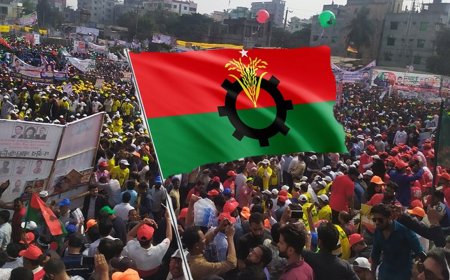
More than 50 registered political parties — including the BNP, Jamaat-e-Islami and the Nationalist Conservative Party (NCP) — are eligible to contest the election.
The Jatiya Party has said it will decide later whether to participate, depending on the political environment.
The Awami League, however, is unable to contest for the first time in its history due to the suspension of its registration. While it boycotted the 1988 and February 1996 elections, it has never before been barred from participating.
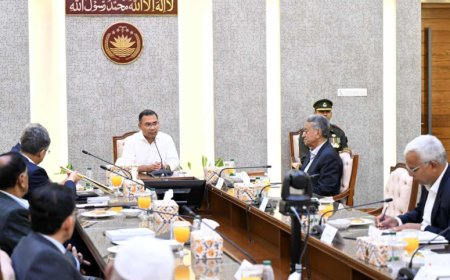
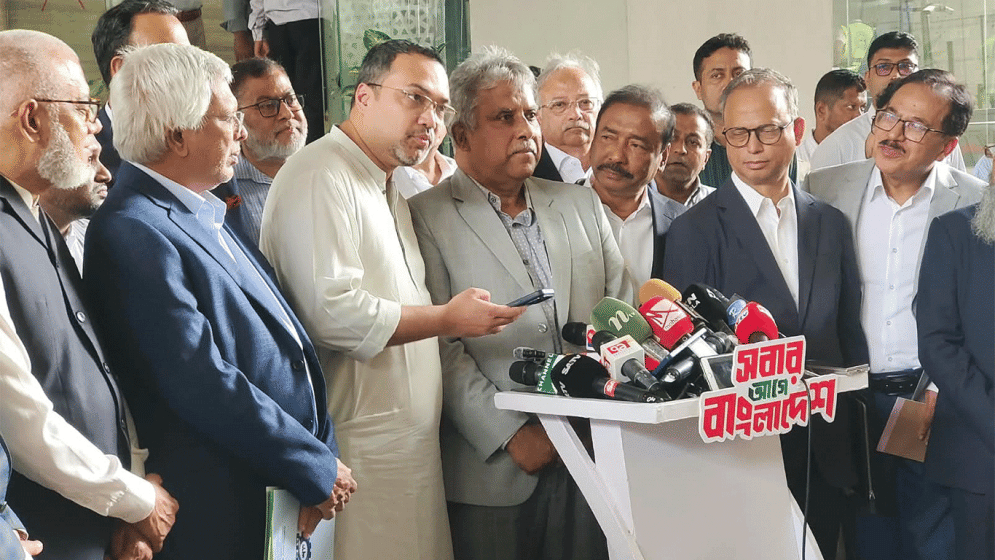
In the days leading up to the announcement, the BNP, NCP and Jamaat met separately with the CEC. All supported holding the election on time, though Jamaat and the NCP expressed concerns about law and order and what they termed an uneven playing field.
Their remarks came amid renewed attention on the deteriorating health of BNP Chairperson Khaleda Zia, whose condition continues to shape political discourse.
EC orders polling officer panel by 15 December
In a separate directive issued Thursday, the Election Commission instructed all district election offices to finalise the panel of polling officers by 15 December.
A letter signed by Deputy Secretary Mohammad Manir Hossain said that officials from private banks would not be included in the regular pool of polling officers. However, if the number of eligible officers proves insufficient, private bank staff may be appointed after strict vetting.
The directive came shortly after the BNP submitted a 36-point proposal urging the EC not to appoint staff from institutions it argues are politically aligned, including Islami Bank and Al-Arafah Bank.
Election Commissioner Brig Gen (retd) Abul Fazal Md Sanaullah reiterated that private-bank officers would only be used “if absolutely necessary,” with preference given to personnel from government, semi-government, autonomous bodies and state-owned banks.
What's Your Reaction?