


































PM Calls on Global Leaders to Translate Climate Pledges into Concrete Action
PM Calls on Global Leaders to Translate Climate Pledges into Concrete Action

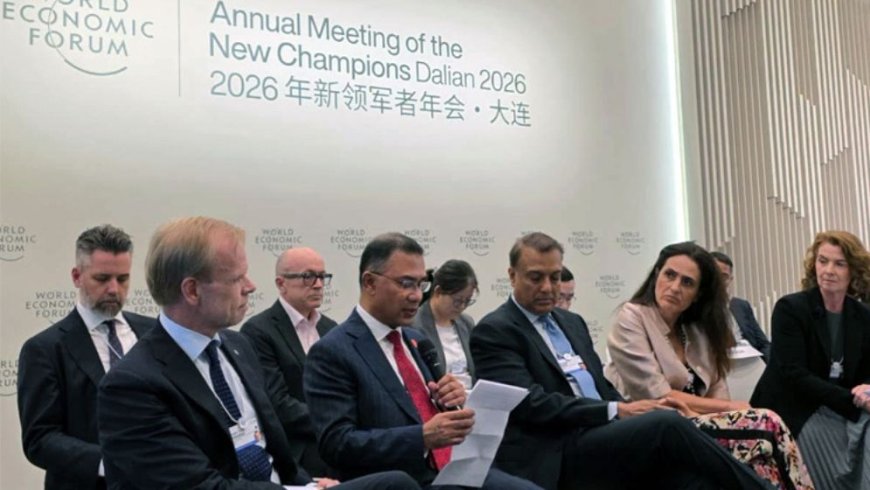
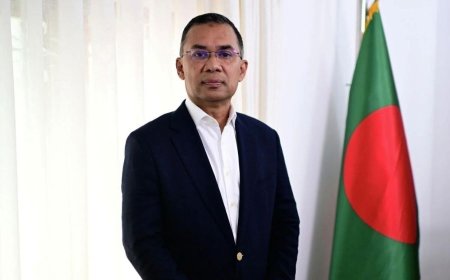
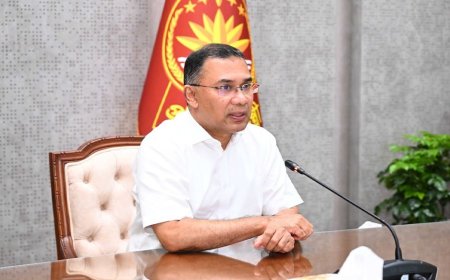
Prime Minister Tarique Rahman on Tuesday urged world leaders to honour their climate commitments and take meaningful action to protect millions of people whose lives are increasingly threatened by climate change.
“It is time to turn climate pledges into action and commitments into tangible results, so that the world can face the future with confidence. We hope COP31 will rise to this challenge, and Bangladesh stands ready to play its part,” he said.
The prime minister made the remarks while delivering the opening statement at a session titled Climate Leadership in a Shifting Global Landscape during the World Economic Forum’s (WEF) 17th Annual Meeting of the New Champions at the Dalian International Conference Centre.
He stressed that COP31—the 31st session of the United Nations Climate Change Conference, scheduled to be held in Turkey in November—must reaffirm the principles and objectives of the United Nations Framework Convention on Climate Change (UNFCCC) and the Paris Agreement.
Tarique noted that the WEF offers an important platform for fostering dialogue, building consensus and promoting collective action on climate issues.
“Bangladesh does not view climate action as a cost. We see it as an essential investment in prosperity, stability and our shared future,” he said. “Together, we can build a future that is greener, safer, more sustainable and more just.”
Emphasising that no country can build climate resilience alone, he said effective action requires strong partnerships, technology transfer, adequate financing and a shared global commitment.
Looking ahead to COP31 and COP32, the prime minister highlighted three key priorities.
First, he said, the Loss and Damage Fund must move beyond promises and provide accessible and predictable support to countries most affected by climate change.
Second, climate finance should be made more accessible, concessional and responsive to the needs of vulnerable nations. He also called for greater technology transfer, stronger private-sector participation and enhanced mobilisation of the Green Climate Fund (GCF).
Third, adaptation must receive equal importance alongside mitigation. “For countries like Bangladesh, adaptation is not a policy choice—it is a necessity,” he said.
Referring to observations by UNCTAD, Tarique said the New Collective Quantified Goal (NCQG) of $300 billion remains insufficient to meet the mitigation and adaptation needs of developing countries.
“We are here today not only as a frontline nation confronting the climate crisis, but also as a country aspiring to offer global solutions,” he said. “We refuse to be defined by our challenges; instead, we choose to be defined by our resilience.”
He said the government, in line with its election manifesto, is committed to transforming Bangladesh into a leading climate-resilient nation, with environmental protection, sustainable development and green growth at the centre of its nation-building agenda.
“Personally, this is a cause I deeply care about and actively champion. It is about safeguarding lives, livelihoods and future generations,” he added.
Outlining major climate initiatives, the prime minister said the government plans to excavate around 20,000 kilometres of rivers and canals over the next five years to restore water flow, reduce flood risks and revive wetlands.
He also highlighted plans to advance the Padma Barrage project to strengthen water security, support agriculture and improve resilience to climate shocks, alongside the modernisation of the Teesta Barrage through a comprehensive master plan.
The government has also pledged to plant and maintain 250 million trees over the next five years.
Through nationwide programmes involving schools, communities and young people—including the “One Student, One Tree” initiative—Bangladesh aims to expand forest coverage, restore biodiversity, create green jobs and help reduce temperatures, he said.
Tarique further noted that the government is working to protect forests, wetlands, wildlife habitats and vulnerable coastal ecosystems, while investing in rural rainwater reservoirs and promoting greener building standards.
He said Bangladesh has set a target of generating at least 20 percent of its electricity from renewable sources by 2030 through solar, wind, waste-to-energy and other clean-energy solutions.
The government is also encouraging green industries, including jute-based products and environmentally friendly transportation such as electric vehicles.
In addition, Bangladesh plans to establish a national carbon market to attract green investment and expand carbon-credit opportunities.
The prime minister said the country is pursuing integrated waste management, recycling, organic fertiliser production and circular economy initiatives to transform waste into valuable resources.
Highlighting Bangladesh’s progress in sustainable manufacturing, he said, “Among the world’s top 100 LEED-certified factories, 69 are located in Bangladesh—a testament to our commitment to green industrial development.”
What's Your Reaction?