




















































Experts caution that the risk of a major earthquake is extremely high
Experts caution that the risk of a major earthquake is extremely high.


Bangladesh faces a dangerously high earthquake risk because it lies on three active tectonic fault lines, experts warned on Saturday.
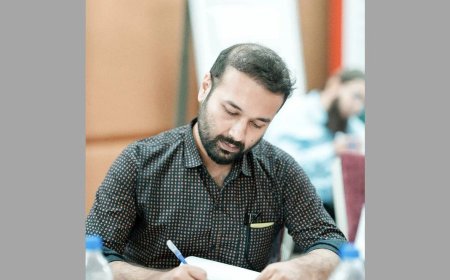
Speaking at a seminar titled “Earthquake Awareness, Safety Protocol and Emergency Preparedness”—organised by JCX Developments Limited at a city hotel—earthquake specialists said the country could face a major humanitarian disaster unless urgent, coordinated measures are taken.
Engineers, architects, policymakers and private-sector representatives from home and abroad joined the discussions.
Experts pointed out that Bangladesh is located at the intersection of the Indian, Myanmar and Eurasian tectonic plates, with three major active faults posing serious threats: the Dauki Fault in Sylhet, the Chittagong–Arakan Fault along the Chattogram–Teknaf belt and Myanmar’s Sagaing Fault.
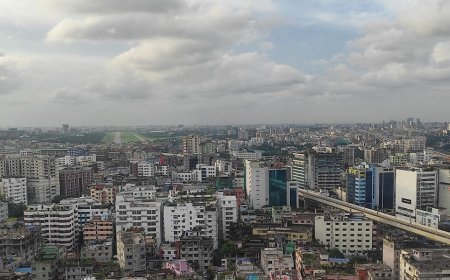
They warned that rapid, unplanned urban growth, widespread building-code violations, narrow access roads and dense populations have created serious vulnerabilities that could worsen the impact of a strong quake.
Participants highlighted research, including a 2016 Columbia University study that predicted the possibility of a magnitude-9 earthquake along a megathrust fault stretching from Sylhet to Teknaf—an area where tectonic stress has not been released for nearly a millennium.
Bangladesh has recorded more than 200 earthquakes over the past 100 years, with activity rising since 2024, they added.
Although the risks are high, experts stressed that large-scale casualties and destruction can still be avoided through coordinated planning, strict enforcement of regulations and widespread public awareness.
Their key recommendations included constructing earthquake-resistant buildings, mandatory structural audits for older structures, improved rescue and emergency-response training, developing early-warning systems, nationwide simulation exercises and community-level preparedness programmes.
Japanese specialists Keichiro Sako and Heisei Sugiyama showcased earthquake-resilient construction techniques used in Japan. They underscored strict adherence to building codes, regular structural audits, sustainable design and the adoption of modern shock-absorption technologies.
They said that with early preparedness, tech-enabled monitoring and sustained awareness efforts, losses from major earthquakes can be greatly reduced.
JCX Developments Limited Managing Director Md Iqbal Hossain Chowdhury said the recent tremors in Dhaka should serve as a wake-up call.
“With weak buildings, high density and haphazard development, a strong quake could be devastating. Government, developers and citizens must work together to build resilience,” he said.
What's Your Reaction?