













































China Pledges Support for Teesta Project, Agrees to Strengthen Defence Cooperation
China Pledges Support for Teesta Project, Agrees to Strengthen Defence Cooperation

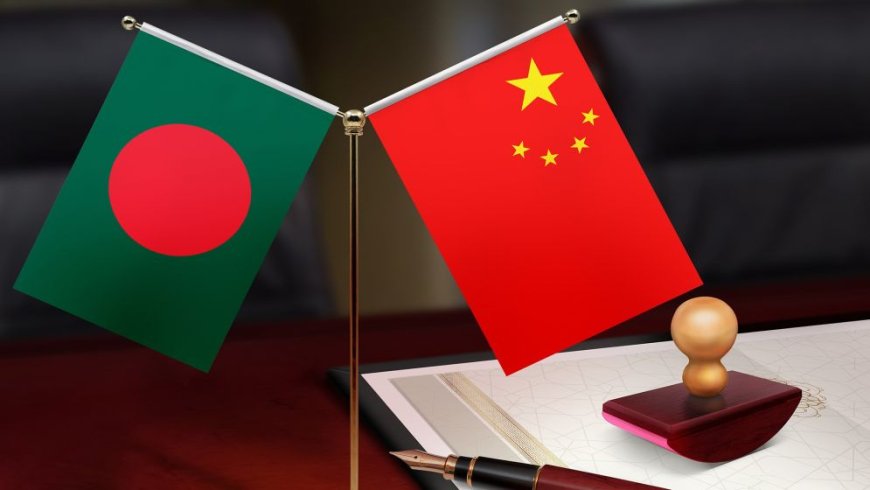
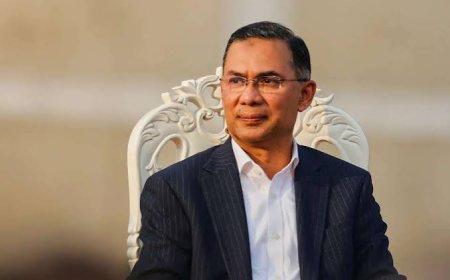
China has pledged support for Bangladesh's Teesta River Comprehensive Management and Restoration Project (TRCMRP) and agreed to deepen bilateral defence cooperation, according to a joint communique issued on Friday following Prime Minister Tarique Rahman's official visit to Beijing.
The two countries also agreed to expand cooperation in scientific and technological innovation, trade, e-commerce, industry, supply chains and investment. The joint statement was released at the conclusion of Rahman's five-day visit to China, during which he attended the 17th Annual Meeting of the New Champions (Summer Davos) and held talks with Chinese leaders.
The communique said President Xi Jinping met Prime Minister Rahman, while Chinese Premier Li Qiang and Zhao Leji, chairman of the Standing Committee of the National People's Congress, also held separate meetings with the Bangladeshi leader. The discussions focused on strengthening bilateral ties as well as regional and international issues of mutual interest.
Both sides agreed to elevate their comprehensive strategic cooperative partnership to build what they described as a "China-Bangladesh community with a shared future in the new era." China congratulated Bangladesh on the successful conduct of its February 2026 general election and expressed support for the new government's "Bangladesh Before All" policy.
To institutionalise strategic engagement, the two countries agreed to establish a foreign ministers' strategic dialogue and explore a "2+2" dialogue mechanism involving their foreign and defence ministries.
Bangladesh reaffirmed its commitment to the one-China policy, recognising Taiwan as an inalienable part of China and opposing any form of "Taiwan independence." In return, China reiterated its support for Bangladesh's sovereignty, territorial integrity and independent development path.
The two sides agreed to advance high-quality cooperation under the Belt and Road Initiative (BRI), with China pledging continued support for Bangladesh's industrialisation, agricultural modernisation and socioeconomic development.
China also committed to strengthening cooperation in trade, e-commerce, industrial and supply chains, and investment. Bangladesh welcomed China's zero-tariff treatment for all Bangladeshi exports and pledged to create a favourable environment for Chinese investment. Both countries agreed to accelerate the modernisation and expansion of Mongla Port and the development of the Chinese Economic and Industrial Zone in Chattogram.
The communique highlighted plans to expand cooperation in connectivity, scientific and technological innovation, information and communications technology, green energy, photovoltaic technology, disaster management and climate change, while exploring direct connectivity between the two countries.
On water resources, the two countries agreed to deepen cooperation in integrated river basin management, hydrological forecasting, flood control, river dredging and technology sharing. China said it would provide support, within its capacity, for the Teesta River Comprehensive Management and Restoration Project and help expedite the project's feasibility study through joint expert collaboration. They also agreed to strengthen maritime cooperation.
In the defence sector, Bangladesh and China agreed to expand exchanges, visits and training programmes, while maintaining close engagement on UN peacekeeping operations.
The communique also underscored plans to enhance people-to-people exchanges in education, media, culture, think tanks, youth, sports, public health and traditional medicine. China pledged to continue offering educational opportunities for Bangladeshi students and support human resource development.
On multilateral cooperation, Bangladesh welcomed President Xi Jinping's vision of building a "community with a shared future for humanity" and expressed readiness to work with China under various global initiatives. China, in turn, supported Bangladesh's greater role in international institutions, including its participation in BRICS and its application to become a partner of the Shanghai Cooperation Organisation (SCO).
The two countries reaffirmed their commitment to the UN-centred international order, international law and multilateralism, while opposing attempts to revive fascism and militarism. They also reiterated support for the post-World War II international order established through the Cairo Declaration, Potsdam Proclamation and the UN Charter.
On the Rohingya crisis, Bangladesh appreciated China's role in facilitating efforts to resolve the issue of forcibly displaced people from Myanmar's Rakhine State. China commended Bangladesh for providing humanitarian assistance and pledged to continue supporting dialogue between Bangladesh and Myanmar to achieve a mutually acceptable solution.
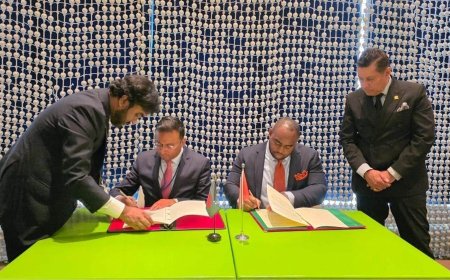
During the visit, the two sides signed several cooperation agreements covering development cooperation, human resources, agriculture, education, trade and investment, and media collaboration.
Prime Minister Tarique Rahman thanked the Chinese government and people for their warm hospitality and invited the Chinese leadership to visit Bangladesh at a mutually convenient time.
What's Your Reaction?