








































Bangladesh Faces Intensifying Competition in Global Markets: Khalilur Rahman
Conference Maps Out Strategy for Trade Expansion, Economic Growth and Diplomacy

Bangladesh Must Step Up Global Competition to Sustain Export Growth: Khalilur Rahman
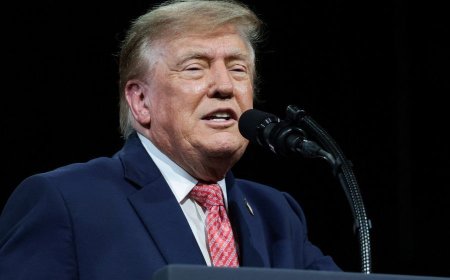
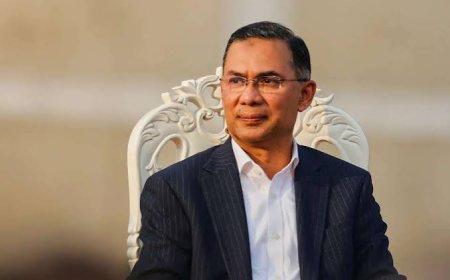
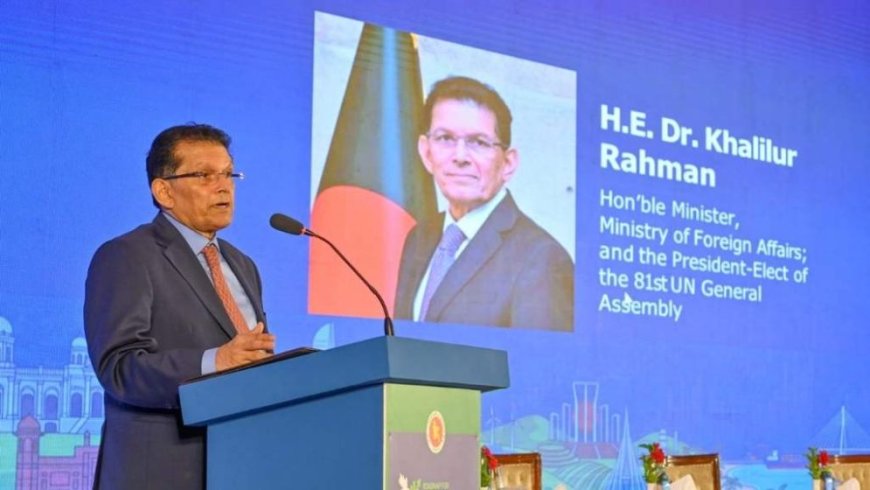
Foreign Minister Dr Khalilur Rahman on Saturday said Bangladesh will need to compete more aggressively in international markets to preserve and expand its export share as the global economy undergoes significant changes driven by slower growth, rising protectionism, climate risks and shifting trade and investment patterns.
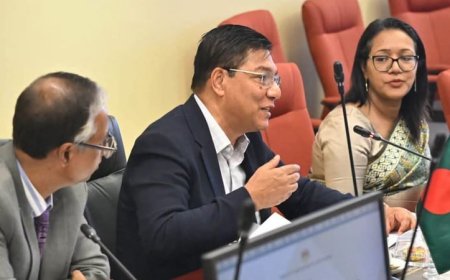
Speaking at the inauguration of the conference titled “Roadmap for Trade, Growth and Economic Diplomacy 2026: Navigating Risks, Leveraging Resilience” in Dhaka, he said Bangladesh faces a rapidly evolving global environment that demands stronger economic diplomacy and strategic policy responses.
The conference was jointly organised by the Ministry of Foreign Affairs and the Bangladesh Investment Development Authority (BIDA), bringing together policymakers, diplomats, development partners and business leaders to discuss the country’s future trade and investment strategy.
State Minister for Foreign Affairs Shama Obaed Islam, Prime Minister’s Foreign Affairs Adviser Humayun Kabir and Foreign Secretary Asad Alam Siam also addressed the event.
Khalilur, who is also president-elect of the 81st session of the United Nations General Assembly, noted that while Bangladesh’s key export markets continue to grow, the pace of expansion has slowed. He cautioned that weaker consumer demand in those economies could affect Bangladesh’s export performance in the years ahead.
The foreign minister said the government took office amid a challenging global backdrop marked by slowing trade and economic growth, geopolitical tensions, policy uncertainty, climate-related risks, increasing protectionism and major shifts in global supply chains.
“The ongoing energy crisis has added another layer of complexity,” he said, stressing that Bangladesh cannot remain insulated from these global developments and must adapt accordingly.
He said the conference was designed to encourage dialogue among stakeholders and support informed decisions on trade, investment and economic cooperation.
Highlighting challenges in international finance, Khalilur said global financial markets now exert growing influence over production, trade and investment flows, making it more difficult for developing countries such as Bangladesh to access affordable capital.
“Countries like Bangladesh face higher borrowing costs and remain highly vulnerable to fluctuations in market sentiment,” he said.
According to him, while advanced economies typically borrow at interest rates between 1 and 4 percent, developing nations often face rates ranging from 6 to 12 percent or even higher, limiting access to secure and affordable financing.
He also pointed to the increasing connection between climate vulnerability and financing costs. Referring to a recent Investment Policy Review by the United Nations Conference on Trade and Development (UNCTAD), he said climate-vulnerable countries collectively pay billions of dollars more in annual interest costs because of climate-related risks.
“External debt and the climate crisis have become closely intertwined,” he observed.
The minister warned that the global energy crisis has significantly increased Bangladesh’s fuel import bill, raising production costs and reducing competitiveness. Higher energy expenditures, he said, could also divert resources from development priorities and create long-term economic pressures.
Citing the International Energy Agency, he noted that the current energy crisis could rival the oil shocks of the 1970s, which contributed to a “lost decade” for many developing countries during the 1980s.
Khalilur also highlighted the growing importance of Trade Tech—the integration of trade, investment and technology—in shaping the future of global commerce.
He said technologies such as artificial intelligence, the Internet of Things, blockchain and 5G are transforming cross-border trade and investment, creating both opportunities and challenges depending on how effectively countries adapt.
Turning to the government’s economic agenda, he said Prime Minister Tarique Rahman’s vision is built around three priorities: stabilisation, reform and elevation.
“We must translate that vision into practical action through our economic and trade diplomacy efforts,” he said.
Khalilur stressed that rebuilding confidence among citizens, businesses and international partners remains a key priority for the government.
“We want to demonstrate that Bangladesh is stable, predictable and open for business,” he said.
Reaffirming the country’s longstanding policy of friendship with all, he said Bangladesh would continue to pursue mutually beneficial bilateral and multilateral partnerships to advance growth and shared prosperity.
He added that Bangladeshi missions abroad are being repositioned to play a more active role in attracting investment, securing market access and strengthening economic integration.
Addressing the business community, the foreign minister pledged reforms aimed at improving the ease of doing business and removing obstacles to investment and entrepreneurship.
“You are the engine of our economic progress, and this government is fully committed to supporting your growth,” he said.
He said the administration seeks to replace bureaucratic hurdles with greater policy certainty, transparency and a level playing field for businesses of all sizes.
Noting positive feedback from both domestic and international stakeholders during the government’s first 100 days in office, Khalilur described the current political transition as a unique opportunity for transformation.
He said the government has the political commitment, strategic direction and determination required to position Bangladesh as the most competitive investment destination in South Asia.
The conference featured three thematic sessions covering trade and investment, financing reforms and emerging growth sectors such as artificial intelligence, creative industries and sports.
According to the Ministry of Foreign Affairs, the event aims to strengthen the link between policy formulation and implementation, enhance Bangladesh’s economic diplomacy and deepen international partnerships in support of sustainable growth and expanded trade.
What's Your Reaction?