





















































Bangladesh calls for stable and predictable international financing to effectively tackle the escalating climate crisis
Bangladesh calls for stable and predictable international financing to effectively tackle the escalating climate crisis.


Bangladesh has urged the international community to provide predictable and sufficient financing to help vulnerable countries confront the triple planetary crisis—climate change, biodiversity loss, and pollution.
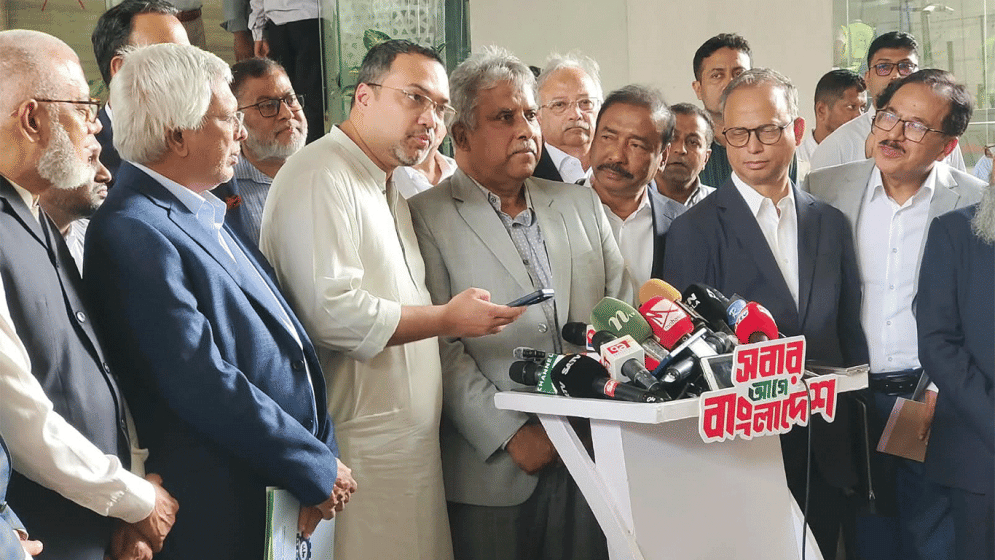
The call came from Farhina Ahmed, secretary of the Ministry of Environment, Forest and Climate Change, as she delivered Bangladesh’s national statement at the plenary of the 7th Session of the United Nations Environment Assembly (UNEA-7) in Nairobi on Wednesday (10 Dec).
According to a press release, Md Ziaul Haque, additional director general of the Department of Environment, joined the Bangladesh delegation at the meeting.
Farhina cautioned that developing nations are increasingly being forced to divert scarce resources from crucial sectors to address climate-driven disasters.
“In the absence of support, governments are compelled to pull funds away from health, education and social protection to respond to crises—putting future generations at risk,” she said.
She urged UNEA-7 to strengthen coordinated and synergistic financing through multilateral environmental agreements.
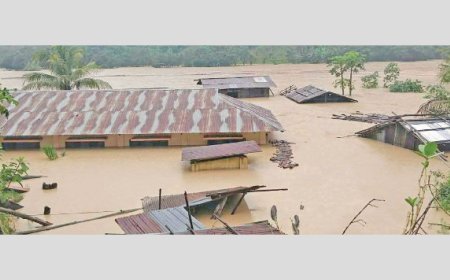
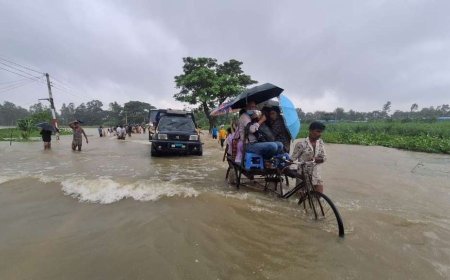
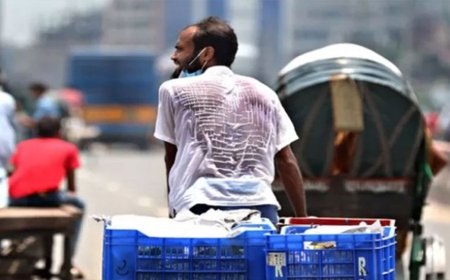
Highlighting the gravity of the global environmental emergency, Farhina said climate change is “a daily reality” for Bangladesh, where extreme heat, cyclones, floods, sea-level rise, and riverbank erosion continue to uproot communities and degrade vital ecosystems.
Although Bangladesh contributes less than 0.5% of global emissions, it continues to demonstrate climate leadership, she noted.
Bangladesh’s updated NDC 3.0—submitted within the global deadline—aims to generate 25% of its electricity from renewable sources by 2035, a fivefold increase from current levels.
The country is also moving ahead with the implementation of its National Adaptation Plan (NAP 2023) and scaling up locally led adaptation efforts in climate-exposed regions.
On biodiversity, Farhina pointed to the immense pressure on natural resources in a densely populated country of 180 million people.
She said Bangladesh is pursuing a comprehensive range of plans and strategies, including the National Biodiversity Strategy and Action Plan (2026–30), the National Conservation Strategy, the Ramsar Strategic Plan (2026–30), Land Degradation Neutrality targets for 2030, and sectoral policies on environment, forests and biosafety.
Addressing pollution, she highlighted Bangladesh’s early leadership, noting it was the first nation to ban thin plastic bags.
Since then, the government has introduced separate regulations for solid waste, e-waste, medical waste, hazardous waste and ship-breaking waste management.
Bangladesh has also finalised Extended Producer Responsibility (EPR) directives for plastic waste and imposed restrictions on selected single-use plastics, while preparing draft Chemical Waste Management Rules.
Farhina called on UNEA-7 to adopt a comprehensive lifecycle approach to managing chemicals and plastics—focused on prevention, safer alternatives and circularity—while ensuring the protection and rights of informal workers.
What's Your Reaction?