


















Under Venezuela’s constitution, Rodríguez assumes the role of acting president in Maduro’s absence
Under Venezuela’s constitution, Rodríguez assumes the role of acting president in Maduro’s absence.


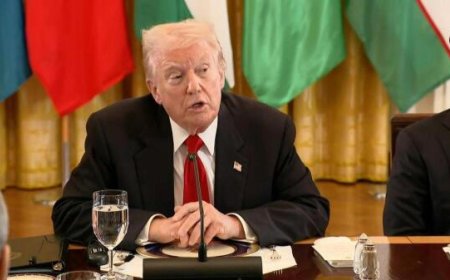
The US capture of Venezuelan leader Nicolás Maduro—hailed by President Donald Trump as “stunning and powerful”—has thrown into question who is now in charge of the oil-rich nation.
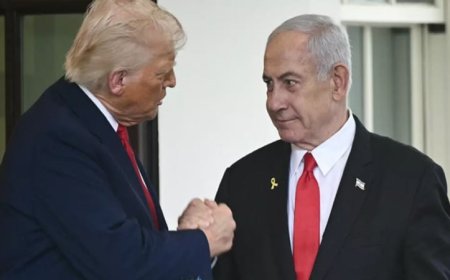
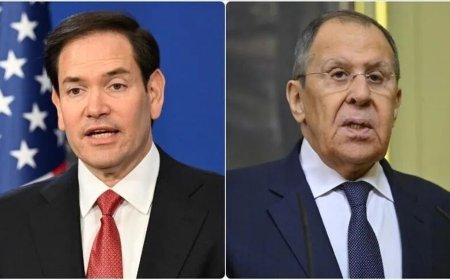
Trump said on Saturday that Vice President Delcy Rodríguez, a key figure within Venezuela’s ruling inner circle, had been sworn in following Maduro’s arrest and had spoken with US Secretary of State Marco Rubio, fueling speculation that she would assume control.
Under Venezuela’s constitution, Rodríguez is next in line to serve as acting president in Maduro’s absence, and the country’s top court ordered her to take on the role late Saturday night.
However, shortly after Trump’s remarks, Rodríguez appeared on state television alongside her brother—National Assembly head Jorge Rodríguez—Interior Minister Diosdado Cabello and Defense Minister Vladimir Padrino López. She declared that Maduro remained Venezuela’s sole president.
The joint appearance suggested that the leadership group that governed alongside Maduro remains unified, at least for now.
Trump also ruled out working with opposition leader and Nobel Prize laureate María Corina Machado, widely seen as Maduro’s strongest challenger, saying she lacks domestic support.
Machado was barred from running in Venezuela’s 2024 elections, though international observers say her substitute candidate won decisively, despite the government declaring Maduro the victor.
Civilian–military power balance
For more than a decade, power in Venezuela has rested with a small group of senior officials. Analysts say the system relies on an extensive network of loyalists and security agencies sustained by corruption and surveillance.
Within this inner circle, power is divided between civilian and military factions. Rodríguez and her brother represent the civilian wing, while Padrino and Cabello anchor the military side, each with distinct interests and patronage networks.
This structure makes dismantling the government far more complicated than removing Maduro alone, according to current and former US officials and security analysts.
“You can remove individuals, but it would take multiple actors at different levels to truly shift the system,” said a former US official involved in Venezuelan investigations.
Attention is now focused on Cabello, who wields influence over both military and civilian intelligence agencies responsible for widespread domestic surveillance.
“Cabello is the most ideological, violent and unpredictable figure in the regime,” said Venezuelan military strategist José García.
The United Nations has found that Venezuela’s intelligence agencies—SEBIN and the military-run DGCIM—committed crimes against humanity as part of a state policy to crush dissent. Former detainees have described electric shocks, mock drownings and sexual abuse at DGCIM detention sites.
In recent weeks, as the US carried out its largest military buildup in Latin America in decades, Cabello has appeared repeatedly on state television issuing threats and ordering security forces to crack down on “terrorists.”
He has also been closely linked to pro-government armed militias known as colectivos—motorcycle-riding civilian groups loyal to the regime.
Generals control key sectors
Although Defense Minister Padrino has formally led the military for over a decade, Cabello retains influence over a significant portion of the armed forces.
Venezuela has as many as 2,000 generals and admirals—more than twice the number in the United States. Senior and retired officers control food distribution, raw materials and the state oil company PDVSA, while many sit on the boards of private companies.
Military officials also profit from illicit trade, according to defectors and US investigators.
Documents reviewed by Reuters indicate that commanders close to Cabello and Padrino oversee key brigades along borders and industrial zones—areas that also serve as major smuggling routes.
“To fully dismantle this regime, 20 to 50 senior officers would likely need to be removed—possibly more,” said a lawyer who has represented members of Venezuela’s leadership.
Some officials may be looking for an exit. The lawyer said several former officials and active generals have approached the US since Maduro’s capture, seeking immunity in exchange for intelligence.
Those close to Cabello, however, say he has no interest in negotiating—for now.
What's Your Reaction?