



























































Trump Sends Saudi Nuclear Deal to Congress, Says Riyadh Must Recognize Israel
Trump Sends Saudi Nuclear Deal to Congress, Says Riyadh Must Recognize Israel

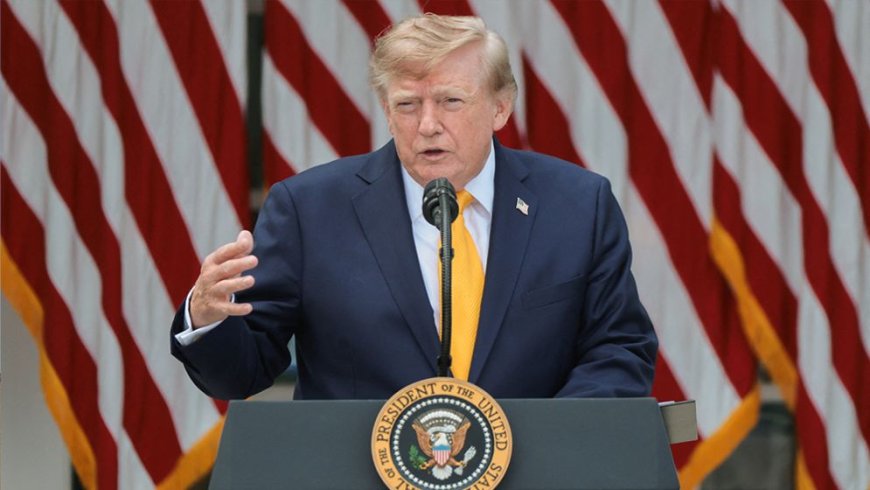
US President Donald Trump has formally sent Congress a proposed civil nuclear cooperation agreement with Saudi Arabia, while maintaining that the deal will only take effect if Riyadh agrees to normalize relations with Israel, a US administration official told Reuters.
The agreement, finalized in July, would allow American companies to export civilian nuclear technology to Saudi Arabia. The administration submitted the pact to Congress on Monday, giving lawmakers 90 session days to review it, the official said.
The Saudi embassy in Washington did not immediately comment on the development.
“The president’s position has not changed,” the US official said, stressing that the agreement would move forward only if Saudi Arabia joins the Abraham Accords, the US-backed agreements that established diplomatic ties between Israel and the UAE, Bahrain, Morocco and Sudan.
Trump has previously sought a similar nuclear agreement with Saudi Arabia during his first term. Former President Joe Biden also pursued a deal and explored linking it to Saudi-Israeli normalization. However, prospects for an agreement deteriorated after Israel’s war in Gaza began in October 2023.
Saudi Arabia has said it would require an irreversible pathway toward the establishment of a Palestinian state before recognizing Israel.
Under the proposed 30-year agreement, Saudi Arabia would be able to pursue the construction of AP1000 nuclear reactors in a project potentially worth tens of billions of dollars. The deal could provide significant opportunities for Westinghouse, which is jointly owned by Canada-based Cameco and Brookfield Asset Management.
Two congressional sources said the agreement was sent to congressional leaders and is expected to be referred to committees on Wednesday. If Congress does not object within 90 session days, the agreement would take effect. Trump could veto a congressional rejection, although lawmakers could override the veto with a two-thirds majority.
Concerns Over Nuclear Proliferation
The agreement has drawn criticism from some Democratic lawmakers and nuclear nonproliferation advocates because it does not explicitly prevent Saudi Arabia from enriching uranium or reprocessing nuclear waste—technologies that could potentially be used to develop nuclear weapons.
The United Arab Emirates accepted similar restrictions, often described as the “gold standard,” in its 2009 civilian nuclear agreement with the United States.
The Trump administration maintains that the Saudi deal contains the nonproliferation safeguards required under US law.
Henry Sokolski, head of the Nonproliferation Policy Education Center, warned that sending the agreement to Congress could allow it to advance without securing Saudi-Israeli normalization or stronger restrictions on uranium enrichment. He described that prospect as “hardly ideal” for those seeking both nuclear safeguards and recognition of Israel.
What's Your Reaction?