


































SAARC spirit still alive, but needs revival: Prof Yunus
SAARC spirit still alive, but needs revival: Prof Yunus


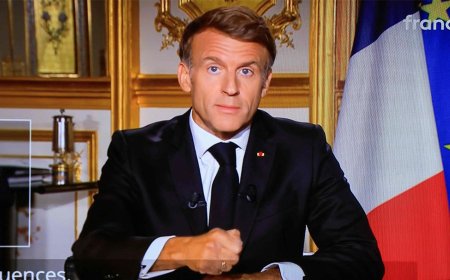
Chief Adviser Professor Muhammad Yunus on Wednesday said the South Asian Association for Regional Cooperation (SAARC) must be revived at all costs, noting that the presence of senior representatives from member states at the funeral of former prime minister Begum Khaleda Zia showed that the organisation’s spirit remains alive.
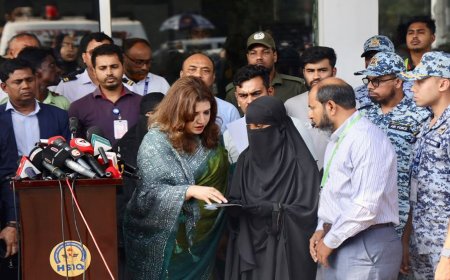
“He conveyed this message to all the visiting foreign dignitaries, saying that SAARC needs to be revived at any cost,” Chief Adviser’s Press Secretary Shafiqul Alam told reporters at a media briefing at the Foreign Service Academy in Dhaka on Thursday.
Chief Adviser’s Deputy Press Secretary Abul Kalam Azad Majumder and Senior Assistant Press Secretary Foyez Ahammad were also present at the briefing.
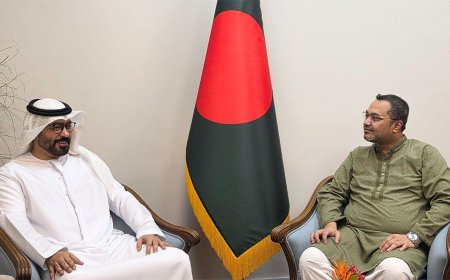
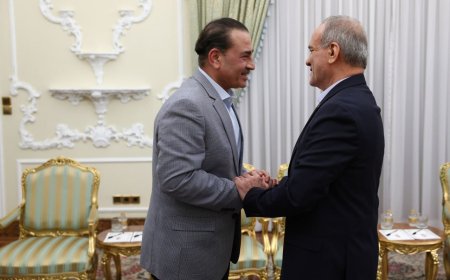
According to Alam, foreign dignitaries from Pakistan, Nepal, Maldives and Sri Lanka met the chief adviser at the state guesthouse Jamuna on Wednesday and Thursday.
“They were deeply moved by the scale of the funeral ceremony,” the press secretary said, adding that the guests appreciated the arrangements and the dignified manner in which the programme was conducted.
Quoting Professor Yunus, Alam said the spirit of SAARC is still alive and needs to be preserved and strengthened.
SAARC was formed with the signing of its charter in Dhaka on December 8, 1985. The regional bloc currently has eight member states: Afghanistan, Bangladesh, Bhutan, India, Maldives, Nepal, Pakistan and Sri Lanka. Its secretariat was established in Kathmandu on January 17, 1987.
Earlier, Foreign Affairs Adviser Md Touhid Hossain described the participation of South Asian leaders and representatives as a “positive gesture” towards Begum Khaleda Zia, who, he said, earned respect, dignity and acceptance both at home and across South Asia.
“I think it is a very good gesture from all. Everyone recognises the positive image established by Begum Zia,” he told reporters at the Ministry of Foreign Affairs on Thursday.
Among those who attended the funeral and paid their respects were Indian External Affairs Minister S Jaishankar, Speaker of Pakistan’s National Assembly Sardar Ayaz Sadiq, Nepal’s Foreign Minister Bala Nanda Sharma, Bhutan’s Foreign Minister DN Dhungyel, Sri Lanka’s Minister of Foreign Affairs, Foreign Employment and Tourism Vijitha Herath, and Maldives Minister of Higher Education, Labour and Skills Development Ali Haidar Ahmed.
Responding to questions about any discussion with Indian External Affairs Minister Jaishankar, Adviser Hossain said there was no opportunity for a one-to-one meeting and that no bilateral issues were discussed. “It was a courtesy call in the presence of other dignitaries,” he said.
Law Adviser Asif Nazrul and National Security Adviser Khalilur Rahman also met the visiting dignitaries on Wednesday.
The foreign guests arrived in Dhaka to pay their final respects to former prime minister and national leader Begum Khaleda Zia, who passed away on Tuesday.
Deputy Press Secretary Abul Kalam Azad Majumder said the advisers thanked the visiting dignitaries on behalf of Chief Adviser Professor Muhammad Yunus for showing solidarity with the people of Bangladesh during the period of national mourning.
BNP Chairperson and three-time former prime minister Begum Khaleda Zia was laid to rest beside her husband, late president Ziaur Rahman, at Sher-e-Bangla Nagar in Dhaka on Wednesday afternoon.
She was buried around 4:30pm with full state honours following her namaz-e-janaza at the South Plaza of the Jatiya Sangsad Bhaban. Family members, senior state officials, government representatives, foreign guests, diplomats and BNP leaders were present.
Before the burial, Begum Khaleda Zia was given a guard of honour under the supervision of the President Guard Regiment (PGR). On behalf of Chief Adviser Professor Muhammad Yunus, his military secretary, Major General Abul Hasnat Mohammad Tariq, placed a wreath at her grave.
What's Your Reaction?