






















































Prime Minister Completes First 100 Days in Office
Prime Minister Completes First 100 Days in Office


Assessing the Government’s First 100 Days
It is still too early to make a definitive judgment about how Bangladesh’s three-and-a-half-month-old government will govern the country over the remaining four years and eight-and-a-half months of its tenure. In a political system that, under Sheikh Hasina, became heavily centred on a single individual, any newly elected administration—even one enjoying a strong mandate—is likely to face continuous pressure from party interests, the bureaucracy and the opposition throughout its term.
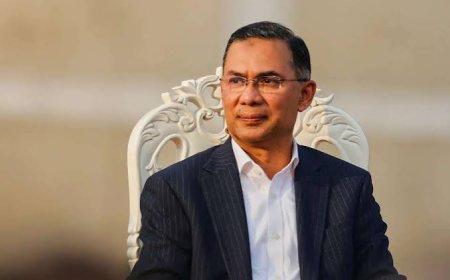
For that reason, it would be premature to deliver a final verdict on the successes or failures of the BNP government led by Prime Minister Tarique Rahman, which assumed office in February. Nevertheless, new governments often seek to shape public expectations by signalling their priorities early in their tenure. In many countries, the first 100 days serve as a benchmark for demonstrating momentum and outlining policy direction. US presidents traditionally launch a “100-day programme” upon entering office. Sheikh Hasina followed this practice, and Prime Minister Tarique Rahman likewise announced and completed a 100-day agenda.
For the leader of a developing country such as Bangladesh, matching the scale of initiatives undertaken by a US president within the same timeframe is unrealistic, and Tarique Rahman has made no such attempt. His administration has, however, begun implementing several commitments outlined in the BNP’s election manifesto. These include Family Cards, Farmer Cards, monthly allowances for imams, muezzins and Hindu priests, financial support and school uniforms for primary school students, tuition-free education for female students up to undergraduate level, and canal excavation programmes.
The key question is whether these measures represent significant achievements or merely the initial steps towards fulfilling broader national commitments. It would not be unreasonable to argue that the government has yet to present a landmark accomplishment during its first 100 days in office.
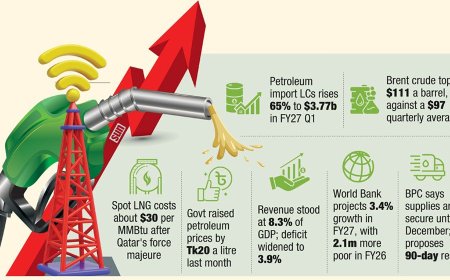
Major challenges remain unresolved. The electricity and energy sectors continue to struggle. No substantial reform initiatives have yet emerged to address the deep-rooted problems in the banking sector. Law and order have deteriorated, while incidents of child murder and sexual violence against children have increased alarmingly. Reports of widespread extortion have also intensified. In particular, extortion targeting transport operators and market traders has contributed to rising food prices, placing essential commodities beyond the reach of many ordinary citizens.
As a result, public frustration has grown. Some who had previously remained silent have begun arguing that life was easier under the Awami League government.
When Tarique Rahman returned to Bangladesh after 17 years abroad, he spoke of a vision for the country. Many expected that vision to be clearly articulated during his first months in office. So far, however, they have been left waiting for a comprehensive explanation of what that vision entails.
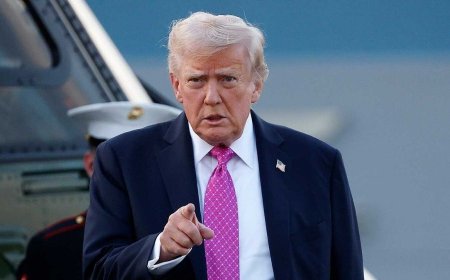
If the concept of a “first 100 days” is to have real meaning, it should be associated with substantive achievements rather than symbolic imitation. In the United States, where the tradition originated, President Donald Trump signed 143 executive orders during the first 100 days of his second term—more than any previous president during a comparable period. Those actions included sweeping tariff increases, immigration reforms, stricter visa procedures, mass deportation initiatives and significant federal spending cuts.
Similarly, Indian Prime Minister Narendra Modi used the first 100 days of his third term to approve major infrastructure and development projects, including a mega-port in Maharashtra, extensive road and bridge networks linking thousands of villages to urban centres, new railway lines and metro system expansions.
Bangladesh may not possess the economic resources of the United States or India, but without ambitious long-term goals, fulfilling election promises primarily through the distribution of various cards is unlikely to produce transformative national development.
Public trust in governments and politicians has declined sharply across the world. In many countries, distrust has evolved into outright resentment. Politicians themselves bear much of the responsibility. Too often, campaign promises are forgotten after elections, while public office becomes a means of personal enrichment, business expansion and the exercise of unchecked power.
Between 2009 and 2024, critics argue that the Awami League government institutionalised such practices among many of its beneficiaries. Allegations of corruption, political favouritism and the misuse of state institutions became widespread. Following the fall of the Awami League government in August 2024, many of these allegations began to receive greater scrutiny.
Although many beneficiaries of the previous regime have disappeared from public view, the culture of patronage and entitlement they left behind risks benefiting new groups aligned with the current administration. If such behaviour is tolerated, it could eventually create serious political difficulties for the government itself. The downfall of the previous administration should serve as a warning.
Bangladesh’s political history demonstrates that when elected governments excessively violate the public interest and citizens feel powerless under political repression, some become willing to welcome extra-constitutional alternatives as a source of temporary relief. That reality should encourage the current government to exercise caution.
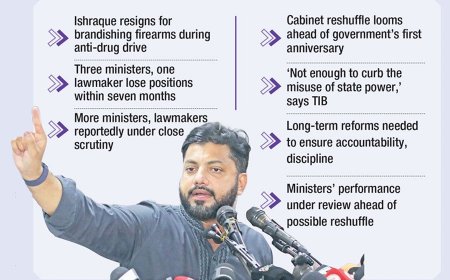
Already, some ministers have attracted criticism for inflammatory public remarks. Unless greater discipline is maintained, such behaviour risks undermining the substantial goodwill and public support the government still enjoys.
Three and a half months is not a long period. Yet citizens inevitably judge governments by how they begin. First impressions often shape expectations for what follows. In that sense, Tarique Rahman’s first 100 days could have been politically significant had his administration launched genuinely transformative national initiatives. That opportunity, however, appears largely missed.
The effectiveness of any elected government depends heavily on a professional, neutral and accountable civil service. The BNP administration already appears increasingly dependent on the bureaucracy, a development that may not be entirely positive. Bureaucrats nurtured under the Awami League era weakened institutions and frequently prioritised personal interests, ultimately imposing significant political costs on Sheikh Hasina and her party. The BNP would be wise to avoid repeating that experience.
According to critics, Sheikh Hasina maintained her position despite declining public confidence through fear, repression, enforced disappearances, politically motivated prosecutions and other coercive measures. They argue that, like her father Sheikh Mujibur Rahman before her, she sought unconditional public loyalty. Such anti-democratic tendencies, critics contend, ultimately proved politically damaging.
Bangladesh’s history has therefore taught citizens not to place blind faith in any leader. Public confidence must be earned through fulfilling election promises, decentralising power, ensuring accountability, bringing the corrupt to justice, holding timely elections and governing within constitutional limits.
In a fragile political system where authoritarian tendencies repeatedly re-emerge, the strongest safeguard remains a genuinely accountable government committed to democratic norms and the rule of law. That continues to be the public’s principal expectation of the new administration.
What's Your Reaction?