































































Jute sales expected to generate Tk 549cr in Rajshahi this season
Jute sales expected to generate Tk 549cr in Rajshahi this season

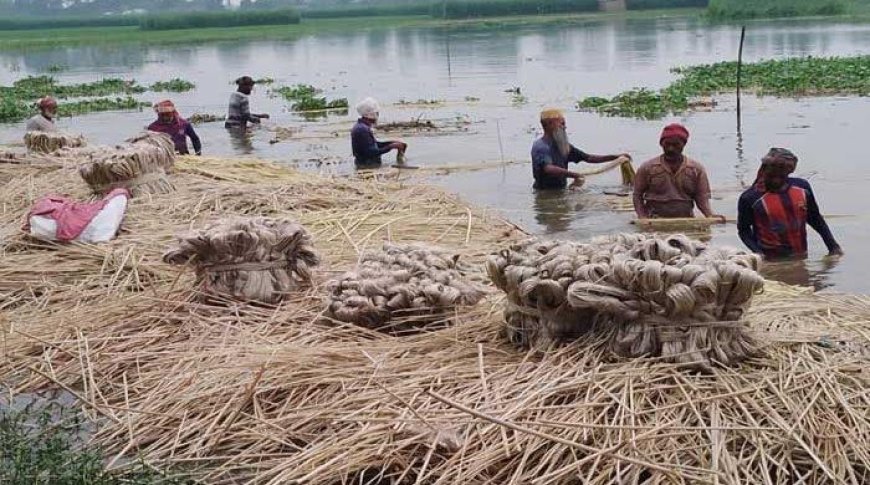
Rajshahi is witnessing a strong jute harvest this season, with favourable weather, expanded cultivation and better market prices raising hopes of around Tk 549 crore in transactions and bringing relief to farmers.
According to the Department of Agricultural Extension (DAE), the district is expected to produce about 49,000 tonnes of jute this season. At the prevailing price of Tk 4,000–Tk 4,300 per maund, the total value of the crop could reach approximately Tk 548.82 crore.
The increased production and higher prices are expected to inject fresh momentum into the rural economy by boosting farmers’ incomes and increasing demand for goods and services in local markets.
Jute has been cultivated across all nine upazilas of Rajshahi this year, covering 18,399 hectares, up from 17,305 hectares last year. The DAE had set a production target of 49,000 tonnes, compared with 48,677 tonnes harvested last season.
The latest DAE assessment shows that harvesting and fibre extraction have been completed on about 82 percent of the cultivated land, yielding nearly 48,200 tonnes. Officials expect production to surpass the target once the remaining crop is harvested and processed.
Favourable weather, adequate rainfall and farmers’ careful management have contributed to the strong yield. Timely rain also made the traditional retting and washing process easier, reducing processing difficulties.
The market has provided another boost to growers. Jute is currently selling for Tk 4,000–Tk 4,300 per maund in local markets, with prices reaching Tk 4,500–Tk 5,000 in some cases.
Mita Sarkar, Additional Deputy Director (Crops) of the Rajshahi DAE, said both cultivation and production increased due to government incentives and the timely availability of improved seeds and fertilisers. She estimated that jute transactions could reach around Tk 549 crore if the average price is calculated at Tk 4,300 per maund.
Meanwhile, Rajshahi’s Department of Jute estimates production at around 3,81,696 quintals this year, approximately 21,000 quintals higher than last year.
Farmers have also welcomed the improved market conditions. Many said that while low prices caused disappointment last year, the combination of better yields and stronger prices this season could allow them to earn a reasonable profit.
Farmers also credited timely rainfall for making retting and washing easier. However, high labour costs and limited water facilities for retting remain key challenges.
Jute produced in Rajshahi is supplied not only to local markets but also to major jute-product manufacturers across the country. Some of the fibre is exported as well, as international demand for processed jute products continues to grow.
Former Rajshahi University economics professor Dr Rafiqul Islam said higher production and better prices were positive developments for the rural economy. He noted that jute transactions worth around Tk 549 crore could stimulate local economic activity by increasing demand for goods and services.
He stressed, however, that reducing the influence of middlemen and expanding direct marketing and government-supported storage facilities would be important to ensure farmers receive a larger share of the benefits.
What's Your Reaction?