





































Allow the government time to deliver
Allow the government time to deliver.


The Bangladesh Nationalist Party (BNP) took charge of governing the country amid the ruins left behind by years of political, economic, and institutional deterioration. After securing an outright majority in the February 12 election, the BNP formed the government at a time when Bangladesh appeared directionless, vulnerable, and deeply disillusioned. The economy was fragile, society was unsettled, the rule of law and justice had been weakened, and citizens had been deprived of fundamental rights. Positive developments were difficult to find.
The previous government’s more than 15 years in power, marked by allegations of corruption, plunder, and excessive politicisation, not only weakened the economy but also undermined the rule of law and human rights. Law enforcement agencies and the civil administration were increasingly politicised and transformed into instruments of the ruling party. Institutions such as the judiciary, the Anti-Corruption Commission, and the National Human Rights Commission were weakened by partisan influence. Citizens’ voting rights were eroded, paving the way for increasingly one-sided political rule. Elections were reduced to formalities through uncontested polls, controversial voting practices, and the use of dummy candidates.
The nation appeared to have been held hostage by a small group of powerful actors. Against this backdrop, a peaceful movement gradually emerged under BNP leadership. Over more than 15 years, people from different sections of society joined the struggle. In July 2024, students launched a movement demanding reforms to the quota system. The BNP sought to connect the student movement with broader demands for voting rights, human rights, and fundamental freedoms. Under the leadership of Tarique Rahman, the movement evolved into a wider campaign for civil rights. The historic mass uprising of August 5 eventually brought the 15-year authoritarian government to an end.
Following the fall of the Awami League, people expected democracy to be restored. They hoped to live freely in a Bangladesh without discrimination, where the rule of law and justice would prevail and enforced disappearances and extrajudicial killings would become things of the past. Business owners expected a safer environment in which to operate. Civil servants hoped merit and competence would once again determine professional advancement. Teachers and students looked forward to campuses free from partisan interference and a return to a normal academic environment. Ordinary citizens simply wanted to live in a safe and stable society.
Those expectations, however, were short-lived.
The 18 months following the formation of Prof Muhammad Yunus’s interim government on August 8 proved to be a deeply troubled period for Bangladesh. Instead of emerging from darkness, critics argue, the country descended into an even deeper crisis.
In the name of economic recovery, the interim administration, according to this assessment, presided over further economic deterioration. A series of murder cases were filed against private entrepreneurs, while industrial establishments faced looting, vandalism, and arson amid widespread mob violence. Gas and electricity supplies to industries were severely disrupted. Private investors became increasingly reluctant to commit capital, while numerous factories closed. As a result, millions of people lost employment and many more were pushed into poverty. Investment slowed, production declined, and economic activity came close to a standstill.
The education sector also experienced severe disruption during those 18 months. Academic institutions struggled to maintain normal operations amid clashes, cancelled classes, and conflicts between different groups and institutions. Instead of remaining in classrooms, students frequently took to the streets and blocked roads to press their demands.
The media environment was similarly marked by fear and uncertainty. Journalists became targets of mob attacks, while many were implicated in murder cases. The sports sector also faced serious challenges, with the interim government criticised for failing to shield sports from political tensions. Bangladesh’s decision not to participate in the T20 World Cup was viewed as a major setback for the country’s cricket. Meanwhile, the international mobility of Bangladeshi passport holders also suffered a significant decline.
Mob violence spread across the country, creating an atmosphere in which the authority of the state appeared increasingly challenged by groups acting outside formal institutions. Corruption also remained a major concern, with business leaders alleging that the cost of securing services through unofficial payments had increased. Allegations of corruption were raised against a number of government advisers, further contributing to public frustration.
Against this difficult backdrop, the BNP-led government under Tarique Rahman assumed office on February 17. Soon after, the international environment became even more uncertain with the outbreak of the Iran-US-Israel conflict. Oil prices surged, while concerns about a global economic slowdown intensified.
Bangladesh therefore finds itself facing multiple challenges at once. The country is dealing with severe electricity shortages while gas shortages are disrupting industrial production. The new government inherited an economy and state institutions already under considerable strain and is now attempting to rebuild them amid an increasingly difficult global environment.
Addressing these challenges requires national unity and cooperation from all sections of society. This is not the moment for endless confrontation; it is a time for collective efforts to rebuild the country. Maintaining peace, stability, and social order must remain a national priority.
It is unrealistic to expect every problem to be resolved within just six months. From the beginning, the BNP government under Tarique Rahman has sought to bring the country back onto a more stable path. It is still too early to make a definitive judgment about whether the government has succeeded or failed. What is clear, however, is that the public can see an effort to address the problems of a country that has been seriously derailed.
The 13th National Parliamentary Election has produced a more competitive and representative parliament. Many of those elected were participants in the long struggle against authoritarianism. Over the past 17 years, members of different political forces fought for democracy, human rights, and voting rights, often facing imprisonment, persecution, and repression. Their shared experience should give them a strong understanding of the sacrifices that were made to restore democratic politics.
Yet there are already signs of confrontation, with some political parties and sections of civil society demanding that the government be given little time to govern. Some individuals who opposed the February 12 election and were associated with the political developments surrounding 1/11 have once again become active, critics argue, attempting to influence public opinion against the government. Such confrontational politics is unlikely to produce positive results for Bangladesh.
The immediate priorities should instead be strengthening democratic institutions, reviving the economy, curbing mob violence, restoring discipline, and rebuilding a healthy academic environment on campuses.
The parliamentary opposition has every right—and indeed a responsibility—to scrutinise the government, identify its shortcomings, and hold it accountable. But the public also expects the opposition to contribute to national efforts to protect the economy, maintain stability, and uphold the rule of law. The role of an opposition is not simply to reject everything the government does; it should also offer constructive alternatives and help improve governance.
Civil society, too, has an important role to play. Intellectuals and other influential voices should provide thoughtful advice and constructive criticism rather than opposing the government merely to demonstrate political or intellectual superiority. Ultimately, Bangladesh belongs to all its citizens.
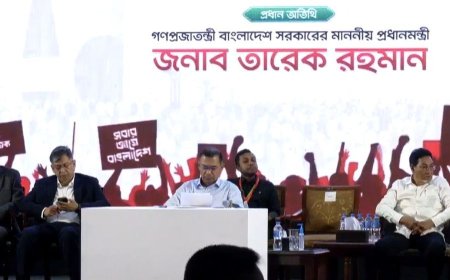
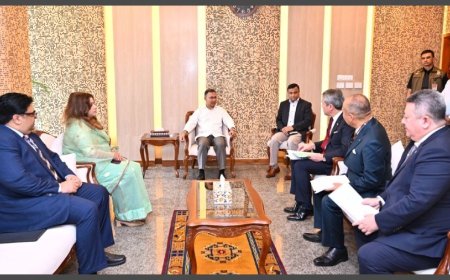
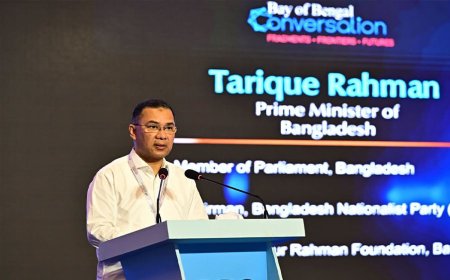
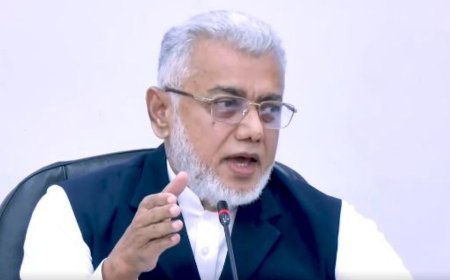
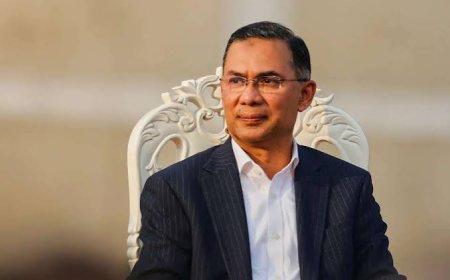
At the same time, the government has a responsibility to engage with all sections of society. It must maintain meaningful communication with opposition parties, business leaders, journalists, academics, professionals, and other stakeholders. Encouragingly, Prime Minister Tarique Rahman appears to have placed considerable emphasis on dialogue. Over the past five months, he has held meetings with business leaders, journalists, and professionals, creating opportunities for discussion and exchange.
The prime minister has made three broad appeals to the nation. First, he has asked for time, noting that his government assumed responsibility for the country during an exceptionally difficult period and needs space to rebuild. Second, he has sought cooperation from everyone to move the country forward. Third, he has welcomed constructive criticism of the government.
Such an emphasis on accountability and dialogue is a positive indication of democratic governance.
The government does not appear to be operating on the assumption that winning an election gives it unlimited authority to do whatever it wishes. So far, its approach has been presented as one of inclusion and consultation.
However, the scope of that dialogue needs to expand further. Most of the people who have so far met with the prime minister appear to come from the BNP’s political and social orbit. The government should also make its doors equally accessible to people outside the BNP and, importantly, to those who openly criticise it.
If consultations are limited primarily to party supporters from different professional groups, there is a danger that genuine dialogue could gradually turn into a competition in praise. Such an environment could eventually distance the government from the realities and concerns of ordinary citizens.
For Bangladesh to move forward, the government must therefore ensure that its engagement remains genuinely inclusive. Dissenting opinions should be heard and respected, criticism should be welcomed when it is constructive, and political differences should be managed through dialogue rather than confrontation.
The country has already endured years of instability, division, and institutional erosion. What Bangladesh needs now is patience, tolerance, cooperation, and a shared commitment to the national interest. Give the government time to work, but also hold it accountable. Strengthen democracy through constructive criticism, not destructive confrontation. Only through mutual respect, inclusive dialogue, and a commitment to the rule of law can Bangladesh begin to rebuild on a stronger foundation.
What's Your Reaction?