



































































Climate Change Increased Risk of Devastating Himalayan Floods
Climate Change Increased Risk of Devastating Himalayan Floods

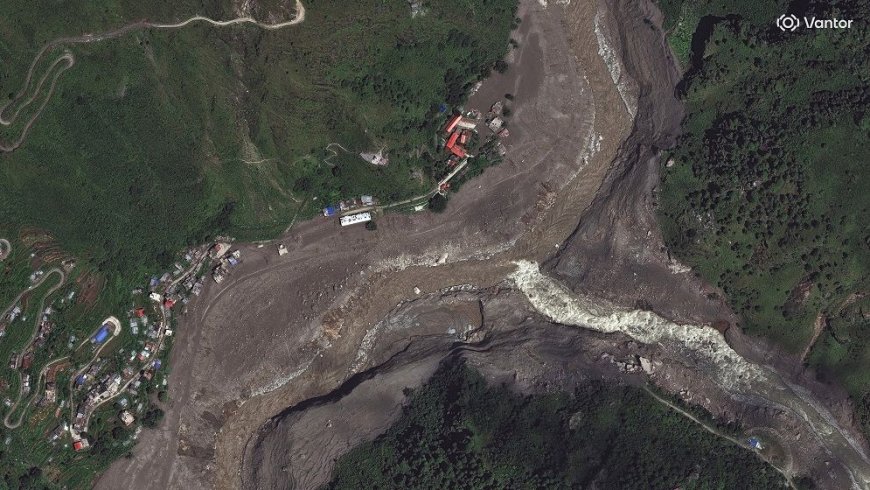
Climate change is creating conditions that can destabilise rocks and ice in high mountain regions, increasing the likelihood of disasters like this week’s devastating Himalayan floods along the Nepal-China border, scientists say.
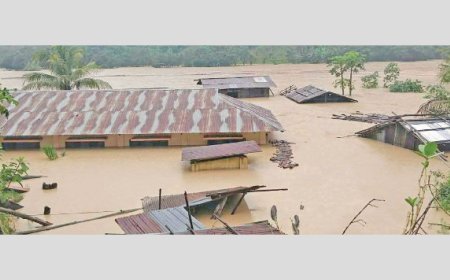
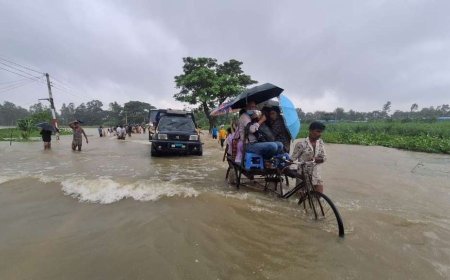
The disaster has killed at least 165 people, while nearly 1,500 remain missing, including around 800 foreign nationals, authorities said on Thursday. The floods began after a massive mass of mud, rock and ice collapsed into a Himalayan river, sending destructive torrents through towns and valleys.
“Climate change is generating conditions that can destabilise high-mountain rock and ice,” said Simon Cox, chief scientist at the Mountains to Sea programme at Earth Sciences New Zealand.
He said such changes could make large-scale collapses and cascading hazards more frequent.
Exact cause of disaster still being investigated
Scientists are still examining the precise cause of Wednesday’s disaster, but initial assessments suggest it may have begun with a huge ice-and-rock avalanche from the northern slopes of Nepal’s Langtang Lirung peak into the Lhende Khola river on the Tibetan side.
The resulting chain of hazards damaged at least six major hydropower plants and infrastructure around the Gyirong Port trade hub. The event also changed river channels more than 100 kilometres downstream, close to the Indian border.
Experts caution that climate change cannot yet be identified as the sole or immediate trigger. However, rising temperatures and glacier melt are believed to have contributed to the instability.
Warming temperatures can reduce the ice support holding steep slopes together, increase meltwater and alter cycles of freezing, thawing and rainfall. These changes can weaken mountain slopes and raise the risk of large collapses, Cox said.
Similar disasters have struck the region
The Himalayas have experienced several catastrophic floods and surges in recent years, although most were smaller in scale.
Recent examples include flooding around Gyirong on the Tibet-Nepal border in 2025, a glacial lake outburst that struck the Sherpa village of Thame in 2024, and a similar disaster in India’s northeastern state of Sikkim in 2023.
Across the Hindu Kush Himalaya, floods, landslides, avalanches and droughts are becoming more frequent and severe.
The International Centre for Integrated Mountain Development (ICIMOD) has warned that rapid changes to water, land and air pose a growing threat to millions of people across the region.
Farooq Azam, a senior cryosphere specialist at ICIMOD, said rising temperatures are making the cryosphere—the ice-covered part of the Earth’s surface—more vulnerable.
He suggested that heavy snowmelt combined with seismic activity may have contributed to the initial rock-and-ice avalanche that triggered the downstream flash flood.
Long-term climate trend is alarming
The long-term changes are increasingly stark. The United Nations said in 2023 that global warming had caused Nepal’s snow-covered mountains to lose nearly one-third of their ice in just over three decades.
It also reported that Nepal’s glaciers had melted 65% faster in the previous decade than during the decade before that.
Benjamin Horton, dean of the School of Energy and Environment at the City University of Hong Kong, described Wednesday’s disaster as a possible example of a “compound event”.
Such events occur when factors such as earthquakes interact with climate-driven changes—including glacier loss, thawing permafrost and unstable slopes—to produce a more complex and destructive disaster than any single factor would cause alone.
Horton said understanding these interconnected and cascading risks will be crucial to strengthening resilience in vulnerable high-mountain communities.
What's Your Reaction?