













































Govt developing three-phase strategy to secure the country’s energy future
Immediate priority on reducing load-shedding, followed by a three-month fuel reserve build-up and efforts to boost domestic gas production.

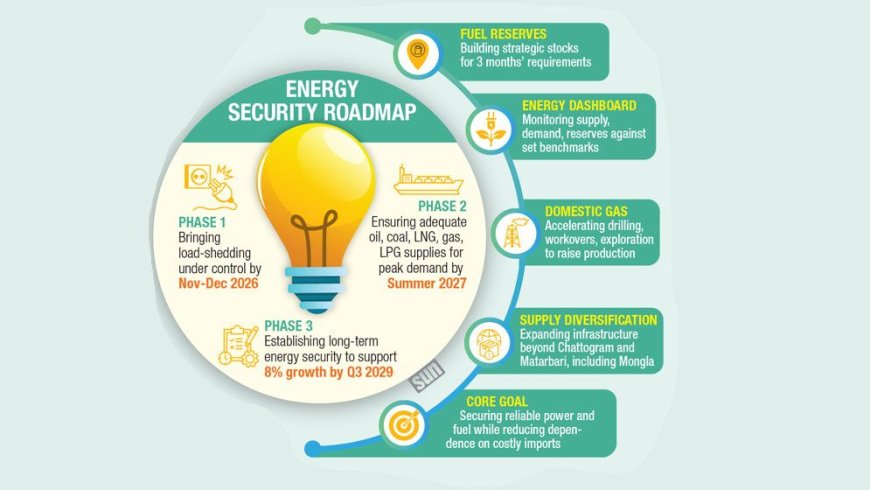
The government is preparing a three-phase roadmap to address Bangladesh’s growing energy crisis, with an immediate focus on reducing load-shedding, ensuring fuel supplies during the peak-demand season and building strategic reserves to support faster economic growth by 2029.
The first phase aims to bring the current power crisis under control by November-December, while the second will focus on meeting increased electricity demand during the summer. The third phase will establish a long-term energy security framework designed to support economic growth of around 8% by the third quarter of 2029.
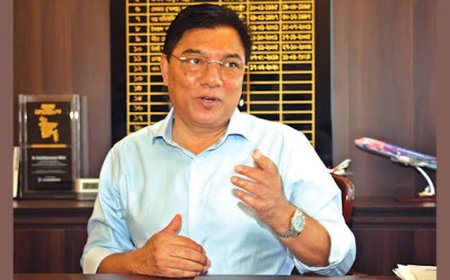
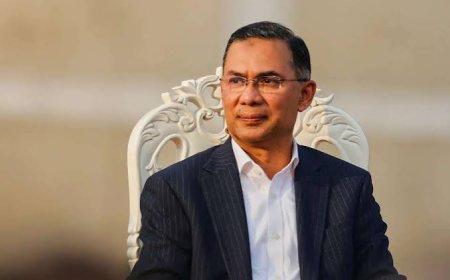
Prime Minister’s Adviser on Finance and Planning Dr Rashed Al Mahmud Titumir told the Daily Sun that the government’s immediate priority was to stabilise the load-shedding situation as quickly as possible.
Under the second phase, the government will assess requirements for oil, coal, LNG, gas and LPG and ensure sufficient supplies ahead of the peak-demand period. In the longer term, it plans to maintain fuel reserves equivalent to roughly three months, or one quarter, of total requirements.
“We are considering a benchmark under which the reserve should be sufficient for three months, or one quarter,” Titumir said, noting that Bangladesh had previously lacked a structured reserve system.
A dashboard-based monitoring mechanism is also planned to track energy availability, demand and reserves against set benchmarks.
Load-shedding puts additional pressure
The roadmap comes amid a sharp rise in load-shedding, despite Bangladesh having almost twice the installed generation capacity of current electricity demand.
Power Division data showed that demand stood at 16,176MW at 3pm on Tuesday, while supply was 13,917MW, resulting in a deficit of 2,259MW. Load-shedding recently reached around 3,500MW, with consumers in some rural areas reportedly facing eight to 14 hours or more of outages daily.
Officials said the situation has improved somewhat following recent government measures.
Bangladesh currently has 133 power plants, including 78 privately owned facilities, with total grid-connected capacity of around 29,593MW. Gas-fired plants account for 12,472MW, or 42%, followed by coal-fired plants at 7,203MW (24%) and furnace-oil plants at 5,641MW (19%). Diesel plants account for 768MW, renewable sources 1,129MW and imported electricity, including from Adani, 2,696MW.
The Bangladesh Power Development Board is preparing to generate up to around 4,000MW from furnace-oil-based plants. Initially, the plants have been instructed to operate at about 80% capacity, with utilisation potentially increasing to 90% depending on demand.
The Bangladesh Petroleum Corporation has also been asked to maintain sufficient furnace oil stocks as demand from the power sector has increased by as much as 35%.
Domestic gas becomes a key priority
A major component of the strategy is increasing domestic gas production to reduce Bangladesh’s costly dependence on imported LNG.
Petrobangla data show that the country has around 29.78 trillion cubic feet of assessed recoverable gas reserves. Of this, approximately 22.41 TCF had been extracted by June, leaving around 7.37 TCF as of June 30.
Domestic gas production has declined from about 2,500 million cubic feet per day six years ago to roughly 1,600 MMcfd, even as demand from power plants and industries has continued to grow.
To reverse the decline, Petrobangla is implementing a 150-well drilling and workover programme. So far, 29 wells have been completed, generating around 270.8 MMcfd of additional gas resources, of which about 125.3 MMcfd is currently being supplied to the national grid.
Eight additional wells are under drilling or workover operations and could contribute another 90 MMcfd. The remaining 113 wells will be developed gradually through exploration, development and workover activities.
Petrobangla expects the overall programme to increase gas production by around 1,401 MMcfd by 2030, strengthening domestic supply and reducing reliance on LNG imports.
Petrobangla Director (PSC and Operation & Mines) Engr Md Shoyeb said the well programme was being carried out alongside expanded exploration efforts.
He said seismic data from various gas fields and blocks was being collected, processed and analysed to identify new leads and drillable prospects, with steps being taken to accelerate exploration drilling in promising areas.
Around 3,000 sq km targeted for seismic surveys
The exploration campaign includes nearly 3,000 square kilometres of planned and ongoing 2D and 3D seismic surveys.
BAPEX is conducting a 660-square-kilometre 3D seismic survey in Char Fasson, while a 2D survey covering approximately 1,450 square kilometres is under way in Habiganj and Bakhrabad. Plans also include 255 line-kilometres of 2D surveys and 632 square kilometres of 3D surveys in the areas.
Following the Jamalpur-1 gas discovery, BAPEX is preparing a project for a 460-square-kilometre 3D seismic survey there. Another 882-square-kilometre 3D survey has been proposed covering Lamigaon, Lalabazar, Doarabazar South and Rashidpur South in Sylhet.
Shoyeb said seismic surveys would be followed by exploration drilling once promising geological structures were identified.
LNG imports cost $23 billion
Bangladesh has increasingly turned to imported LNG since 2018 to compensate for declining domestic gas supplies.
According to Petrobangla’s accounts division, the country spent around Tk277,452 crore, equivalent to about $23 billion, on LNG imports between FY19 and FY26. The government also provided approximately Tk51,366 crore in subsidies.
Current gas demand stands at around 4,000 MMcfd, while the national grid recently received about 2,395 MMcfd, including 792 MMcfd from LNG. This left a deficit of roughly 1,600 MMcfd.
Officials warned that without a significant increase in domestic production, LNG could account for 60-70% of Bangladesh’s gas supply by 2030, increasing the import bill and placing further pressure on foreign exchange reserves.
Experts call for international expertise
Energy expert and Independent University, Bangladesh Vice-Chancellor Prof M Tamim said Bangladesh’s gas fields were already experiencing declining production and required advanced technology, expertise and substantial investment.
He argued that BAPEX lacked sufficient capacity to meet the challenge alone and suggested that Bangladesh make greater use of the technology, expertise and investment available from experienced international companies such as Chevron.
Tamim also stressed that simply drilling new wells would not be sufficient because production from existing fields was declining. He proposed developing smaller gas-bearing layers within existing fields and pointed to the potential of the Chhatak gas field in Sylhet, where preliminary estimates suggest gas reserves of 600 billion to 1 trillion cubic feet.
Energy security linked to investment and industrial growth
Titumir said ensuring energy security was a key part of the government’s broader industrialisation and investment strategy.
The government aims to position Bangladesh as a manufacturing hub and regional gateway, which would require reliable energy supplies as well as policy stability, access to finance, deregulation and improved connectivity.
He also highlighted the need to diversify energy infrastructure beyond Chattogram and Matarbari, with facilities around Mongla being considered as alternative supply routes.
Overall, the three-phase roadmap seeks to ensure reliable electricity and fuel supplies, reduce dependence on expensive imported energy and establish a stronger energy foundation for Bangladesh’s targeted economic growth by 2029.
What's Your Reaction?