






































Dhaka Central University signals a new era in Bangladesh’s higher education
Dhaka Central University signals a new era in Bangladesh’s higher education.

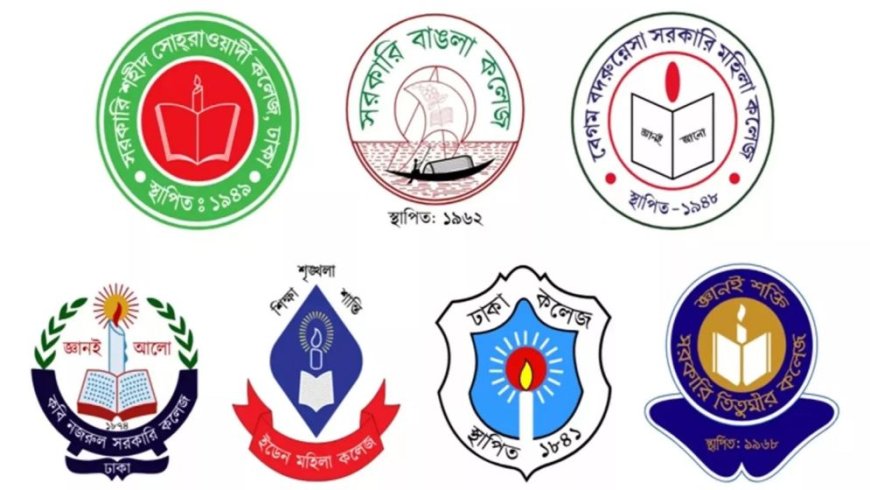
Bangladesh’s higher education landscape is poised for a significant overhaul following the government’s approval of the Dhaka Central University (DCU) Ordinance, 2026, clearing the way for the establishment of a new public university through the integration of seven major government colleges in the capital.
The decision formally ends the long-standing affiliation of these colleges with Dhaka University (DU) and introduces a new institutional arrangement aimed at resolving chronic administrative inefficiencies, session backlogs and allegations of academic discrimination that have persisted for years.
Under the ordinance, the seven colleges—recently separated from DU—will come under the academic jurisdiction of the newly formed DCU while maintaining their individual identities, infrastructure and administrative independence.
Higher secondary education at the colleges will continue under the existing framework, ensuring that intermediate-level students are unaffected by the transition.
The ordinance was approved on January 22. Chief Adviser’s Press Secretary Shafiqul Alam said the move was intended to enhance the quality of higher education and address complications arising from the colleges’ earlier affiliation with DU.
Affiliated Colleges, Independent University
While the seven institutions will function as affiliated colleges, DCU will also operate as a standalone university with its own academic programmes.
The university will eventually be housed on a permanent campus, though temporary arrangements—including rented facilities or designated sites—will be used until construction is completed.
The affiliated colleges are Dhaka College, Eden Mohila College, Government Shaheed Suhrawardy College, Kabi Nazrul Government College, Begum Badrunnesa Government Women’s College, Mirpur Government Bangla College and Government Titumir College, which together serve nearly 200,000 students.
The ordinance provides for a complete administrative framework for DCU, including the Chancellor, Vice-Chancellor, Senate, Syndicate and Academic Council. The President will serve as Chancellor, while the Vice-Chancellor will be appointed from a Senate-nominated panel.
The University Grants Commission (UGC) will retain supervisory authority, with powers to inspect, evaluate and issue directives on academic, examination, research and administrative matters.
Break from DU
Dhaka University formally withdrew the colleges’ affiliation on January 27 following months of protests, road blockades and clashes involving students from both DU and the colleges.
The unrest was driven by allegations of discrimination, delayed examinations and prolonged academic sessions after the colleges were brought under DU in February 2017, following decades under the National University.
According to the ordinance, the colleges will continue as affiliated institutions with full ownership rights over their movable and immovable assets intact. DCU, meanwhile, will be responsible for designing curricula, conducting examinations and awarding degrees, diplomas and certificates.
Student admissions will be conducted centrally, with placements determined by SSC and HSC results and an admission test, either at DCU’s main campus or its affiliated colleges.
School-Based Academic Structure
A major departure from existing practice is the introduction of a school-based academic system, replacing the traditional faculty model.
Separate schools will be established for Arts, Science, Social Sciences, Business Studies, Law and Fine Arts, each headed by a designated Head of School. Teaching, examinations and assessments at undergraduate and postgraduate levels across affiliated colleges will follow a unified academic calendar and evaluation system set by DCU.
The ordinance defines a school as an integrated academic unit comprising multiple departments or disciplines. DCU will also centrally administer MPhil and PhD programmes and facilitate faculty development and advanced training.
Intermediate Education Unaffected
Five of the seven colleges—Dhaka College, Government Shaheed Suhrawardy College, Begum Badrunnesa Government Women’s College, Kabi Nazrul Government College and Mirpur Government Bangla College—currently offer higher secondary education.
Earlier drafts of the ordinance had raised concerns among higher secondary students about potential threats to institutional identity. These concerns have now been addressed, with the final ordinance explicitly confirming that intermediate education will remain under the existing system.
From Movement to Mandate
The creation of DCU is the culmination of years of student activism, which gained renewed momentum during the 2024 student movement amid persistent academic delays under DU.
In response, the Ministry of Education formed a four-member UGC-led expert committee to design the new framework. Following clashes between DU and college students on January 27, formal steps were taken to sever the colleges’ ties with DU.
An interim arrangement placed a principal-level administrator under UGC supervision until the full university structure could be put in place. After consultations, the name “Dhaka Central University” was finalised, and on May 18, 2025, retired Dhaka College principal Prof AKM Ilias was appointed interim administrator for a two-year term.
Progress Amid Delays
Admission notices were issued in July, with results for the first undergraduate intake published on August 26. About 72,000 applicants competed for 11,150 seats across Science, Arts and Social Sciences.
A draft ordinance released on September 24 by a committee led by Prof Mohammad Tanzimuddin Khan invited stakeholder feedback, generating more than 6,000 responses and sparking intense debate.
On November 18, the Education Ministry announced its in-principle approval of DCU, pledging timely examinations, improved governance and enhanced academic quality.
However, despite completing admissions for the 2024–25 academic year and announcing a November 23 start date, classes have yet to begin. With most public universities already well into the academic year—and DU preparing admissions for the next cycle—DCU’s first cohort has effectively lost a full academic year without attending a single class.
Meanwhile, students from the seven colleges continued protests demanding finalisation of the ordinance, with the latest demonstration on January 15 disrupting traffic at several key intersections in the capital.
Prof AKM Ilias said the launch of DCU would raise academic standards across the affiliated colleges. Reflecting on the prolonged movement, he said delays—reasonable or not—often lead to unrest when decisions remain unresolved.
He added that existing BCS education cadre teachers would continue teaching at the colleges and could also join DCU through recruitment exams or transfers.
DCU movement coordinator Zakaria Bari Sagor, a master’s student at Kabi Nazrul Government College, described the ordinance as the outcome of prolonged student struggle. He said the measure would be dedicated to four students killed during the July uprising at the college.
With the ordinance now approved, stakeholders hope Dhaka Central University will finally transition from uncertainty to stability, fulfilling long-standing demands for timely education, institutional autonomy and academic dignity for tens of thousands of students in Dhaka.
What's Your Reaction?