























































Civic Leaders Call for Inclusion of Zia’s ‘Birth of a Nation’ Article in Textbooks
Civic Leaders Call for Inclusion of Zia’s ‘Birth of a Nation’ Article in Textbooks

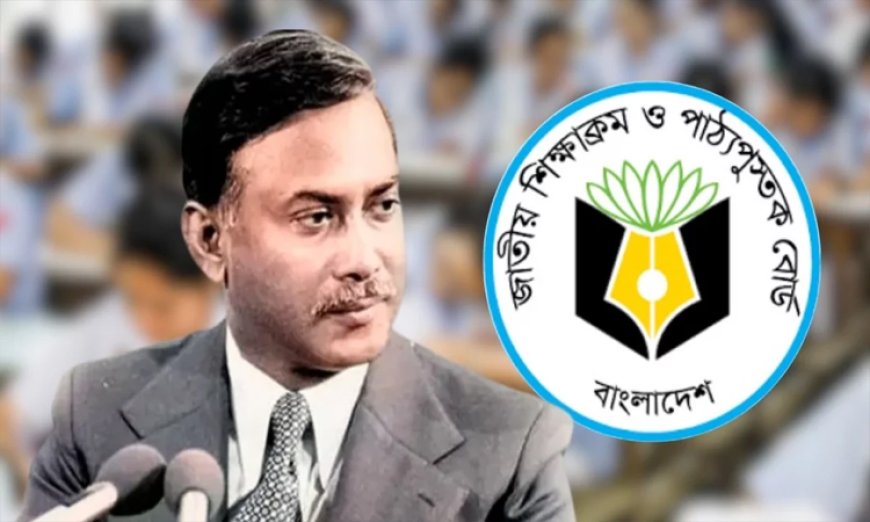
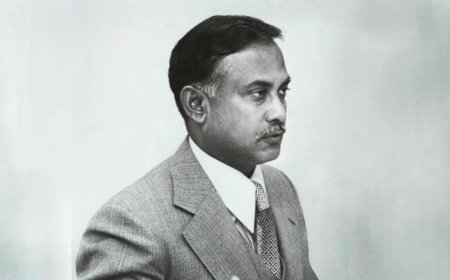
Several prominent civil society figures have proposed including Shaheed President Ziaur Rahman’s widely discussed article, Birth of a Nation, in school textbooks, arguing that it is an important historical document that can help future generations better understand Bangladesh’s Liberation War and the country's emergence as an independent nation.
The call comes as the country prepares to observe the martyrdom anniversary of Ziaur Rahman tomorrow.
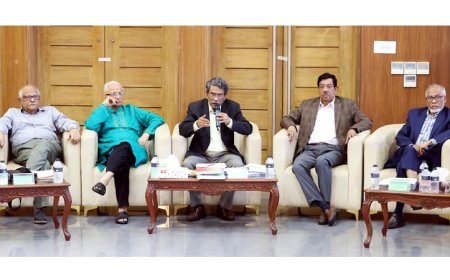
Speaking to BSS, Bangla Academy President and noted educationist Professor Abul Quasem Fazlul Huq described the article as a significant historical document. Originally published in the now-defunct Dainik Bangla on the first anniversary of Bangladesh’s Independence Day in 1972, the article offers a first-hand account of key events leading to the Liberation War.
“This is an excellent piece of writing and an important historical document. It deserves a place in the national curriculum,” Huq said.
Historian Professor Syed Anwar Husain echoed the sentiment, stressing the need to preserve authentic accounts of the Liberation War.
“The true history of the Liberation War is gradually fading from public memory. Including this article in textbooks would help preserve the history of 1971,” he said.
Other academics also expressed support for the proposal, saying the article could contribute to a broader, more inclusive understanding of Bangladesh’s struggle for independence.
Former Dhaka University Vice-Chancellor and Ambassador Professor Dr Anwarullah Chowdhury said the article contains valuable historical insights and could be incorporated into courses related to Bangladesh Studies.
“I have read the article carefully. It is informative and free from misleading narratives. It would be a valuable addition to academic materials dealing with Bangladesh’s history,” he said.
Birth of a Nation was first published in Dainik Bangla’s Independence Day special edition in 1972, when Ziaur Rahman was serving as Deputy Chief of Army Staff with the rank of Major General. The article was later republished by the now-defunct weekly Bichitra in 1974.
Professor Dr Md Israfil, founding vice-chancellor of Thakurgaon University, said the article received widespread appreciation when it was first published because of its vivid portrayal of the circumstances surrounding the Liberation War.
“The younger generation, irrespective of religion or ethnicity, should know this history,” he said.
In the article, Ziaur Rahman reflected on the political, cultural and economic discrimination faced by Bengalis under Pakistani rule and traced the developments that eventually culminated in the Liberation War. He discussed major milestones including the 1952 Language Movement, the 1954 elections, military rule under Ayub Khan, the 1965 Indo-Pak war, the nationalist movements of the 1960s, the 1969 mass uprising, and the 1970 general election.
Zia argued that the Pakistani leadership’s refusal to transfer power following the Awami League’s electoral victory and the subsequent military crackdown of March 25, 1971, made armed resistance inevitable.
Recalling the period, he wrote that Bengali military personnel began preparing for resistance after Bangabandhu Sheikh Mujibur Rahman’s historic March 7 speech, which he described as a “green signal” for the movement.
The article also recounts Zia’s role in mobilising Bengali troops in Chattogram following the launch of Operation Searchlight and his subsequent involvement in the Liberation War. He later commanded a sector before leading the brigade-sized force known as “Z Force.”
In one notable passage, Zia reflected on the language controversy that emerged shortly after Pakistan’s creation, arguing that the seeds of Bengali nationalism were planted when the country’s founder, Muhammad Ali Jinnah, declared that Urdu alone would be Pakistan’s state language.
The article presents a chronological account of the political developments that shaped the Bengali nationalist movement and eventually led to the Liberation War and Bangladesh’s independence.
Following the war, Ziaur Rahman went on to become a national political figure and later served as President of Bangladesh. During his tenure, he introduced the concept of Bangladeshi nationalism, restored multiparty politics by ending the one-party BAKSAL system, and promoted broader political participation and freedom of expression.
What's Your Reaction?