















































BNP at 48: Carrying Forward Zia’s Vision of a Self-Reliant Bangladesh
Tarique Vows to Build an Accountable, Welfare-Oriented Bangladesh

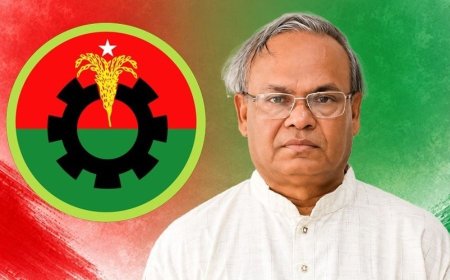
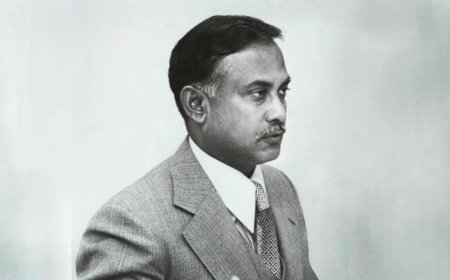
The Bangladesh Nationalist Party (BNP) marks its 48th founding anniversary today, reaffirming the political and economic ideals of its founder, Shaheed President Ziaur Rahman. His 19-point programme envisioned a democratic, self-reliant and economically just Bangladesh.
Established on 1 September 1978, the BNP has remained a major force in Bangladesh’s political landscape, forming governments at various times while also playing a significant role in opposition.
Ziaur Rahman, the party’s founding chairman, led the BNP until his assassination in Chattogram on 30 May 1981 by a group of disgruntled military personnel.
After decades of political struggle, the BNP is now back in power and has announced a five-day nationwide programme to celebrate its founding anniversary.
Zia officially announced the formation of the BNP at Ramna Maidan in Dhaka on 1 September 1978. The party’s stated goals included economic development, democratic governance, national unity rooted in Bangladeshi nationalism and economic self-reliance.
The BNP was founded on four core principles: absolute faith and trust in Allah, Bangladeshi nationalism, multi-party democracy, and socialism defined in terms of economic and social justice.
Its 19-point programme focused on reducing poverty and population growth, promoting private enterprise, developing agriculture and fostering national unity regardless of religion, caste, creed or ethnicity.
Earlier, in early 1978, Zia had supported the formation of the Jatiyatabadi Ganatantrik Dal (Nationalist Democratic Party), bringing together diverse anti-BAKSAL forces, including nationalist, centrist and right-wing groups as well as secular freedom fighters.
After becoming president in April 1977, Zia took steps to restore multi-party politics and end the one-party BAKSAL system introduced through the Fourth Amendment to the Constitution in January 1975.
The BNP secured a landslide victory in the second parliamentary election in February 1979, winning 207 of the 300 seats.
Emphasis on agriculture and private enterprise
Zia’s economic strategy placed particular importance on agriculture and the private sector.
His government formed expert teams to promote economic development, introduced measures such as farmer subsidies and improved agricultural marketing, and encouraged exports of both traditional and non-traditional products.
Food production increased significantly during his tenure, with Bangladesh moving closer to becoming a rice-surplus nation.
As part of the 19-point programme, more than 1,500 canals were excavated or re-excavated within 18 months to expand irrigation facilities. The country subsequently achieved its highest food-grain production for two consecutive years under the development programme.
Zia also focused on strengthening law and order, improving police training and professionalism, and enhancing discipline and organisational capabilities within the armed forces.
Foreign policy and regional cooperation
On the international front, Zia followed an independent and non-aligned foreign policy, seeking friendly relations with countries across different regions.
During his tenure, Bangladesh strengthened ties with neighbouring states, China, the United States, Muslim-majority countries and Southeast Asia.
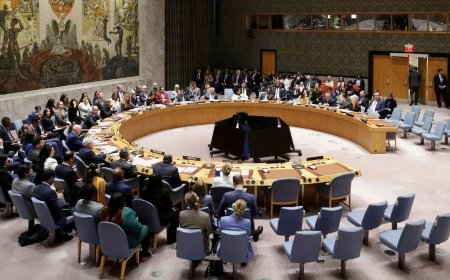
His government also placed emphasis on multilateral diplomacy, helping Bangladesh secure a non-permanent seat on the UN Security Council in 1978.
Zia advocated greater regional cooperation in South Asia, laying the foundations for what later became the South Asian Association for Regional Cooperation (SAARC), which was formally launched in Dhaka in 1985.
His diplomatic outreach to Saudi Arabia and the Organisation of Islamic Cooperation (OIC) also helped strengthen Bangladesh’s relations with the Muslim world.
Among Zia’s constitutional changes were the insertion of “Bismillahir Rahmanir Rahim” in the Preamble and the addition of “absolute trust and faith in the Almighty Allah” to Article 8(1) and 8(1A). Article 8(1) described socialism as “economic and social justice”, while Article 25(2) emphasised stronger fraternal relations among Muslim countries based on Islamic solidarity.
Zia did not live long enough to see all of his political and economic objectives fulfilled. His assassination in 1981, however, did not bring an end to the political legacy associated with his vision.
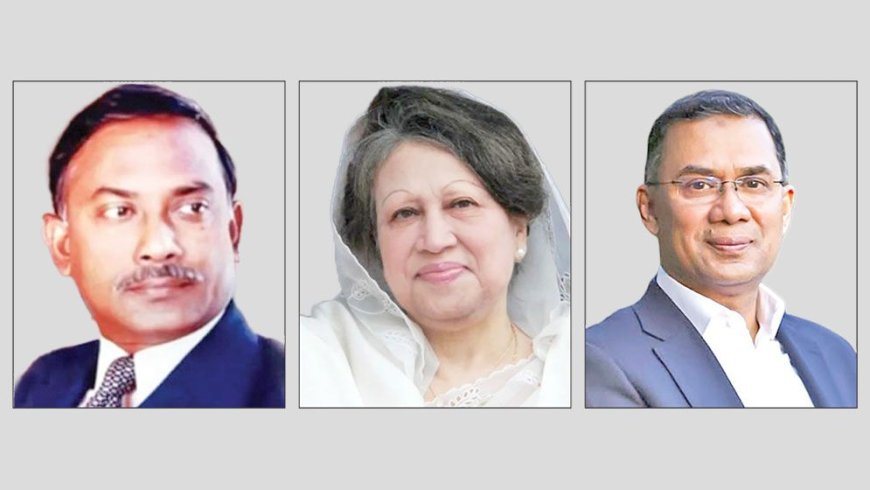
Following his death, Begum Khaleda Zia led the BNP until her death in 2025. During her imprisonment, her son Tarique Rahman served as the party’s acting chairman and later assumed charge of the state.
Five-day anniversary programme
The BNP has announced a series of programmes to observe its 48th anniversary.
Party flags were hoisted at 6:00am at the BNP’s central office in Nayapaltan and at party offices across the country.
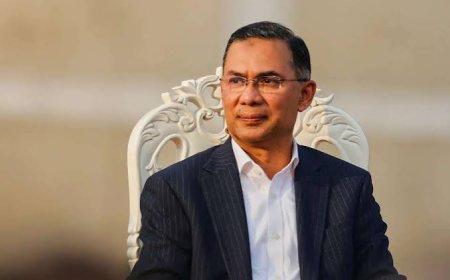
Prime Minister and BNP Chairman Tarique Rahman is scheduled to pay tribute to Ziaur Rahman and former prime minister Begum Khaleda Zia by placing wreaths at their graves at Zia Udyan in the capital.
The party will also organise a fish fry releasing programme led by Joint Secretary General Habibun Nabi Khan Sohel and a tree plantation campaign under the leadership of Joint Secretary General and Water Resources Minister Shahiduddin Chowdhury Anne.
Tarique pledges an accountable, welfare-oriented state
In a message marking the anniversary, Prime Minister Tarique Rahman extended greetings to BNP leaders, activists, supporters and well-wishers, as well as the people of Bangladesh.
He said the establishment of the BNP was a landmark moment in the country’s efforts to restore democracy.
Tarique highlighted Ziaur Rahman’s role in restoring democratic politics and reinstating the rights of banned political parties to engage in political activities, paving the way for the revival of a pluralistic democratic system.
He described Zia as the Great Proclaimer of Independence, a successful statesman and an architect of modern Bangladesh.
Tarique also paid tribute to Khaleda Zia, saying her charismatic leadership helped bring the BNP closer to people across the country.
He said BNP leaders, activists, supporters and well-wishers had repeatedly sacrificed their lives alongside pro-democracy forces whenever the country’s independence, sovereignty and democracy came under threat.
According to Tarique, the BNP was entrusted with governing the country whenever citizens were able to exercise their voting rights through free and fair elections.
He said the party now wanted to honour that public trust by establishing an accountable state and transforming Bangladesh into a welfare-oriented country.
“The people who believe in democracy are the source of all political power of BNP,” he said, adding that the BNP’s other name was the struggle to build a welfare-oriented, democratic and self-reliant Bangladesh.
What's Your Reaction?