
































































Students increasingly at risk as social media addiction grows
Students increasingly at risk as social media addiction grows

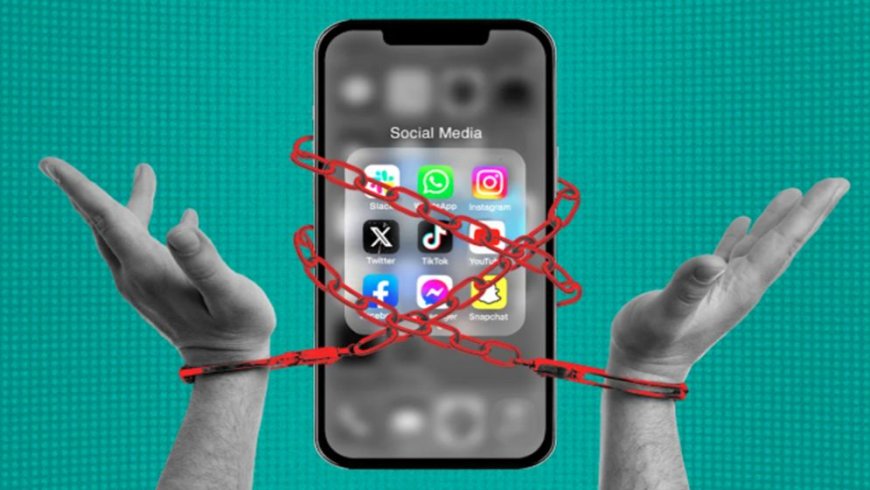
Late-night scrolling through Facebook, YouTube, TikTok, and Instagram has become routine for many teenagers in Bangladesh. What may appear to be harmless entertainment is increasingly raising concerns among parents, educators, and health professionals. Children and adolescents—often regarded as the country's greatest asset—are now facing growing risks from excessive social media use, prompting fears about their future well-being and development.
Studies indicate that prolonged engagement with social media is affecting sleep patterns, reducing academic focus, and contributing to higher levels of stress and anxiety among young people. While countries such as the United Kingdom, Australia, France, Spain, and Norway have moved to restrict social media access for users under 16, Bangladesh has yet to adopt any major policy measures to tackle the issue.
According to 2025 estimates, nearly 60 million people in Bangladesh use social media, accounting for around 34 percent of the population. Facebook remains the most widely used platform, followed by YouTube, TikTok, and Instagram, with young users making up the largest segment of the audience.
Attention Span and Family Bonds at Risk
Professor Dr. Salahuddin Kawsar Biplob, chairman of the Department of Psychiatry at Bangladesh Medical University, cautions that excessive screen time and the misuse of social media among children and adolescents can have serious consequences for both mental and physical health.
He explained that, like other forms of addiction, internet dependency stimulates dopamine release in the brain, gradually impairing concentration and memory. According to him, overreliance on screens is also diminishing children's imagination and creativity, while many addicted youngsters become detached from reality and retreat into virtual worlds.
A Threat to Future Generations
Dr. Fahmida Khatun, executive director of the Centre for Policy Dialogue (CPD), believes that social media addiction is emerging as a major obstacle to the healthy growth and development of young people.
While acknowledging the benefits of digital platforms, she warned that their negative effects are increasingly undermining critical thinking, creativity, and intellectual development. She also noted that the absence of effective regulation has allowed social media to evolve into an uncontrolled environment that weakens family relationships and social values.
Rising Health Concerns
Data from the International Centre for Diarrhoeal Disease Research, Bangladesh (icddr,b), shows that children in Dhaka spend nearly five hours a day on screens, including smartphones, televisions, tablets, computers, and gaming devices.
Research has revealed that more than one-third of children experience eye-related problems, while nearly 80 percent frequently suffer from headaches. Excessive screen exposure has also been associated with sleep deprivation, obesity, vision impairment, and a range of mental health challenges.
Impact on Sleep and Mental Well-being
A study published in the journal Nature and Science of Sleep, based on data from 1,139 Bangladeshi higher secondary graduates, identified a strong relationship between social media addiction and poor sleep quality.
The findings suggest that higher levels of social media dependency are linked to disrupted sleep, frequent awakenings during the night, and reduced productivity during the day. Researchers concluded that excessive use of social platforms can significantly undermine both physical and psychological well-being.
Global Shift Toward Regulation
Governments around the world are increasingly taking steps to limit children's exposure to social media.
Earlier this week, British Prime Minister Keir Starmer announced plans to ban access to Facebook, TikTok, and Instagram for children under 16, supported by advanced age-verification systems.
Australia has already become the first country to introduce a nationwide prohibition on social media use for under-16s. The legislation applies to platforms including Facebook, Instagram, Snapchat, TikTok, X, and YouTube, and imposes substantial fines on companies that fail to comply.
France is considering similar restrictions for children under 15 and tighter controls on mobile phone use in schools. Comparable measures have either been implemented or proposed in countries such as Indonesia, Malaysia, Austria, Spain, Greece, Denmark, Norway, Poland, and Slovenia.
China has introduced a dedicated "minor mode" that limits screen time based on age, while the European Union has strengthened protections for children online through its Digital Services Act.
Bangladesh Yet to Act
Despite the growing concerns, Bangladesh currently lacks any age-specific restrictions on social media use. Existing child protection laws contain little guidance on online safety, while cyber legislation focuses primarily on cybercrime rather than safeguarding children in digital spaces.
A UNICEF survey found that two-thirds of young people in Bangladesh support stronger measures against harmful online behavior. Among nearly 29,000 respondents, 45 percent reported experiencing cyberbullying. Yet experts argue that policy responses remain inadequate.
Calls for Urgent Intervention
Technology expert Suman Ahmed Sabir supports restricting social media access for children under 16 but emphasizes that awareness-building must accompany any regulatory measures.
He stressed that both parents and children need a better understanding of the dangers associated with excessive social media use, while also highlighting the importance of promoting sports and other healthy recreational activities.
Dr. Md. Touhidul Haque, assistant professor at the Institute of Social Welfare and Research at the University of Dhaka, warned that unrestricted access to smartphones and high-speed internet is increasingly influencing children's behavior.
According to him, many young people are losing interpersonal communication skills, becoming more aggressive, and showing declining respect for family and social norms.
What Can Be Done?
Experts recommend a comprehensive strategy involving the government, educational institutions, families, and technology companies. Key proposals include:
-
Introducing age-based restrictions on social media use for children under 16.
-
Requiring mandatory age verification on social media platforms.
-
Integrating digital literacy and internet safety education into school curricula.
-
Launching nationwide awareness campaigns for parents and guardians.
-
Strengthening child protection provisions within cyber and digital safety laws.
-
Imposing penalties on platforms that fail to adequately protect young users.
As social media addiction continues to affect children's education, health, and social development, experts warn that inaction could have lasting consequences for Bangladesh's next generation. The challenge now is whether policymakers can act quickly enough to protect young people in an increasingly digital world.
What's Your Reaction?