



































































Search for Alternatives to Hormuz Oil Exports Intensifies
Search for Alternatives to Hormuz Oil Exports Intensifies

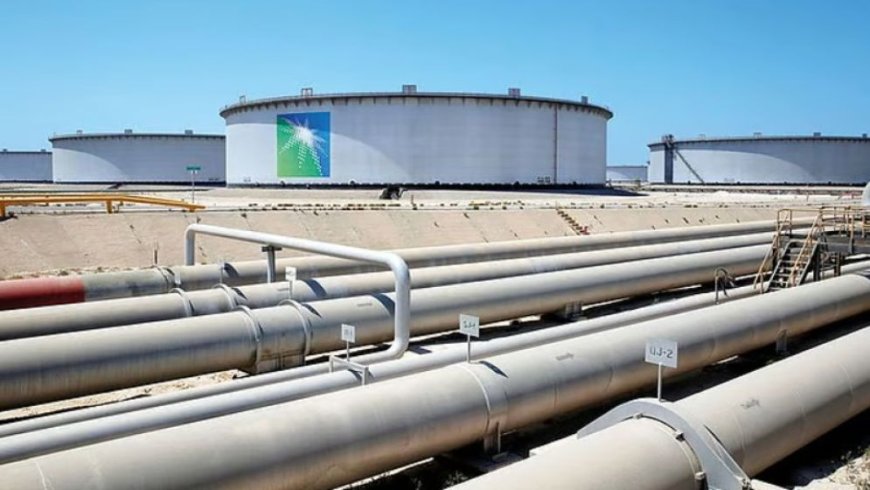
Disruptions to shipping through the Strait of Hormuz have prompted Gulf oil producers to fast-track alternative export routes, with several pipeline projects either revived or newly announced.
Here is an overview of the key proposals:
Regional outlook
The Strait of Hormuz handled approximately 14.95 million barrels per day (mbd) of crude oil exports in 2025, according to the International Energy Agency (IEA).
Iran accounted for roughly 1.69 mbd of those exports and is expected to remain dependent on the strait in the long term because of its strategic control over the waterway. According to Andrew Wilson of BRS Shipbrokers, Iran is likely to continue producing and exporting as much crude as possible, primarily to China, making alternative routes less critical for Tehran.
Excluding Iran's exports, around 13.26 mbd moves through Hormuz. Industry experts and official estimates suggest that up to 11.5 mbd could eventually be diverted through existing pipelines and planned infrastructure projects.
Saudi Arabia
Before the conflict that began in late February, Saudi Arabia transported about 2 mbd of crude via its East-West Pipeline, which connects Abqaiq on the Gulf coast to the Red Sea port of Yanbu, according to the IEA.
Saudi Aramco announced in March 2025 that it had expanded the pipeline's capacity to 7 mbd, leaving around 5 mbd of unused capacity.
The kingdom is also considering a further expansion of up to 2 mbd, according to the US-based Institute for Energy Research (IER). It remains unclear whether this would involve upgrading the existing pipeline or building a parallel line. Andrew Wilson said the project could be completed around 2030–31.
United Arab Emirates
Prior to the conflict, the UAE exported about 1.1 mbd through the Abu Dhabi Crude Oil Pipeline (ADCOP), which links inland oil fields to the port of Fujairah on the Gulf of Oman, avoiding the Strait of Hormuz.
The IEA estimates the pipeline's capacity at 1.8 mbd, leaving roughly 0.7 mbd of spare capacity.
In May, the UAE announced it was accelerating work on a second pipeline that would run alongside the existing route before extending to the country's northern coast, enabling crude produced north of Hormuz to bypass the strait. According to the Abu Dhabi Media Office, the project will double Fujairah's export capacity and is expected to become operational next year.
Iraq
Earlier in July, the US State Department said efforts were underway to revive a major pipeline linking Iraq's oil fields to Syria's Mediterranean coast.
The project, backed by an international consortium under US oversight, is expected to have an initial capacity of 2 mbd. However, no completion timeline has been announced, and analysts warn that political and investment challenges could delay progress.
Kuwait and Bahrain
Neither Kuwait nor Bahrain currently has a pipeline that bypasses the Strait of Hormuz.
However, both countries have recently held discussions with Saudi Arabia about connecting to the kingdom's pipeline network, according to the Institute for Energy Research, as they explore options to reduce reliance on the strategic waterway.
What's Your Reaction?