

















































LOYALTIES UP FOR GRABS - Second wave of defections hits parties days ahead of polls
LOYALTIES UP FOR GRABS - Second wave of defections hits parties days ahead of polls

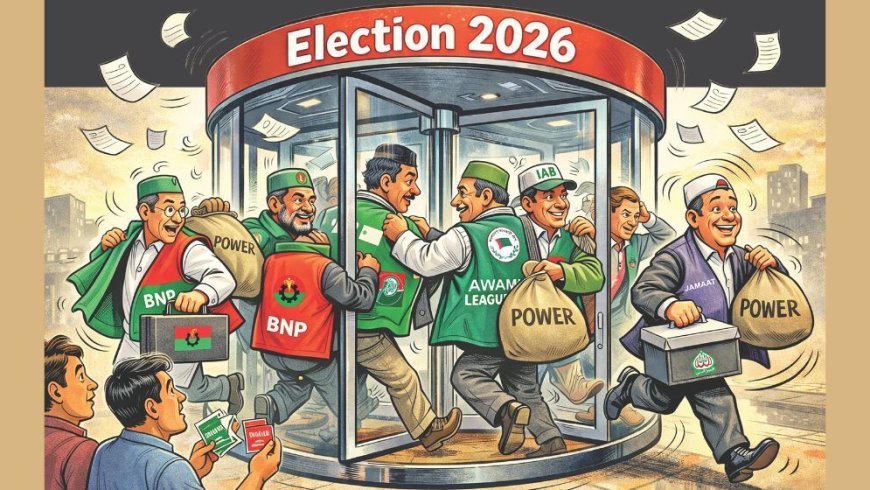
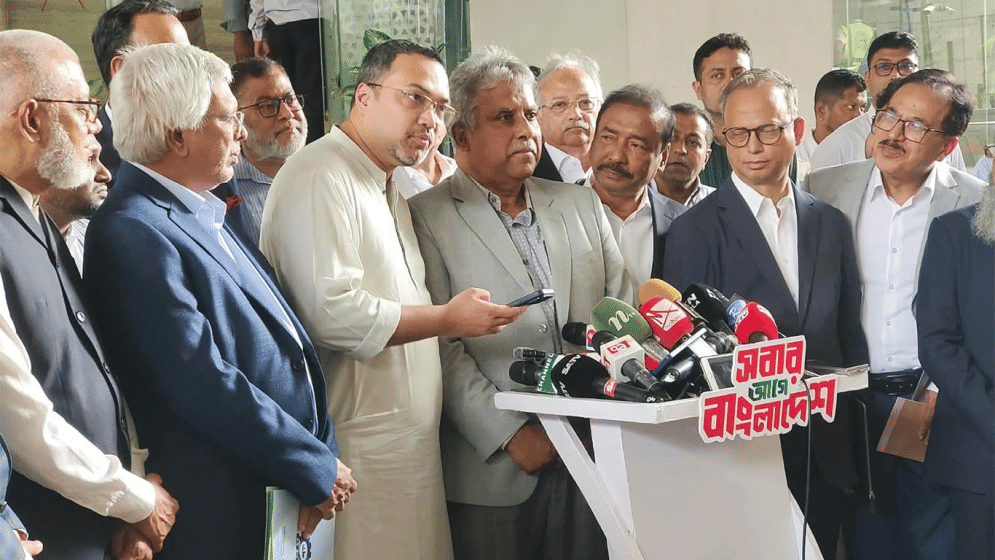
With just days remaining before the 13th parliamentary election, a new wave of political defections is sweeping across the country, extending from senior leaders to district-level organisers and grassroots activists. The trend, analysts say, reflects a deepening organisational and ideological crisis within Bangladesh’s political parties.
This second round of shifting allegiances—following an earlier spate of defections during seat-sharing negotiations—has seen leaders and activists move among the BNP, Jamaat-e-Islami, National Citizen Party (NCP) and Islami Andolan Bangladesh (IAB). Unlike the earlier phase, however, the current movement has spread far beyond prominent figures, penetrating local party units across multiple districts.
In many instances, former members of the activities-banned Awami League, the Jatiya Party and the NCP have joined the BNP and the IAB. At the same time, IAB activists have defected to Jamaat-e-Islami, while a smaller number of Jamaat members have reportedly moved in the opposite direction.
Those changing sides often cite ideological disappointment, marginalisation within their parties and political deprivation. Political scientists, however, argue that personal calculation remains the primary motivation.
On 27 January, Azmal Sarker, president of the Jiyar Kandi union Awami League, joined the BNP along with more than 100 activists at an event held at Matrichaya School and College in Titas upazila of Cumilla. The programme was attended by Selim Bhuiyan, the BNP’s Cumilla divisional organising secretary and candidate for Cumilla-2.
Azmal said his long-standing loyalty to the Awami League had gone unrecognised and that he had been denied opportunities to serve the public while the party was in power. Similar defections from the Awami League to the BNP have since been reported in Aditmari in Lalmonirhat, Saltha in Pabna and Bhanga in Faridpur.
The flow has not been one-directional. On 30 January, Golam Mahmud Mahabub, a BNP district-level leader in Barishal and vice-president of its Banaripara upazila unit, joined Jamaat-e-Islami along with more than 100 leaders and activists. He was welcomed by Master Abdul Manan, Jamaat’s candidate for Barishal-2 (Banaripara–Wazirpur).
Mahabub, who said he had joined the BNP in 1977, accused his former party of abandoning its founding ideals. “The BNP has turned into a party of extortionists, looters, grabbers and addicts,” he said, adding that Jamaat-e-Islami upheld values of independence, sovereignty and Islam. “I joined to be a soldier for the truth.”
Elsewhere, at least 50 leaders and activists from the Jatiya Party and Jamaat-e-Islami joined the BNP in Rampal, Bagerhat, on 23 January. A day earlier, at least 55 activists from the Makhaldanga union unit of Islami Andolan Bangladesh in Chuadanga defected to Jamaat-e-Islami. The reception was attended by Masud Parvez Rasel, assistant secretary of the Chuadanga district Jamaat unit and the party’s candidate for Chuadanga-1.
Shahin Ali, health affairs secretary of the Makhaldanga union IAB unit, said differences with the party’s central leadership prompted the move. “We could not align with the workflow and mentality of the central body of Islami Andolan,” he said.
Further realignments have been reported in the southern districts, where former Awami League activists joined the Gano Odhikar Parishad in Patuakhali, while Gano Odhikar members recently moved to Jamaat-e-Islami in Jhalokathi.
Several high-profile figures had also switched allegiance earlier, ahead of nomination submissions, withdrawals and seat-sharing negotiations. These include Jatiya Dal leader Sayed Ehsanul Huda, Gano Odhikar Parishad’s Rashed Khan, Bangladesh Liberal Democratic Party’s Shahadat Hossain Selim, and Liberal Democratic Party leader Ridwan Ahmed, all of whom joined the BNP.
Expelled BNP leader and freedom fighter Akhtaruzzaman Ranjan joined Jamaat-e-Islami, while Jatiya Party leaders Rustom Ali Farazi and Golam Moshi defected to Islami Andolan Bangladesh.
Dr Md Shahabul Haque, a professor of political studies at Shahjalal University of Science and Technology, said personal gain was the most likely driver behind the mass defections. “Leaders and activists from smaller parties are joining the BNP and Jamaat-e-Islami because they believe these parties will come to power,” he said. “They want to remain in a comfort zone after the election.”
He added that frustration also played a role. “Members of the activities-banned Awami League are switching parties out of frustration. Many BNP activists, sidelined after 5 August, moved to Jamaat-e-Islami as it emerged as a new power contender. Islami Andolan members joined Jamaat after the collapse of alliances weakened their party. Why a few Jamaat members joined the IAB, however, remains puzzling.”
Shahabul Haque warned that the erosion of smaller parties could undermine democratic pluralism. “If this continues, small parties will disappear, which is unhealthy for democracy. Historically, minor parties have played an important role in governance.”
Mezbah-Ul-Azam Sowdagar, political analyst and associate professor at Jagannath University, said ideology still mattered—but only to a degree. “Ideology is one factor, but not the only one,” he said. “People leave when they feel undervalued, when internal wrongdoing frustrates them, or when they see better prospects to exercise power elsewhere. Defections vary from case to case across parties.”
What's Your Reaction?