





















































Govt Intensifies Efforts to Ease Energy Crisis
Govt Intensifies Efforts to Ease Energy Crisis

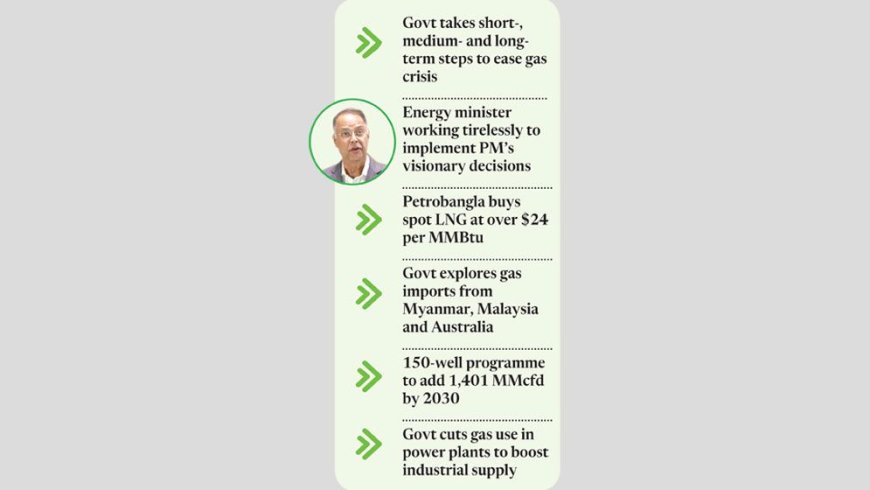
The government has launched a series of short-, medium- and long-term measures to address the country’s ongoing gas crisis, including increasing expensive spot-market LNG purchases, expediting a programme to drill and work over 150 wells, and exploring gas imports from Myanmar and Malaysia.
It has also decided to reduce gas consumption in power plants and maximise oil-fired generation to free up additional gas for industries.
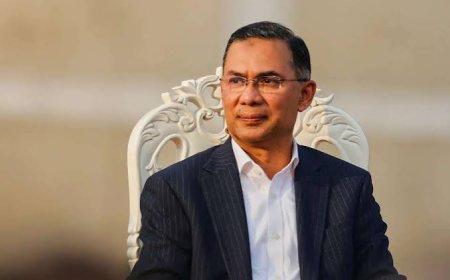
Following Prime Minister Tarique Rahman’s directives to address the energy crisis on an urgent basis, the Ministry of Power, Energy and Mineral Resources and its relevant agencies are jointly implementing the measures.
The multi-pronged strategy focuses on importing LNG from the spot market, exploring alternative gas sources, boosting domestic exploration and production, and adjusting the power sector’s fuel mix to ensure the most efficient use of available gas.
Officials said the ministry and Petrobangla, under Power, Energy and Mineral Resources Minister Iqbal Hassan Mahmood Tuku, are working to address the immediate supply shortage while pursuing a longer-term strategy to increase domestic production and reduce dependence on imported gas.
The government’s primary objectives are to keep industries operational, stabilise electricity supplies and gradually reduce reliance on costly imported LNG. Petrobangla sources said uncertainty surrounding long-term LNG supplies has forced the state-run company to turn to the spot market, where prices are significantly higher. Two cargoes purchased last week cost more than $24 per MMBtu.
The government is also expanding its pool of LNG suppliers to ensure uninterrupted supplies. While 29 companies are currently enlisted, efforts are under way to add nine more.
The global LNG market has become increasingly uncertain after Qatar suspended supplies. QatarEnergy declared force majeure and halted LNG operations following shipping disruptions in the Strait of Hormuz amid the US-Iran conflict. Bangladesh was scheduled to receive 56 LNG cargoes under long-term contracts during the current fiscal year. However, with supplies suspended until November, Petrobangla expects to receive only about half of the contracted cargoes, prompting the government to seek alternative sources.
Talks have begun on a proposal to import gas from Myanmar through a pipeline. The government is reviving an earlier proposal to construct a pipeline from Myanmar to Chattogram, while the possibility of importing gas from Myanmar as LNG is also being considered.
Meanwhile, the government has taken an in-principle decision to import gas from Malaysia using cryogenic lorry tankers under the ISO method. The initiative, aimed at delivering gas to industries more quickly, could take around six months to implement. The government has also sought measures to import LNG from Australia.
1,401 MMcfd additional gas expected by 2030
The government is also prioritising increased domestic gas production as a sustainable solution to the crisis. Full implementation of Petrobangla’s programme to drill and work over 150 wells could generate an additional 1,401 million cubic feet per day (MMcfd) of gas by 2030.
Work on 29 wells has already been completed, securing around 270.8 MMcfd of gas resources, of which approximately 125.3 MMcfd is currently being supplied to the national grid. Drilling and workover activities are under way at another eight wells, which are expected to contribute around 90 MMcfd once completed. Plans have been made to complete exploration, development and workover activities on the remaining 113 wells in phases.
Petrobangla Director (PSC and Operation & Mines) Engineer Md Shoaib said extensive exploration is also under way alongside the 150-well programme to identify new gas reserves. Authorities are taking steps to quickly drill exploration wells after promising structures are identified through seismic surveys.
The urgency of these initiatives has grown as domestic gas production continues to decline. Petrobangla data show that daily domestic production has dropped from around 2,500 MMcfd to approximately 1,600 MMcfd over the past six years. Meanwhile, demand from the power and industrial sectors has continued to rise, with total national gas demand now estimated at around 4,000 MMcfd. On Tuesday, the national grid received 2,329 MMcfd, including 711 MMcfd from LNG.
Save gas for industry, use oil for power
To increase gas availability for industries, the government has moved to reduce gas consumption in power plants and operate furnace-oil-fired plants at maximum capacity. The authorities are strengthening the plants’ ability to purchase fuel by clearing outstanding electricity bills.
If oil-fired power plants return to near-full capacity within the next two weeks, they could add around 2,500 megawatts to the national grid.
To support the initiative, the government has provided the Bangladesh Power Development Board (BPDB) with a Tk6,000 crore interest-free loan to purchase furnace oil. The fund is expected to support average daily generation of around 4,000MW from oil-fired plants.
Through these coordinated measures, the government aims to increase electricity generation, reduce load-shedding and free up gas currently being consumed by the power sector for industrial use, helping factories maintain production.
Energy expert Prof M Tamim said the decision to moderately reduce gas supplies to power plants and divert the gas to industries was realistic under the current circumstances. However, he cautioned against increasing dependence on oil-fired power generation over the long term.
Overall, the government is tackling the immediate gas shortage by purchasing costly LNG while simultaneously exploring new sources, boosting production from existing fields and developing import options from alternative countries. At the same time, increasing oil-fired electricity generation and reducing gas consumption in power plants could create additional scope to supply gas to industries and sustain production.
What's Your Reaction?