






















Birthright Citizenship Boosts US World Cup Charge
Birthright Citizenship Boosts US World Cup Charge

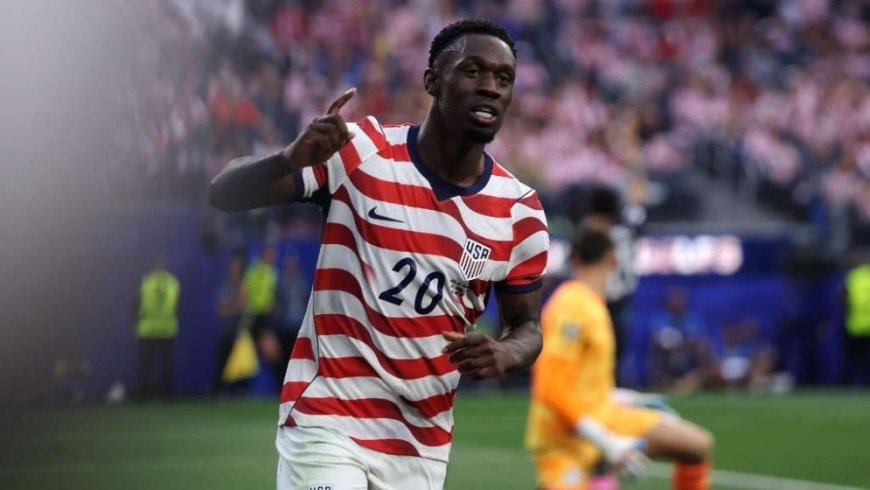
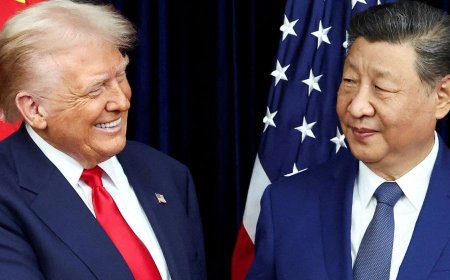
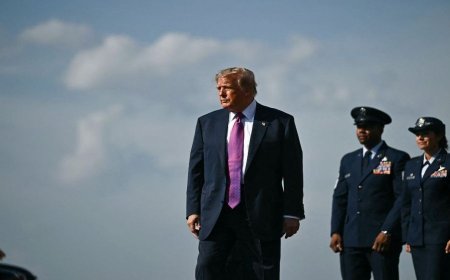
President Donald Trump's effort to end birthright citizenship has reached the US Supreme Court, but the policy's significance is already evident on one of the world's biggest sporting stages — the FIFA World Cup.
Under longstanding US law, anyone born on American soil automatically acquires citizenship. Trump is seeking to change that rule as part of his broader immigration agenda.
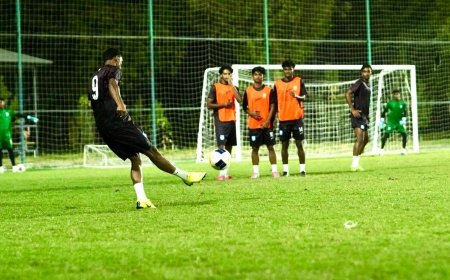
As the Supreme Court prepares to deliver its ruling, US striker Folarin Balogun has provided a high-profile example of birthright citizenship in action. Balogun scored twice in the United States' 4-1 victory over Paraguay, helping to underline the issue's real-world impact.
The forward's American citizenship stems from a chance circumstance. His mother travelled to the United States to visit her sister while pregnant but was unable to return to the United Kingdom because airlines deemed her too close to giving birth. As a result, Balogun was born in New York and became a US citizen by birth, despite moving to London when he was only a month old.
Although he grew up in England and retains a strong British identity, Balogun ultimately chose to represent the United States instead of England or Nigeria, his family's country of origin.
The United States, Canada and Mexico — co-hosts of the 2026 World Cup — are among a small group of countries, largely in the Americas, that grant automatic citizenship to those born within their borders.
Trump's proposal would limit citizenship to children with at least one parent who is a US citizen or lawful permanent resident, a rule that would not have applied in Balogun's case.
Experts say Balogun's story is unusual but highlights the growing influence of migration and citizenship policies in international football.
Marissa Kiss of George Mason University's Institute for Immigration Research noted that nearly a quarter of players at the current World Cup were born in countries other than those they represent.
"As with the World Baseball Classic, the Olympics and the World Cup, countries are competing for talent and immigration policy can be a competitive advantage," she said.
Diaspora communities have become increasingly important in expanding national team talent pools, according to Gijsbert Oonk, a professor at Erasmus University Rotterdam who studies migration and sport.
Oonk's research shows that 75 European-born players are representing African nations at this World Cup. France, in particular, has emerged as a major exporter of football talent, with close to 100 World Cup participants born in the country, many of whom represent other nations.
Players of African heritage born in France now feature for countries including Algeria, Morocco, Senegal, Mali and Haiti, reflecting historical migration patterns linked to France's colonial past.
The United States squad also reflects this trend. According to team officials, half of its 26-player roster is eligible for more than one nationality.
Among them is Tim Weah, son of former Ballon d'Or winner and former Liberian president George Weah. Although eligible to represent Liberia, Jamaica and France, he chose to play for the United States.
Elsewhere, Curacao has relied heavily on its diaspora, with only one player in its squad born on the Caribbean island itself. The remaining players were born in the Netherlands, which maintains constitutional ties with Curacao.
The tournament also features four pairs of brothers representing different national teams, further illustrating the complex links between migration, identity and international sport.
Australia's squad includes three players from refugee backgrounds, while Canada's captain Alphonso Davies was born in a refugee camp in Ghana to Liberian parents before eventually settling in Canada.
Together, these stories demonstrate how citizenship, migration and global mobility continue to shape the modern game, both on and off the field.
What's Your Reaction?